


Rudolf Gaiseb
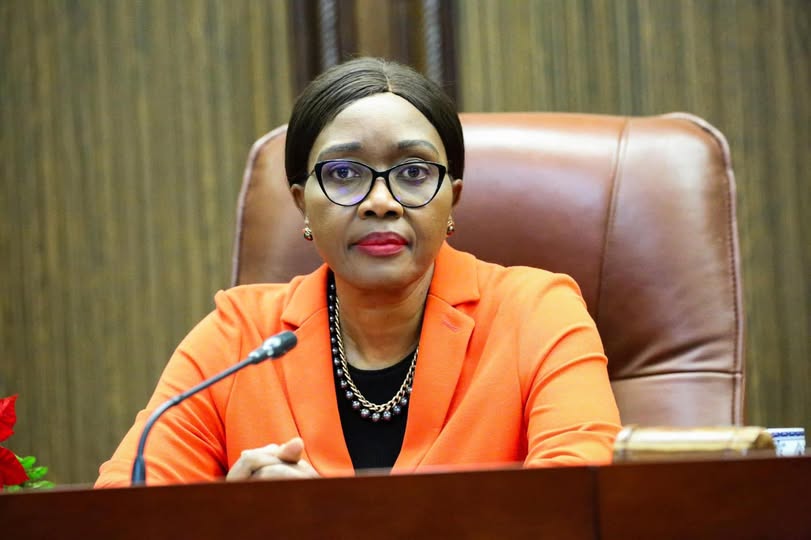
National Assembly Speaker Saara Kuugongelwa-Amadhila says Namibia is well on course in balancing the scales in gender equality.
The world celebrated International Women’s Day last Sunday, appreciating the imperative role of women and reinforcing promoting gender equality and eliminating all forms of violence, discrimination and harmful practices against women.
On Sunday, Kuugongelwa-Amadhila said that the legislative body will continue policy advocacy and pass gender-sound laws that promote and empower women to be recognised as equal citizens in all spheres of life.
“The Parliament of the Republic of Namibia shall continuously promote equality for all citizens and ensure no citizen rights are violated, and no one is left out.
And most importantly, availing equal opportunities to ensure everyone is afforded a chance to be productive citizens in the betterment of our country and in shaping the lives of our people,” she said.Kuugongelwa-Amadhila is the first woman to lead the National Assembly of Namibia. At the moment, President Netumbo Nandi-Ndaitwah is the first female to occupy that role since independence.
She is deputised by Lucia Witbooi, the second female to occupy the role. With her election, Namibia became one of the few countries in the world where the top three government positions, president, vice president, and speaker, are held by women.
Meanwhile, during last year’s 58th Plenary Assembly of the Southern African Development Community Parliamentary Forum (SADC-PF), Kuugongelwa-Amadhila emphasised the importance of women accessing finance and markets through public procurement, quotas, and support for cooperatives.
Shack dwellers
Kuugongelwa-Amadhila cited the Shack Dwellers Federation of Namibia (SDFN) as one of the country’s successful women-led cooperatives facilitating low-cost housing and enabling agricultural projects in the country.
Founded in October 1998 by 30 grassroots housing groups, SDFN is a community-based network of housing-saving schemes.
It works to improve the living conditions of the urban and rural poor while promoting women’s participation.
Unemployed individuals or those earning less than N$5 000 per month can join SDFN.
Over the years, the Shack Dwellers have built over 7 000 brick homes for low-income and poor people in informal settlements.
The SDFN now boasts over 1 000 saving groups in all 14 regions of Namibia, with a total number of over 33 000 federation members who saved over N$34 million.
In endorsing the SADC regional parliamentary caucus report, Kuugongelwa-Amadhila highlighted that the recommendations will ensure leveraging regional capacities and resources to ensure shared development at the regional level.
“Government procurement offers great opportunities for access to markets and can be leveraged to facilitate access to private finance, as well as state financing through cession of contract income in lieu of security, which many women lack,” she said.
“And we also have quotas for women and youth for public tenders and for financing from public financial institutions in order to support inclusive development,” she added.
It was noted that climate financing can support women’s initiatives aimed at savings mobilisation and financing of women’s initiatives. In like manner, on the joint sitting of the committee’s report addressing abortion, she noted that restrictive approaches often overlook root causes such as limited access to reproductive health services, sexual violence, and poverty.
She advocated for strengthening adoption systems, supporting young mothers to continue education, and enhancing social grants and corporate social responsibility to assist vulnerable communities in order to prevent dangerous clandestine procedures and protect health and dignity.
Meanwhile, convened under the theme ‘The Impact of Climate Change on Women and Youth in the SADC Region and the Role of Parliaments in Climate Change Mitigation and Adaptation’, the plenary assembly brought together presiding officers, speakers and parliamentarians from 14 SADC member states. The assembly’s central objective was to address the unequal impacts of climate change on women and youth and to define and reinforce the role of parliaments in mitigation and adaptation. This objective was pursued through the review and adoption of committee reports, formulation of targeted resolutions, and a deliberate focus on accelerating regional integration by ratifying and domesticating key SADC protocols.
The Assembly also examined the Forum’s institutional preparedness for transformation into a regional parliament, recognising that strengthened staffing, sustainable financing, and codified procedures are essential for an effective transition.
Trade
Meanwhile, MP Nelson Tuhafeni Kalangula, who was part of the delegation to the forum, told members that the SADC commits to protocol ratification, as it is the key to transforming economies and guarding against exploitation.
Kalangula also noted that to avoid future sanctions, withdrawal of aid, and economic growth programmes used as neo-colonialism tools to maintain a grip and control on African resources and the continent, SADC must first track trade within itself through the Africa Continental Free Trade Agreement.
“Inasmuch as we seek foreign direct investment from outside of Africa to boost our economies, it will be in our best interest to look internally to trade amongst ourselves as Africans,” he said.
Namibia adopted the report, aiming to hold tight to Africa’s resources and promote value addition to avoid raw material or mineral exploitation under the guise of favour and employment for Africans.
– rgaiseb@nepc.com.na