

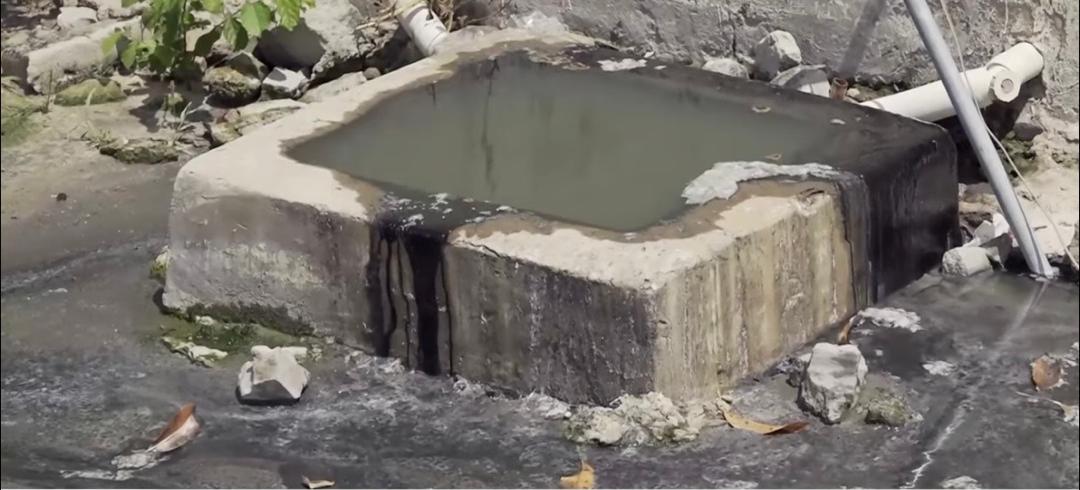

KATIMA MULILO – The University of Namibia (Unam) has taken a major step towards addressing longstanding sewer challenges in Katima Mulilo.
It is being done through a new integrated wastewater management system as part of the expansion of its campus in the Zambezi region.
The project – known as Component 3: Campus Integrated Wastewater Management System – forms part of the broader expansion of the Unam Katima Mulilo Campus and aims to provide a sustainable solution to sewage challenges affecting the university and surrounding institutions.
Speaking at the official workshop, Unam vice chancellor Kenneth Matengu said the initiative was prompted by a critical sanitation crisis in the town, where ageing sewer infrastructure is struggling to cope with population growth.
“We are here today [Thursday] because of a critical situation that exists in this town,” Matengu said.
“Wastewater is a problem in small towns because of the old infrastructure. Many of the piping systems here date back to the 1930s and were designed to serve approximately
five thousand residents. At this stage, the town has a population of close to fifty thousand, meaning the pressure on the infrastructure is very high,” he said.
Matengu noted that the deteriorating sewer system had previously posed a serious health risk at the university’s campus.
“As a university, we needed to respond to this challenge because we have a concentration of a population, and the sewage situation in the town was becoming a health hazard at our campus,” he said. “At some point I was actually considering closing the campus because the sewage was all over.” The new treatment plant, supported by the KfW Development Bank with financing from Germany, will serve multiple institutions, including Unam and the Zambezi Vocational Training Centre.
“The treatment plant that we are workshopping today is going to save not just the University of Namibia but also the Zambezi Vocational Training Centre,” Matengu said. “The objective is to use this facility for water treatment and enable reuse, but also to promote research and innovation.”
He added that wastewater management is critical for public health and environmental protection.
“Water treatment is important because it is a means for public health protection. It helps prevent contamination of pathogens in our river systems, improves environmental protection, and supports water conservation and reuse,” Matengu said.
The facility will also strengthen UNAM’s research and training capacity, with students and staff from both UNAM and the vocational training centre expected to participate in operational training and research activities.
Matengu expressed hope that the facility would become a model for wastewater management in the region.
“This facility will continue to play a bigger role in innovation and water use not just here in Katima Mulilo, but we hope it will be a model for water treatment within the KAZA region,” he said.
The project, valued at approximately N$60 million, is jointly financed by the German government through KfW and contributions from Unam. Project manager Mercedes Rosell explained that the campus expansion project originated from efforts to support sustainable natural resource management within the Kavango-Zambezi Transfrontier Conservation Area (KAZA). “The project started from the University of Namibia to address the needs from the Namibian government and the KAZA region to create fair access to natural resources and ensure sustainable management,” Rosell said. The initiative led to the establishment of a new Department of Wildlife Management and Tourism Studies at the Katima Mulilo Campus, supported through Namibia-Germany cooperation and co-financed by KfW. Rosell said the development process began over a decade ago with feasibility studies and planning.
“Land was donated by the Katima Mulilo Town Council, financing agreements were signed in 2016 and 2017, and construction of the new campus infrastructure began in 2021,” she explained.
However, the project soon encountered a major challenge: connecting the new campus infrastructure to the town’s failing sewer system.
“The most challenging question was where to safely connect the sewer. At that time, we had an idea where to connect, but later we learned it was not safe enough,” she said.
A joint technical assessment conducted by Unam and the Katima Mulilo Town Council revealed that the town’s sewer infrastructure dates to the 1930s, when the population was only around 3 000 residents.
“According to the 2024 census results, the current population is around forty-six thousand inhabitants. The sewer system is still being utilised beyond capacity, and not everyone is connected,” she added. She noted that the municipal sewer system has been dysfunctional for years due to faulty pumps, blockages and under-capacity oxidation ponds.
“The sewer in Katima Mulilo has been dysfunctional for many years due mainly to faulty pumps, blockages and under-capacity ponds,” Rosell said. Because the municipal rehabilitation project would take longer, UNAM opted to pursue its own dedicated wastewater treatment plant.
“Understanding the extent of the problem and what the town council needs to resolve is much bigger than our case alone,” Rosell said. “Unam, having almost completed its infrastructure, had to hurry up with our own solution.”
Following a feasibility study funded with additional German support, a suitable site within the existing campus was identified for the wastewater treatment facility. Rosell said consultants have now been appointed to design the plant and guide its implementation. “We have appointed a group of consultants who are here with us today to help design and eventually establish the plant,” she said.
Once completed, the system is expected to provide safe wastewater treatment, enable water reuse, support academic research and contribute to environmental sustainability in the region.