

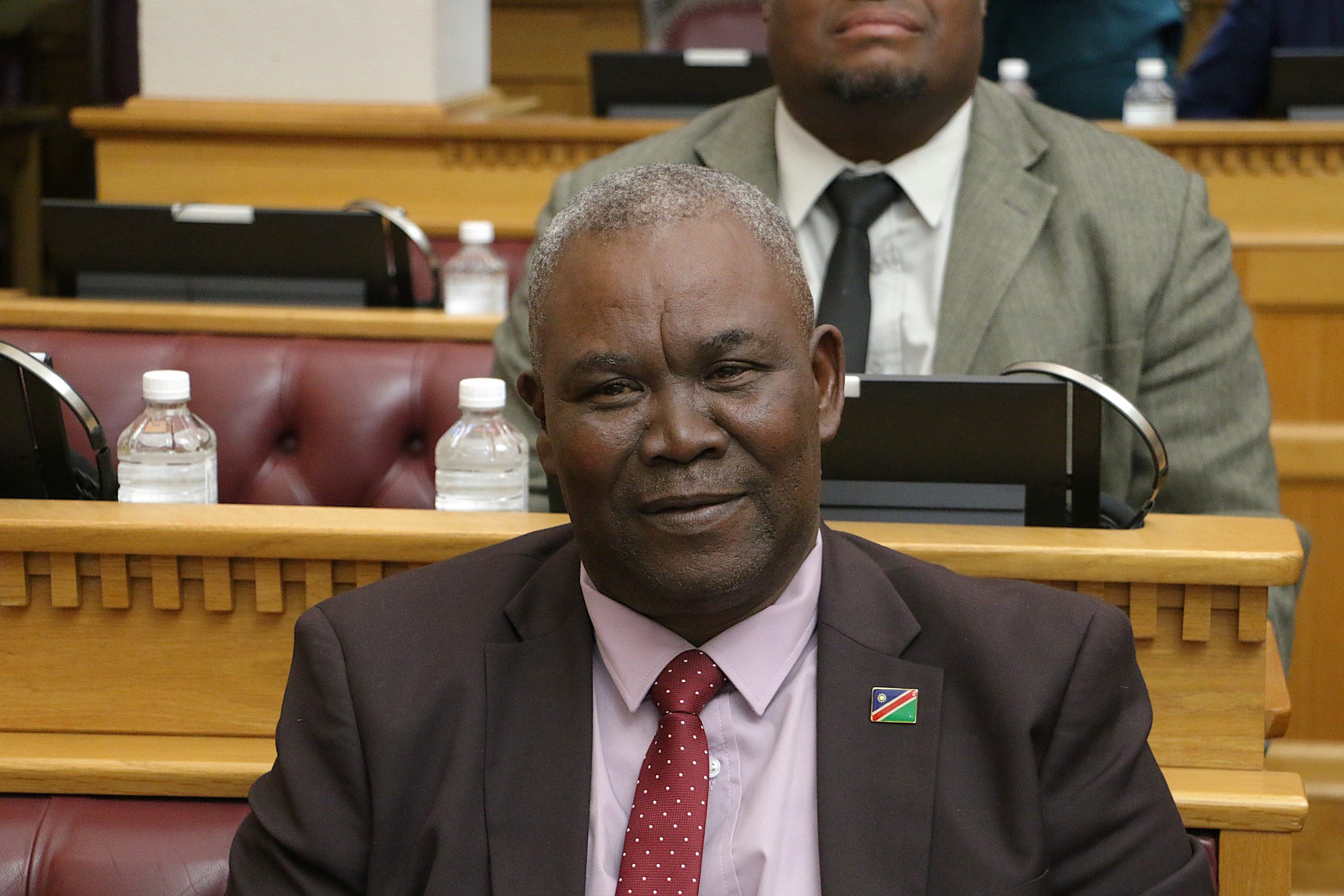

The United Democratic Front (UDF) used its consultative meeting with President Netumbo Nandi-Ndaitwah to highlight pressing challenges in Kunene.
Chief among them was human-wildlife conflict, a legal dispute involving the regional council, housing shortages, youth unemployment and inequality between rural and urban schools.
This comes at a time when stray elephants are wreaking havoc in the northern parts of the country.
Last Thursday, a 46-year-old woman from Omugulugwombashe in Omusati’s Tsandi constituency died after being trampled by an elephant.
According to the police, the elephant trampled the woman to death after it had been shot by a villager the previous night. The victim allegedly moved too close to the animal.
The elephant was later put down by officials from the environment ministry.
Briefing the media on the talks, UDF leader and former Kunene Regional Council chairperson Hendrik Gaobaeb appreciated the opportunity to raise concerns affecting communities, particularly those in remote rural areas. One of the most prominent issues raised was the growing human-wildlife conflict affecting communities in northern regions, including Kunene. The UDF said rural residents are increasingly bearing the cost of wildlife conservation, despite wild animals being regarded as national assets.
“These mammals, such as elephants, rhinos and lions, are national assets. National assets mean they belong to all Namibians,” he said.
The burden of living with the animals falls mainly on rural communities that are already struggling with poverty, he said.
According to the UDF, wildlife regularly destroys crops, kills livestock and threatens the safety of villagers in areas bordering national parks and conservancies. He said the situation stretches across several regions, including the Zambezi, Kavango East and West, Kunene and areas around Etosha National Park.
“Once a lion is in your kraal, any movement must be silenced. That is the reality people are living with,” he said.
The UDF leader said the ongoing conflict is pushing already vulnerable rural households deeper into poverty. “Human-wildlife conflict is impoverishing the communities,” he said. He added that Nandi-Ndaitwah acknowledged the seriousness of the problem.
“The President agreed that the population of elephants must be cut,” he said, adding that controlled use of wildlife resources could help benefit the nation, while reducing pressure on affected communities.
Challenges
Another key matter raised during the meeting was a legal dispute involving the Kunene Regional Council and the Ministry of Urban and Rural Development.
According to the UDF, the ministry has taken the regional council to court, resulting in both parties hiring private lawyers using public funds.
The party questioned whether the dispute should continue to be fought in court when dialogue could potentially resolve the matter.
“The regional councillors approached the minister, but after listening to them, the minister said the matter is in court and they cannot talk to each other,” he said.
The UDF leader said the situation is problematic because taxpayers’ money is being used to fund legal teams on both sides.
The party proposed that the two sides engage in discussions despite the court case.
“The fact that it is at the court is not preventing them from engaging,” he said.
He suggested that both parties could reach an agreement outside the courtroom and then inform the court of the outcome.
It is further UDF’s considered position that resolving the dispute through dialogue would help avoid unnecessary legal costs and allow the regional leadership to focus on development challenges facing communities.
The UDF also pointed to the stalled mass housing project in Swakopmund, where about 600 houses remain incomplete due to legal disputes with contractors.
“If that process can be sped up, those houses can help address housing shortages,” the party leader said. The politician added that the country’s housing shortage undermines people’s dignity and constitutional rights.
“Housing is a constitutional provision. The dignity of a person living in conditions without sanitation and water is affected, and that situation is not good,” he said.
Additionally, the party highlighted growing unemployment, particularly among young people, and urged the government to create conditions that allow the private sector to generate jobs.
“It is not that the government will take up all the unemployed in government service. The government must create a conducive environment for investors and the establishment of industries so that employment can be created,” he said.
Agriculture
Agriculture was another key issue discussed. Although Namibia has an arid climate, the party believes there is potential to expand farming activities along rivers such as the Kunene and Kavango rivers.
The UDF suggested that agricultural projects in these areas could help produce affordable food for the local market while allowing Namibia to export surplus produce to neighbouring countries. Educational inequality between rural and urban schools was another concern highlighted during the discussions. The party said many parents send their children to towns because rural schools often lack the same standards and facilities.
“To us, the best tool to address poverty in this country is to educate the Namibian child, whether rural or urban. But the rural poor are left behind because the standard of education there is not good,” he said.
Poor road conditions in rural areas were also discussed. According to the UDF, many residents face higher vehicle maintenance costs because gravel roads are not adequately maintained.
Photo: Heather Erdmann