

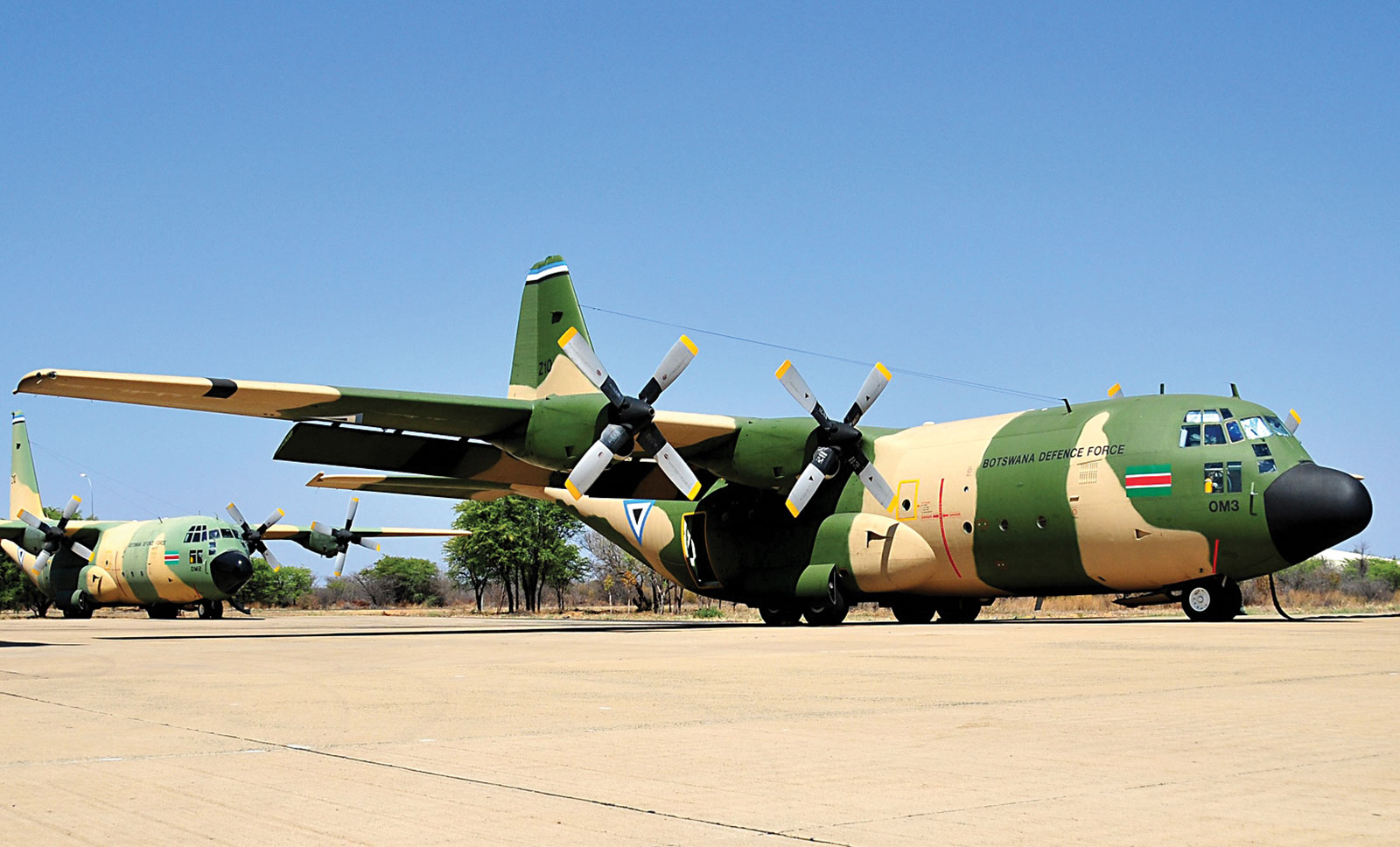

The Botswana government has dismissed decades-long reports that it is home to one of many United States of America military bases abroad.
For years, murmurs have suggested that the US operates a military base at the Thebephatshwa Air Base, a claim the country now fervently and vehemently denies.
Botswana’s clarification follows hot on the heels of a widening Middle East conflict between the US, Israel and Iran, which has resulted in destructive retaliatory strikes on multiple US military bases and installations across Gulf countries which host US bases.
US military bases are spread across Bahrain, Qatar, Kuwait, the United Arab Emirates, Dubai, Iraq, Saudi Arabia and Jordan, and most, if not all, have reportedly come under intense attack from Iran, which has in some instances resulted in loss of civilian lives.
Botswana’s defence and security minister, Moeti Mohwasa, said the assertions undermine regional stability and public trust.
Botswana on Tuesday issued a statement clarifying that the Thebephatshwa Air Base is a sovereign military installation owned, operated, and controlled entirely by the Botswana Defence Force (BDF).
The airbase is located west of Botswana’s Molepolole village.
“Botswana does not host a United States military base. Thebephatshwa Air Base is a sovereign military installation owned, operated and controlled entirely by the Botswana government through the Botswana Defence Force. The facility serves Botswana’s national interests of enhancing emergency response capabilities, supporting regional peacekeeping and humanitarian efforts, and maintaining the operational readiness of our armed forces,” said Mohwasa.
Namibia-China ties
Last month, Namibia’s defence minister, Frans Kapofi, in an interview with Namibian Sun’s flagship talk show, The Agenda, also firmly dismissed claims that Namibia has been approached by China and had agreed to host a Chinese military base.
“No, there is no such thing. We have not been approached for such an arrangement, and we are not likely to agree to such a thing. Why should we have a situation where another country is deploying its troops on our territory? We can’t have that. For those other countries in the region and beyond that have agreed to host military bases of foreign countries on their soil, those are their own sovereign decisions. I can’t comment on that. But for Namibia, our security has always been entrenched in our own people, and they will be the ones to defend our sovereignty. Not foreign troops or their bases here,” stated Kapofi.
He, however, said Namibia has always been willing and ready to train and exchange expertise with other friendly countries and sister armed forces, if those trainings and exchanges serve Namibia’s military needs.
“We have good relations with everyone, and the Namibian army is one of the biggest contributors to UN peacekeeping missions worldwide. That will continue, but requests to host a foreign military base on our soil will never be accepted. We don’t need it,” he maintained.
Military targets
In Middle East countries hosting US bases, apart from targeting formal military facilities, commercial facilities such as ports, strategic oil facilities, airports and hotels have also been targeted and destroyed by Iran.
Reports suggest the US controlled about 750 bases in close to 100 countries worldwide as of July 2021 and spends more on its military than the next 10 countries combined.
In 2020, the US spent US$778bn on its military – the largest military spender in the world and more than the next 10 countries combined. China ranked second at US$252bn, followed by India at US$73bn, Russia at US$62bn and the UK at US$59bn.
With 120 active bases, Japan hosts the highest number of US bases in the world, followed by Germany with 119 and South Korea with 73.
According to global US military deployment data published in the Conflict Management and Peace Science Journal, the US had around 173 000 troops deployed in 159 countries as of 2020.
African footprint
In Africa, the US reportedly operates a military base in Djibouti that was originally established as a garrison for the French Foreign Legion, while Kenya’s Manda Bay has been used by US troops as a base of operation for years now.
In Somalia, US forces have for years operated forward locations and rotational facilities, including Baledogle Airfield and areas near Mogadishu Airport, which support airstrikes, intelligence missions, and training of Somali forces.
In West Africa, the US has two airbases, Air Base 101 in Niamey and Air Base 201 in Agadez, both in Niger.
The US also has smaller facilities and rotational deployment bases in countries including Ethiopia, Ghana, Senegal, Tunisia, and Morocco.
New reality
For almost a century now, the US has maintained its overseas bases through reliance on two premises – the first being that hosting these bases would be a source of security for the host country, shielding allies and partners from foreign attack through US deterrence.
The second is that, by investing in such a shared and long-term military infrastructure, the bond between host countries and Washington would be deepened and strengthened.
But the ongoing conflict in the Middle East is beginning to prove that hosting American military bases may increase vulnerability faster than it guarantees protection for host nations.
Iran has throughout the conflict indicated that the moment US military installations and bases are used to launch or support offensive operations against it, they cease to serve as security partnerships and automatically become operational components of the conflict.
For Iran’s neighbouring Gulf states, it has warned that if US aircraft depart from the base’s host territory, if military logistics flow through their ports, if command infrastructure operates within their borders, then the sovereignty of those nations is already entangled in the war.
“Botswana values its strong relationships with all its neighbours and remains committed to regional cooperation, dialogue and mutual respect. Misinformation, particularly when amplified across borders, has the potential to create unnecessary misunderstanding among citizens and between neighbouring countries. It is important that discussions concerning national security are grounded in verified facts rather than speculation,” Botswana’s defence minister reiterated.