

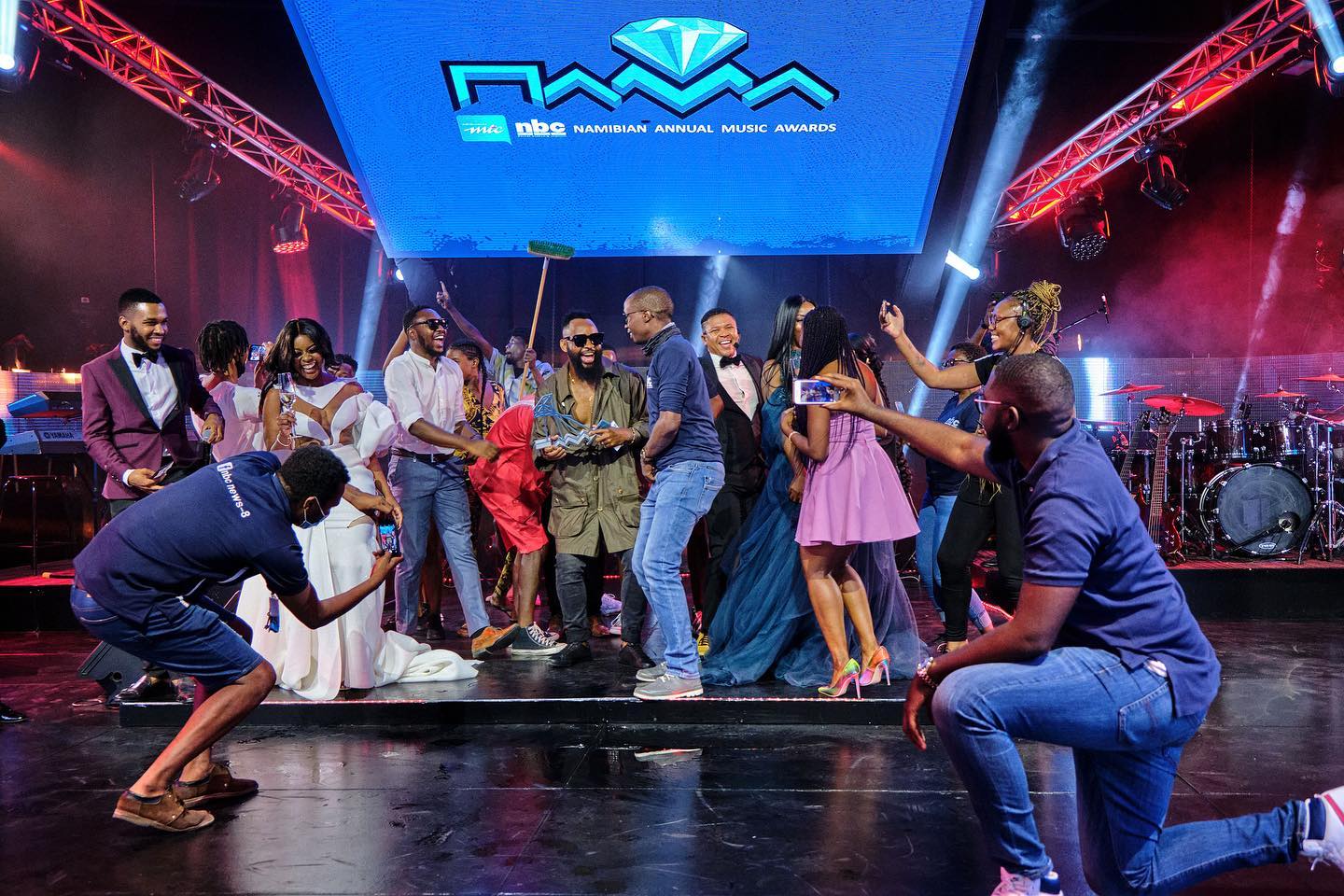

Namibian musicians have called for fair treatment, better support and stronger development programmes as discussions begin on the future of the Namibia Annual Music Awards (NAMAs).
The discussions took place during an Industry Stakeholder Engagement Session hosted by the Ministry of Education, Innovation, Youth, Sports, Arts and Culture, through its Directorate of Arts, in partnership with the National Theatre of Namibia.
The meeting provided artists, producers, and other stakeholders with an opportunity to share ideas on how to enhance the country’s premier music awards event.
NAMAs background
The NAMAs were launched in 2011 to celebrate and promote Namibian music. Over the years, the awards became one of the most important platforms for local artists, helping many musicians gain national recognition and media exposure. However, the awards were discontinued in 2020 after challenges such as funding issues and changes in sponsorship. Since then, artists and fans have been calling for the awards to return. The current consultation process aims to rebuild the credibility and impact of the event before it is revived. During the engagement session, several artists said the awards must be fair to both solo artists and music groups. The artist explained that in the past, prize money did not always consider the size of a group. According to them, a solo artist and a band could receive the same amount of money, even though a band might have five or six members who must share the prize.
“This is not fair. The future award structures should take these differences into account,” they said.
Artists also said the music industry needs more support beyond just prize money. Some suggested financial literacy training so musicians can learn how to manage their income.
Others proposed that part of the prize money should be invested in long-term benefits such as medical aid or training programmes. Artists further said many musicians struggle after winning awards because they are not prepared for the business side of music.
“Artists focus on making music, but there is also the music business. We need training so that we know how to manage our careers,” they said. Creatives also raised concerns about how local artists are treated compared to international performers at major events. They said international acts are often given better accommodation, VIP areas and other benefits, while local artists sometimes must stand in queues for basic services.
Artists called for equal respect and better professional standards at future events. Singers discussed the importance of promoting Namibian music both locally and internationally.
Some artists said the country should invest in music infrastructure, such as studios and digital platforms where musicians can sell their music.
Others encouraged the industry to celebrate traditional Namibian sounds and create a unique musical identity that can be recognised around the world. The stakeholders suggested category Artist of the year/ Best overall artist, Best male artist, Best female artsist, Best newcomer, Best duo, Best live performance, Best producer, Best dj, Best music video, Best Songwriter/composer, Best beatmaker, Best album / Best song / Best single, genre-specific categories such as Amapiano, Hip Hop/Rap, Gospel, Kwaito, House and Traditional this comes after the ministry sent out a questionnaire.
The Arts director, M’kariko Amagulu, called for a renewed focus on the growth and protection of Namibia’s music sector, while outlining plans to reshape the country’s biggest music awards platform. She highlighted the long-standing role of the Namibian Annual Music Awards, describing them as one of the country’s most visible platforms for celebrating musical success. “They have provided artists with recognition, encouraged excellence and showcased Namibian talent to audiences both locally and beyond our borders,” she said. She stressed that it was time to reflect on whether the awards are still meeting the needs of the industry.
“As with any important national platform, it is necessary from time to time to pause, reflect and ask ourselves whether the structure, format and purpose of the awards continue to serve the needs of the industry and the musicians they are intended to honour.”
She added that the Namibian Annual Music Awards must first and foremost celebrate Namibian music, its identity, its sound, its stories and the artists who create it. She praised the country’s diverse music scene, noting that artists draw from a wide range of cultural traditions and modern influences.
“From traditional sounds to modern genres, musicians are creating work that is uniquely Namibian,” she said.
Copyright bill
Amagulu touched on progress in updating Namibia’s copyright laws. Officials confirmed that a revised copyright bill has already been submitted for approval and now includes provisions for digital space.
“We’ve been looking at all the changes that have happened since 1994, because the current copyright law dates to then. It is something that the government has actively been working on,” she said. The new law is expected to benefit not only musicians but a wide range of creatives.
“Copyright is not just for music, it’s also for film, for choreographers, and for all players who create artistic products,” the official explained.
Authorities are working with the Business and Intellectual Property Authority (Bipa) to finalise the regulations, with support from Unesco.
“It is already in process, and it has gone really far,” she added.
-pmukokobi@nepc.com.na