


Monika Amunyela
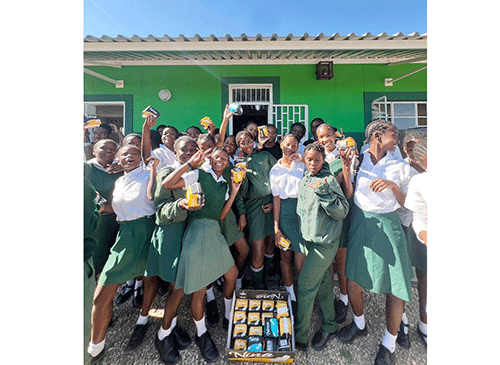
At just 21 years old, Faith Nghipunya is working to change the reality that comes with menstrual support for other young girls through outreaches that educate them on menstrual health and provides them with sanitary pads, so that no girl is left unprepared or unsupported.
A key part of her vision is introducing menstrual health education into school curricula and fostering an environment where menstrual health isn’t regarded as taboo. “We hope to move towards a future where period poverty is recognised as a genuine barrier to gender equality in education and to influence school policies to include comprehensive menstrual health education within the Life Skills curriculum. Education should begin as early as nine or ten to better prepare young girls,” Nghipunya explained.
Nghipunya stressed the importance of including teachers and administrators to this mission as they can make a lasting change and create safe environments where learners can ask questions freely and without shame, their continued involvement ensures that the support does not end after outreach visits. “By maintaining emergency kits and continuing the dialogue, they ensure that support remains available every day.”
Nghipunya points out that they face challenges as many stakeholder’s view this as a one-time charitable act rather than a long-term investment, this makes it harder to build sustainable lasting support, funding remains their biggest challenge, as the initiative relies solely on donations and sponsorships. “We were recently very blessed to be sponsored by Ausiku Attorneys for our visit to the Okahandja Project School. We invite corporate partners to consider monthly adoption programmes or assist with logistics,” Nghipunya says, especially when it comes to reaching remote regions that are often overlooked.
Nghipunya is driven by a deeply personal motivation. She hopes to be the voice that reminds young girls that they are not alone. “Many girls as young as 11 start this journey with no prior knowledge,” describing the confusion and fear they often experience, she reinforces her belief that no girl’s education should ever be disrupted by something as natural as menstruation.
In total, the “I’m just a Girl” campaign has visited three schools: Ella Du Plessis Secondary School, Green Leaves Primary School and Okahandja Project schools. They also intend to visit three other schools in Ohangwena in the coming month.
-mamunyela@nepc.com