


Auleria Wakudumo
A renewed wave of international support is set to strengthen Namibia’s health system as the government of Japan, the United Nations (UN), and global partners unveiled major investments aimed at improving emergency preparedness, disease prevention, and access to quality healthcare.
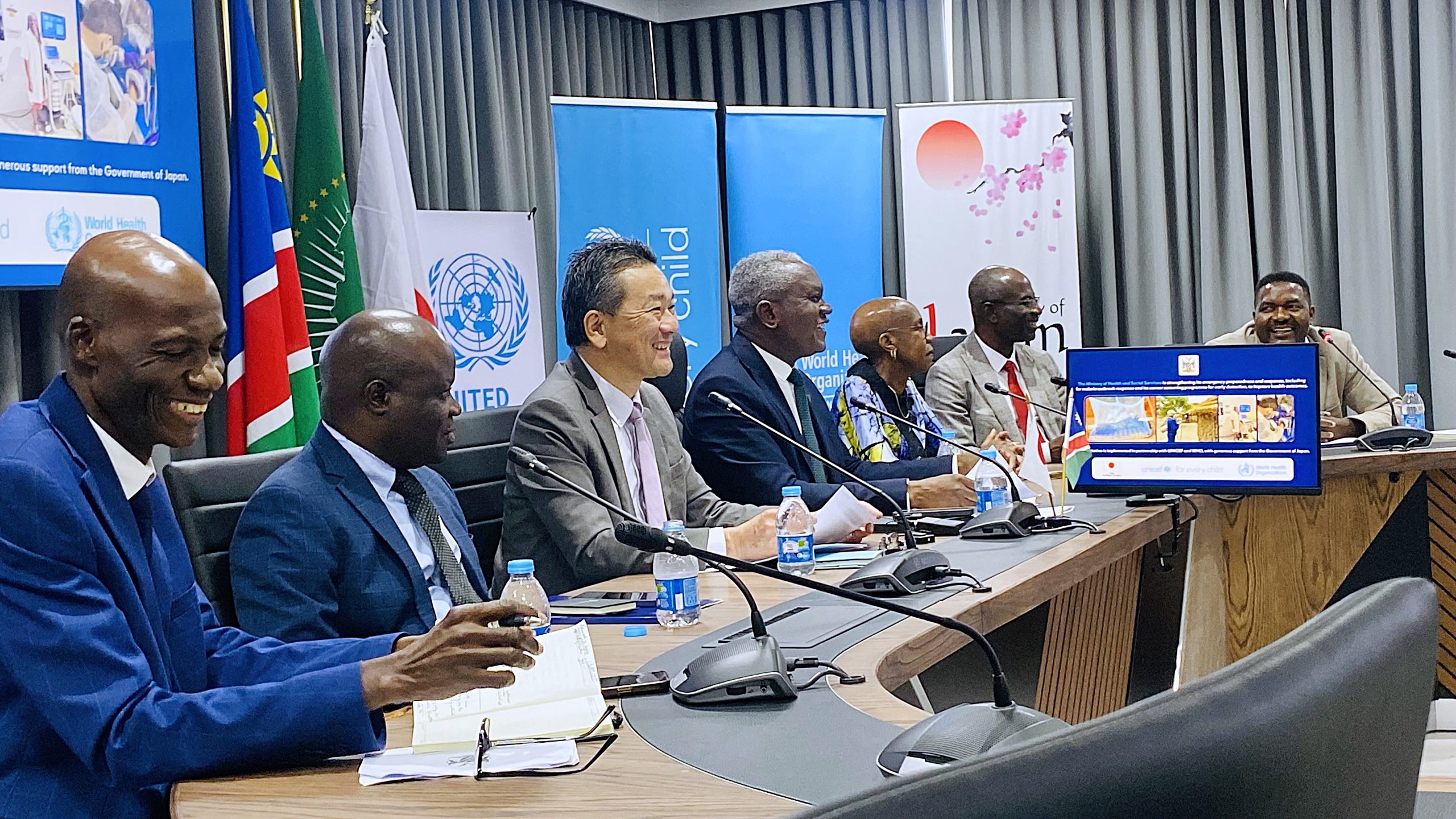
Speaking at the launch of the Japan Supplementary Budget-funded Joint Trilateral project in Windhoek last week, Japan’s ambassador to Namibia, Shinichi Asazuma reaffirmed his country’s long-standing commitment to Namibia’s development.
Japan has funded 27 trilateral cooperation projects in Namibia, with investments exceeding US$23 million (approximately N$375 million) since 2013,” he said.
The latest package funded under Japan’s 2025 supplementary budget introduces three key projects implemented through the UN system in collaboration with the Namibian government. These projects target health emergency preparedness, community resilience and improved diagnostic capacity.
One of the flagship initiatives implemented by UNICEF focuses on strengthening community-level health systems to better detect and respond to public health threats, particularly in vulnerable regions such as Kunene, Omusati and Otjozondjupa.
Another initiative led by the World Health Organization aims to enhance national health security through improved surveillance and emergency response systems.
Asazuma highlighted Japan’s broader contribution to Namibia’s healthcare infrastructure. He pointed to the donation of eight medical vehicles in recent years, including ambulances deployed to remote areas such as Opuwo, Keetmanshoop and Katima Mulilo.
On her part, UN Resident Coordinator in Namibia Hopolang Phororo said the initiative is an investment in people, in mothers, children, health workers and communities whose resilience shapes Namibia’s future.
She highlighted that the programme aligns with Namibia’s national development priorities and the UN Sustainable Development Cooperation Framework, reinforcing long-term institutional capacity while addressing immediate needs.
Executive director in the health ministry of, Penda Ithindi, delivered remarks on behalf of minister Esperance Luvindao, expressing gratitude for what he described as a “timely and strategic investment” in the country’s health sector.
The projects, valued at approximately N$18.4 million, will directly address Namibia’s growing exposure to climate-related health risks, cross-border disease transmission, and the rising burden of non-communicable diseases such as cancer.
“These projects are about strengthening systems, improving access to quality healthcare, and ensuring that no Namibian is left behind,” Ithindi said.
He noted that the interventions will benefit more than 118 000 people across eight hospitals to improve access to water, sanitation and hygiene for over 14 000 individuals.
It will also enhance cancer diagnosis through the procurement of seven ultrasound machines. In addition, vulnerable households will receive insecticide-treated bed nets to reduce disease transmission.
The impact is expected to be felt across several regions, including Khomas, Omusati and Zambezi, where improved infrastructure and services will directly support communities facing both drought and flooding.
Rotary International has also stepped to support Namibia’s polio response efforts following the detection of poliovirus in the region. Speaking at a related handover event, its representative, Karin Kuntze, reflected on the organisation’s decades-long fight against polio, noting that global cases have been reduced by 99.9% since the launch of the PolioPlus initiative in 1985.
“Polio is a disease many of us have seen first-hand. It leaves a lasting impression, and we have a responsibility to protect the next generation,” she said.