


Zebaldt Ngaruka
Most emerging farmers in Namibia’s communal areas are increasingly opting for small-stock animals, such as goats and sheep, due to their lower initial investment requirements and faster production cycles compared to cattle farming.
Small-stock farming offers farmers the opportunity to quickly build their herds and generate a steady income with less capital, land, and infrastructure.
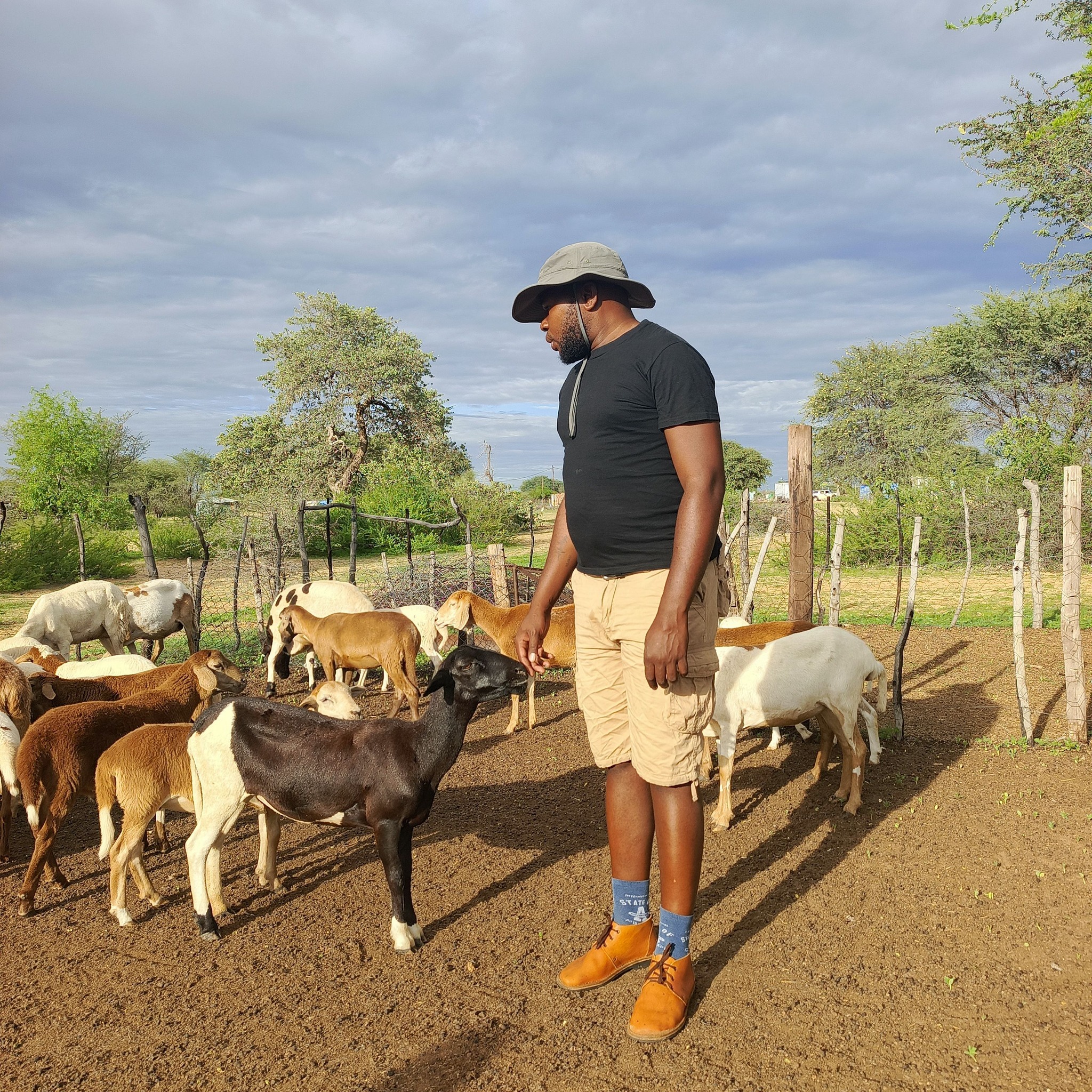
One notable example is young farmer Pelle Hoveka, a sheep farmer from Okatuuo village in Epukiro constituency, Omaheke region.
Despite the low maintenance demands of sheep farming, Hoveka cites his passion for sheep as the primary motivation for his venture.
The 33-year-old has been passionate about sheep since childhood, growing up in a homestead where sheep farming was prevalent.
“We were farming cattle and goats, but I fell in love with sheep because they were everywhere. I noticed that lambs grow faster than goat kids,” he explained.
Hoveka’s journey into commercial farming began in 2016 when he sold a heifer and purchased eight ewes from his late cousin, Rihuurua Muundjua. That same year, he acquired a Veldmaster ram from Unotjari Festus Kavari at the Namboer auction in Windhoek.
The Veldmaster breed, developed through crossbreeding Damara sheep with Van Rooy, Dorper, and Persian breeds, is renowned for its adaptability and resilience.
“I chose the Veldmaster breed because it can easily adapt to harsh environments and extreme conditions. They are resilient, rarely get sick, and have high reproductive potential,” Hoveka noted.
He highlighted that the breed exhibits rapid lamb growth, possesses a strong frame, and is primarily bred for meat rather than fat.
In addition to their robustness, Veldmasters are efficient foragers, capable of covering long distances to find food. They are known for their fertility, mothering abilities, and capacity to survive in challenging environments.
Motivated by a genuine passion for sheep farming, Hoveka finds fulfilment in witnessing his herd’s growth and progress.
“Waking up everyday to do what I love keeps me motivated. Seeing my progress and working towards my long-term goals drives me,” he said.
In 2021, Hoveka registered his herd under PH Farming with the Veldmaster Breeders Association and has since become a respected breeder in the Omaheke region. His dedication has earned him numerous accolades at agricultural shows across Namibia.
Notably, his sheep have consistently won breed championships, including at the Epukiro Expo 2025, where one of his rams was named Breed Champion, and at the Okatumba Gate Show last year. He also secured the Breed Champion title at the Aminuis Agricultural Show in 2025.
Hoveka supports his family primarily through income generated from sheep farming.
“I rarely sell my cattle; my profits from sheep are my main source of income. They contribute to my family’s education and overall well-being,” he shared.
Challenges
However, Hoveka acknowledges the challenges facing small-stock farmers, including disease outbreaks, theft, predators, variable rainfall, and financial constraints. These issues can impact productivity and profitability.
Despite these obstacles, Hoveka advises aspiring sheep farmers to start small and leverage existing resources.
“Learn as much as you can, be prepared to adapt to challenges, and build networks with experienced farmers and mentors. Knowledge and community support are crucial for success,” he emphasised.
He also stressed the importance of proper health management, nutrition, and market awareness. “Attend information-sharing sessions organised by farmers’ associations or experts and keep contact details of local veterinarians. Staying informed about best practices and market trends is vital.”
For many young farmers, Hoveka’s journey exemplifies how dedication, passion, and strategic choices can pave the way for success in small-stock farming, inspiring a new generation of emerging farmers in Namibia’s communal areas.
-zngaruka@gmail.com