


Dalene Kooper
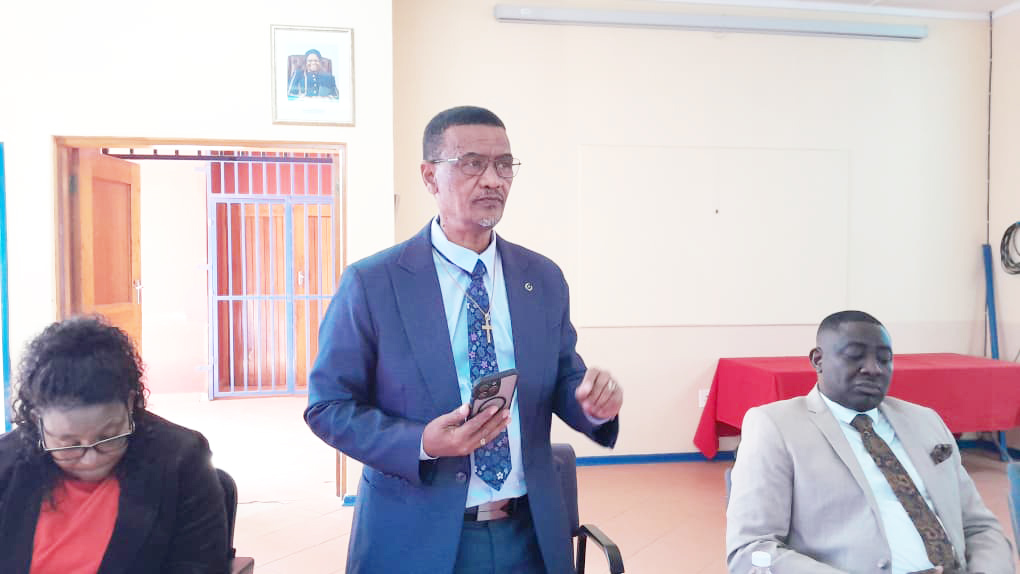
KEETMANSHOOP – //Kharas governor Dawid Gertze yesterday called for stronger constitutional recognition of traditional authorities and communities living near Namibia’s natural resources, saying many residents in the region feel excluded from land reform and resource governance processes.
Gertze made the remarks during an engagement with the Parliamentary Standing Committee on Constitutional and Legal Affairs and Petitions, which is conducting a nationwide constitutional review and reform assessment 36 years after Namibia’s independence.
The consultation, attended by regional leaders, traditional authorities and civic representatives, aimed to strengthen citizen participation in possible constitutional amendments.
The parliamentary delegation was led by acting chairperson Philipe Elder. Gertze said there is a growing sentiment among communities that they remain sidelined in matters relating to land ownership and the management of natural resources.
“We should not be seen as a social responsibility. We need to be recognised as significant role players in managing the resources of this country,” he said.
According to Gertze, concerns raised by stakeholders since he assumed office in July last year include land reform, ancestral land claims and the role of traditional authorities in governance structures.
Regional and traditional leaders questioned why traditional authorities remain custodians of communal land without fully owning or exercising rights over land within their jurisdictions.
Gertze further highlighted what he described as the “paradox” between resettlement and settlement, saying residents are concerned about unoccupied resettlement farms while local communities continue to demand access to ancestral land.
“Anyway, we are crying for ancestral land. How does the Constitution address, rebalance and redress ancestral land?” he questioned. The governor also noted dissatisfaction among some traditional authorities, who feel government recognition systems favour gazetted traditional authorities while excluding others.
“There is a sense that government is more friendly towards those who are gazetted, leaving others behind, who are equally citizens of the state,” he said. Gertze added that conflicts between traditional authorities, regional councils and other governance structures should also be addressed through constitutional and policy reforms.
He stressed that while many residents may not possess legal expertise, their concerns should still be documented and presented to lawmakers for consideration.
Member of the parliamentary standing committee Job Amupanda said Namibia’s Constitution recognises customary law and traditional land ownership.
Referring to Article 66, he said customary laws that existed before independence remain valid, including traditional leadership and community land rights.
“Customary law is law,” Amupanda stressed, adding that traditional communities may already lawfully own ancestral land through customary law protections.
He explained that Article 100, which states that land belongs to the state unless lawfully owned, may not apply to communities whose land ownership is recognised under customary law, as their rights are constitutionally protected.