


SWAKOPMUND – The era of plundering Namibian fisheries and marine resources is over, the fisheries ministry has said.
This is after the fisheries ministry observed an increasing presence of foreign fishing vessels operating near Namibia’s northern maritime borders, with some unlawfully intruding into Namibian waters and engaging in illegal fishing activities.
“The era of plundering Namibia’s marine resources is over. The Government of the Republic of Namibia remains resolute in protecting the country’s fisheries resources and ensuring their sustainable utilization for the benefit of current and future generations,” fisheries ministry spokesperson Romeo Muyunda said.
The ministry said many of these vessels have already been intercepted and arrested for violating Namibia’s fisheries laws.
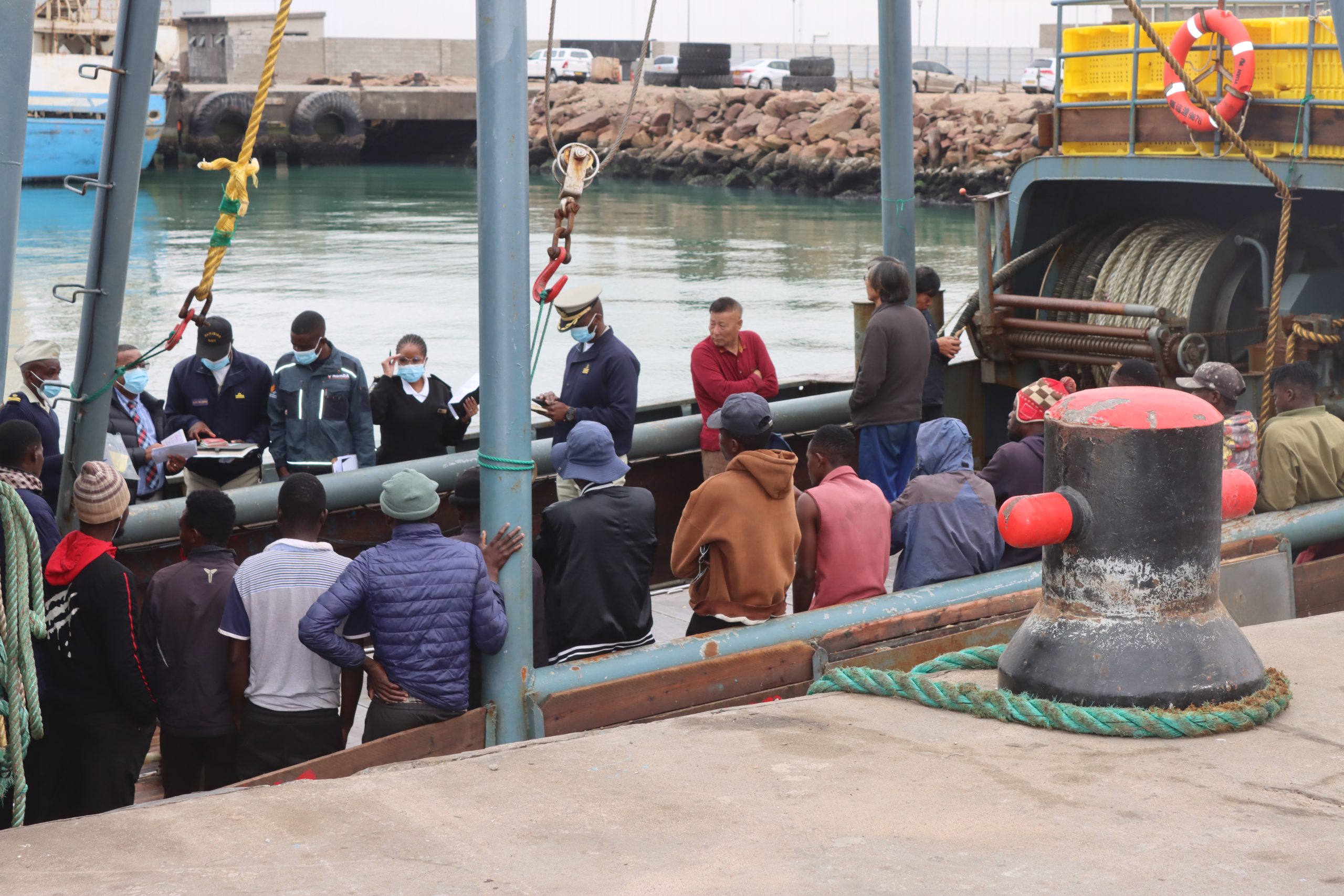
The ministry was responding to the latest arrest and impounding of a foreign-flagged vessel, Fu Yuan Yu 9878, and 22 crew members last week.
This is after the Namibian Navy intercepted the vessel suspected of engaging in illegal, unreported, and unregulated (IUU) fishing activities within Namibia’s waters.
The fishermen appeared last week in the Walvis Bay Magistrate’s Court.
However, their case was postponed to today for a formal bail application.
Muyunda in a press statement said the latest arrest should serve as a stern warning to all participants in the fishing industry that non-compliance with fisheries laws and regulations will not be tolerated.
He added that illegal fishing activities are not only committed by foreign vessels but also some Namibian-flagged and licensed fishing vessels operating within Namibia’s Exclusive Economic Zone.
“This is evidenced by several cases currently under investigation. The ministry remains committed to ensuring that all offenders are brought before the courts,” he said.
The ministry said illegal fishing activities continue to threaten the sustainability of Namibia’s fisheries resources, undermine conservation efforts, and negatively affect the livelihoods of communities dependent on the fishing sector.
Muyunda said Namibia’s marine resources remain a strategic national asset and continue to contribute significantly to economic growth, employment creation, food security, and export earnings.
He added that the interception of vessels suspected of violating fisheries laws sends a strong message that Namibia remains committed to enforcing its fisheries regulations and preserving marine resources.
The ministry commended the Namibian Navy for the successful interception of the vessel during routine patrol operations.
“This milestone achievement demonstrates the unwavering commitment of the Namibian Defence Force, through the Namibian Navy, to safeguarding Namibia’s marine resources and protecting the country’s territorial integrity and economic interests,” Muyunda said.
He said the ministry commends the professionalism, vigilance, and dedication displayed by the Namibian Navy in carrying out its mandate.
The ministry revealed that discussions are underway between the agriculture ministry, defense ministry, and home affairs ministry, particularly the Namibian Police water wing, to formalize cooperation in combating IUU fishing activities within Namibia’s Exclusive Economic Zone.
Muyunda said consultations on a memorandum of understanding between the three ministries are currently at an advanced stage.
“The ministry anticipates the official signing of this MoU between the three sister ministries in the coming months,” he said.
Stiffer fines
Meanwhile, works and transport minister Veikko Nekundi recently announced that the government plans to introduce tougher penalties for illegal fishing activities.
Nekundi said the Cabinet approved amendments aimed at increasing penalties against vessels illegally operating in Namibian waters.
He noted that foreign trawlers continue to enter Namibia’s waters, switch off their vessel monitoring systems, and illegally harvest fish before disappearing into neighboring waters to offload their catch.
“We have vessels coming to steal the fish undetected. They didn’t care because the law was outdated. It came from the 1950s, and the penalty was only N$400,” he said.
Nekundi added that the proposed amendments would increase fines to as much as N$10 million for offenders.
“They need to know that Namibia is a sovereign state, and we mean it. Enough is enough,” he said.