


OSHAKATI – The Oshakati Town Council has made significant progress in the formalisation of informal settlements through a combination of relocation and in-situ upgrading approaches aimed at improving access to services and secure land tenure.
Under the relocation approach, residents from vulnerable or unsuitable informal areas, such as Oshoopala, have been relocated to Onawa, where planned and serviced erven are available.
This allows residents to access proper services and secure tenure.
“We have adopted two main approaches, namely, relocation and in-situ upgrading. Through the relocation approach, residents from vulnerable or unsuitable informal areas, such as Oshoopala, have been relocated to Onawa, where planned and serviced erven are available,” said Oshakati Town planner Alina Amwaama.
She said council is also formalising and upgrading existing informal settlements through replanning, surveying and servicing.
The Evululuko, Pohamba, Uupindi, Oneshila and Okandjengedi areas have already been planned and surveyed as part of the municipality’s broader objective to eliminate informal settlements within Oshakati.
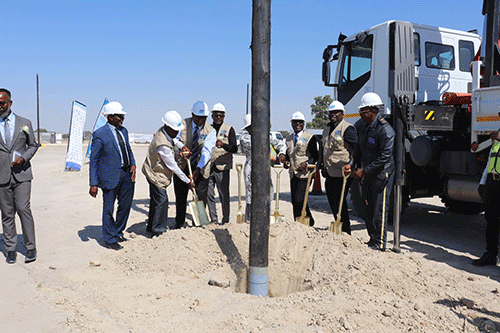
“Council is currently installing services, including water and sewer infrastructure, in several of these areas to transform them into properly serviced neighbourhoods.
Residents will benefit through improved access to basic services, such as water, sewer, roads and other municipal infrastructure,” she noted.
Amwaama said the process will also provide security of tenure, create more liveable neighbourhoods, improve public health and safety, and allow residents to invest in their homes with greater confidence.
She added that formalisation is not only about land delivery but also about restoring dignity and creating sustainable communities.
Despite the progress, the council continues to face challenges during implementation.
These include illegal construction during planning and servicing phases, which affects approved layouts and delays service delivery.
“Another challenge is limited cooperation from some residents, especially where relocation, realignment of structures or compliance with planning requirements is necessary. In some cases, residents continue to occupy areas reserved for roads, services or public infrastructure, making implementation more difficult,” she said.
Amwaama further noted that financial constraints remain a challenge, as the servicing of informal settlements requires substantial investment in bulk and internal infrastructure.
Nevertheless, the council remains committed to working with communities to ensure that formalisation is implemented in a fair, orderly and sustainable manner.
To ensure residents are included in the programme, the council continues to prioritise public participation and community engagement throughout the formalisation process.
“Council believes in planning with the community, rather than planning for the community. Residents are engaged through meetings, consultations and direct interaction with council officials. Local development committees also play an important role in supporting communication between the council and residents,” she said.
The next phase of the programme will focus on continuing the installation of essential municipal services, including water, sewer, roads, drainage and other supporting infrastructure in the planned and surveyed settlements.
She said, Once servicing is completed, the council will proceed with the allocation and administration of erven, including processes that will enable residents to obtain security of tenure.
“The long-term goal is, therefore, not only to formalise informal settlements but also to transform them into sustainable neighbourhoods that reflect dignity, order, economic opportunity and improved quality of life for all residents,” Amwaama said.