


Lahja Nashuuta
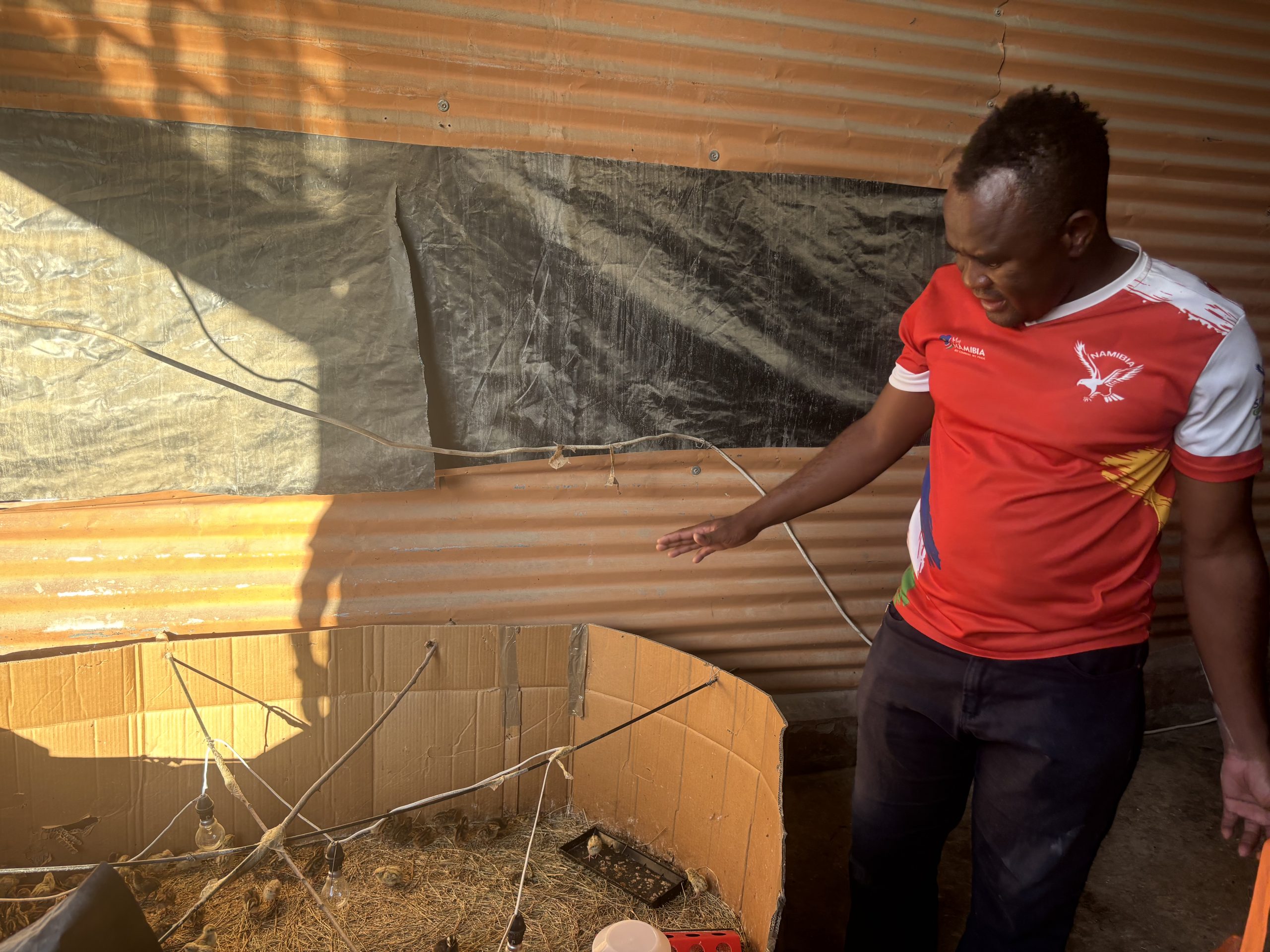
From sleeping in the same room with five chicks to running a growing poultry business with thousands of birds, Oshakati-based poultry farmer Gustaf Uunona says determination and hard work changed his life.
Uunona is the co-founder of Okahuhwa Poultry Farming, a business established in 2013 with five members. The project focuses on chicken production, chicks, quails, guinea fowls, ducks and doves, mainly for meat and egg production. The business also supplies chicks to upcoming small-scale farmers.
In an interview with New Era, Uunona shared how his journey started while he was employed as a security guard at G4S.
“I only started with five chicks. It was very difficult because I did not have money to build a proper chicken house. I kept the chicks in boxes, and we slept together in my room,” he recalled.
Humble beginning
Uunona said his passion for poultry farming was inspired by a successful farmer from Omaalala, Salome Petrus, who encouraged and guided him.
“She inspired me a lot. I kept asking her how to become successful in poultry farming, and she kept teaching me,” he said.
Without enough money for proper materials, Uunona collected discarded pallets, plastics and nets to build his first chicken shelter at the village. Despite the difficult conditions, he remained determined and continued buying a few chicks every month.
By 2014, he had grown his stock to around 200 chickens and started selling eggs. A year later, his efforts attracted the attention of the government.
“In 2015, the Oshana Regional Council through the Okatana Constituency supported me with my first incubator machine. That was my first and last sponsorship, and from there I never gave up,” he said proudly.
The incubator opened new opportunities for his business. Although he initially struggled to operate the machine, he gained experience over time and expanded the business. Today, Okahuwa Poultry Farming operates four incubators.
Currently, the farm keeps more than 1,000 quails, hundreds of chicks, guinea fowls, ducks and doves. Due to high customer demand, the business often sells out quickly.
“The aim is to sell. Sometimes we can reach 1,000 chicks, but because customers are demanding them, we cannot keep stock for long,” he explained.
Feed and market challenges remain
Uunona credited Feedmaster products for helping improve the growth and health of his poultry. He said the business uses different feed products depending on the stage and type of bird.
“When the chicks are young, we use starter feed. When they are growing, we use grower feed, and layers for egg production. The feed gives us very good results,” he said.
Although the products have helped the farm, feed shortages remain one of the biggest challenges. According to Uunona, poultry farmers are sometimes forced to mix commercial feed with mahangu to stretch their stock during shortages.
“Sometimes the food is not available in Oshakati. If only one supplier has stock, the prices go up because they are the only ones selling,” he said.
He added that poultry farming is still misunderstood by some customers who compare commercial poultry prices to traditional village chickens.
“People do not understand the difference between chickens raised for business and village chickens. When you tell them the price is N$130, they think it is too expensive,” he said.
Uunona also called on government and retailers to create more market opportunities for local poultry farmers.
“I do not want government money to expand my business. I already know how to grow my business. What I need is a market where I can supply my products,” he stressed.
He believes local farmers can contribute greatly to food security and employment if given proper support.
“The more you supply to big shops and retailers, the more you can produce and employ young people,” he added.
Another challenge affecting the farm is electricity outages, which disrupt incubators and reduce hatching success. Uunona said a backup generator would help protect production.
Call for youth to venture in agriculture
Despite the challenges, Uunona remains passionate about agriculture and youth empowerment. Through his farm, he trains unemployed young people interested in poultry production and basic animal health management.
“We give training to youth who want to start poultry farming. Many young people are unemployed, but agriculture can change their lives,” he said.
The business also practices sustainable farming by recycling poultry manure into compost for gardening. The compost is used to grow vegetables such as spinach at the farm.
Uunona further praised the Oshakati Town Council for supporting local agricultural initiatives by allocating them land to expand operations.
“They gave us a plot because they saw that we are producing food for the people in town. We are very grateful for their support,” he said.
He urged young people not to wait for large sponsorships before starting businesses.
He urged government institutions and private companies to continue supporting local producers.
“If we want to build this country, we must support local farmers and local food production. Agriculture has the power to create jobs and reduce poverty,” Uunona said.