


Molly Weyulu
Ani Negumbo
Male candidates emerged as the top performers in the 2025 Grade 11 NSCCO and Grade 12 NSSCAS examinations, according to results released by the education ministry.
During the official announcement of the results on Tuesday, education minister Sanet Steenkamp said male candidates performed strongly overall, particularly in science and in commercial subjects.
“Male learners dominated top achievement categories across most subjects at both senior secondary levels. The boys have proven themselves,” Steenkamp said.
According to the minister, enrolment numbers showed a slight decline in Grade 11 candidature compared to the previous year.
“A total of 38 692 full-time candidates registered for the NSCCO examination in 2025, compared to 40 757 candidates who registered in 2024,” she said.
Despite the decrease in registration, overall performance remained stable, with an improvement noted in the number of learners qualifying for promotion to the next grade. Steenkamp attributed the results to curriculum stability, improved teacher support, and increased learner adaptation to assessment demands.
The ministry noted that while male learners dominated the top-performing categories for 2025, female learners continued to outnumber males in overall enrolment figures at both Grade 11 and 12 levels.
Steenkamp emphasised that the results should not be viewed as a competition between genders, but rather as an indication of progress made in addressing historical underperformance among boys in the education system.
She further urged parents, teachers and learners to continue working together to improve academic outcomes across all regions, especially in rural and underserved areas.
“On that note, all candidates are hereby informed that the 2025 NSSCO and NSSCAS examination results will be accessible via the ministry’s official website,” Steenkamp concluded.
Improvement
Overall, the 2025 national examination results for both the NSSCO and NSSCAS levels show an improvement in key performance indicators (KPIs) compared to 2024, despite persistent challenges in parts of the system.
“The decline in full-time candidates may point to challenges within earlier stages of the schooling system, while the increase in part-time enrolment highlights the growing demand for second chance opportunities. This invites us, as a ministry, to reflect on how best we can support learners to succeed in their first attempt, and how we can further strengthen or provide alternative pathways to ensure they are truly enabling success in their preferred areas,” said Steenkamp.
She further said all KPIs at NSSCO level reflected noticeable improvement in 2025.
The first KPI, which measures the percentage of full-time candidates who qualify to progress to the NSSCAS level by achieving a minimum grade three (C) or better in three subjects, increased from 29.5% in 2024 to 36.0% in 2025, signalling an expanded pool of learners eligible for AS level studies.
Under the previous benchmark of 20 points in five subjects, performance rose from 53.7% to 60.2%, whilst under the new, more demanding benchmark of 25 points in five subjects, achievement increased from 34.6% to 40.3%.
“These upward shifts reflect strengthened teaching, learning and assessment practices across the system,” Steenkamp stated.
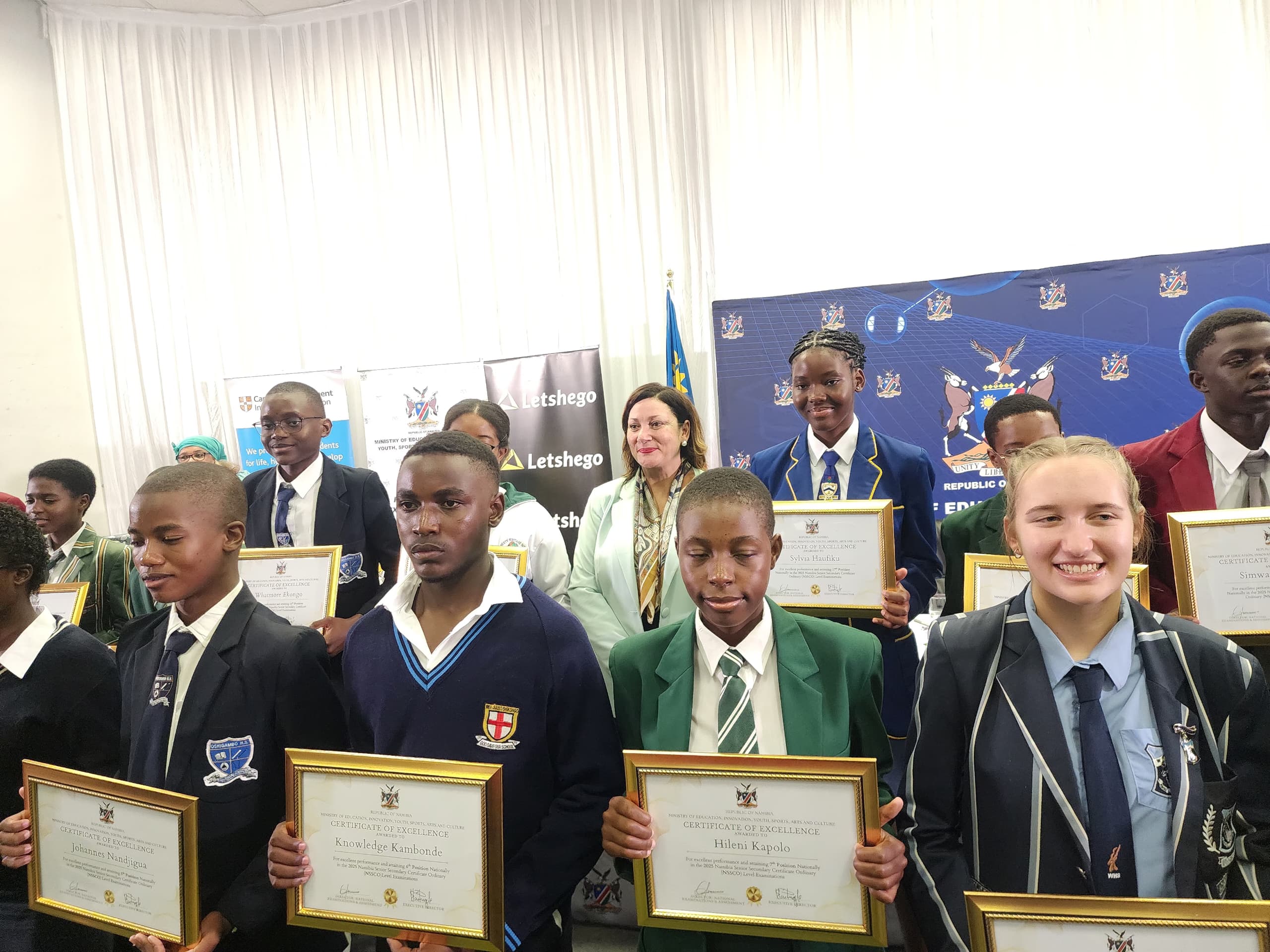
Rukonga Vision School, Onawa SSS, and Oshigambo High School dominated the top performers’ lists for both levels.
Steenkamp noted that both rural and urban centres demonstrated a show of excellence, demonstrating improvement across diverse learning environments.
At Advanced Subsidiary level, regional rankings shifted once again, with Kavango West retaining the first position, Hardap rising from 12th to third, and Oshikoto falling from fourth to eighth place.
-Nampa