


Iuze Mukube
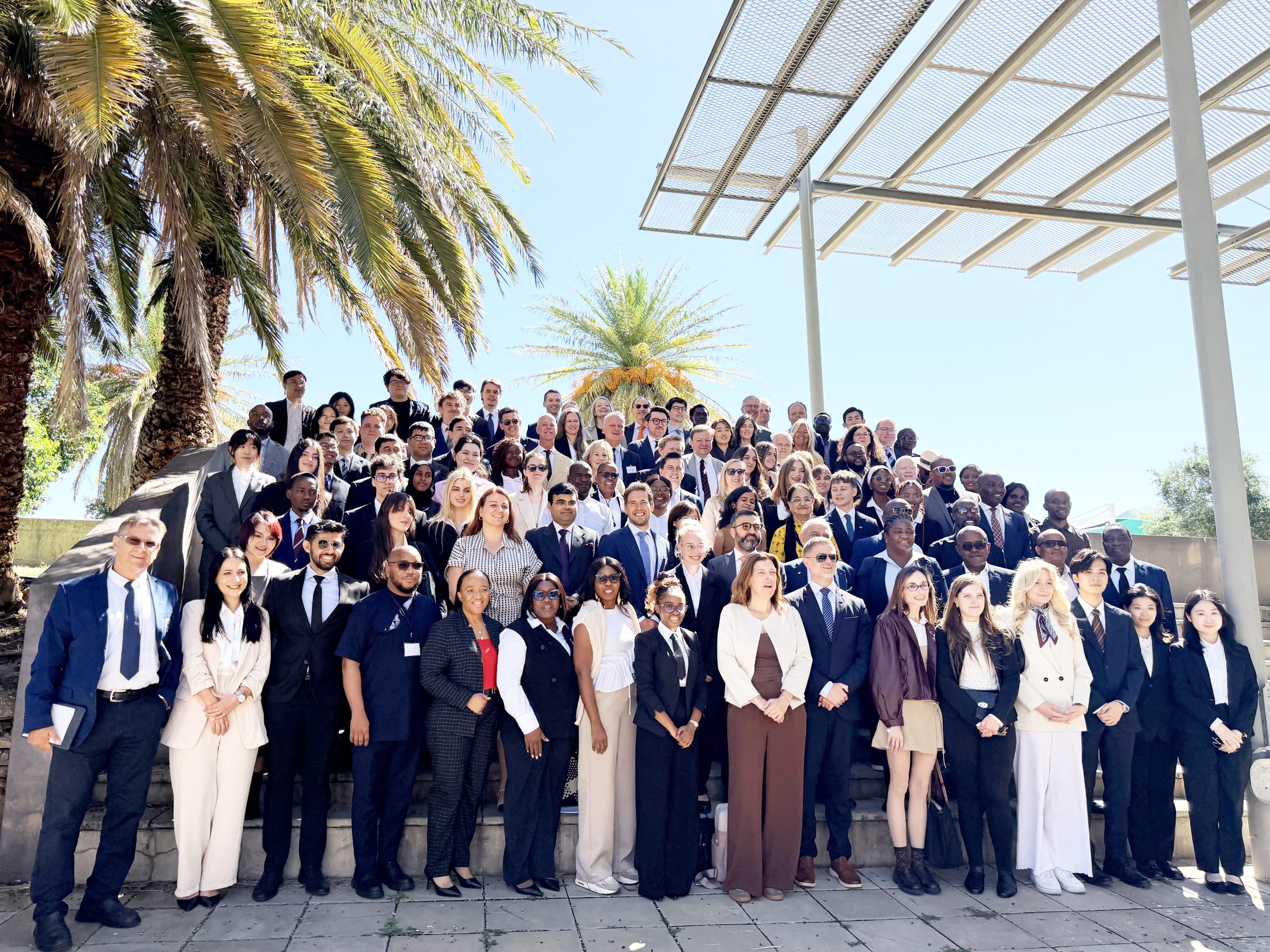
Pioneers, judges, legal professionals and competing participants lauded the recently held 17th Leiden-Sarin International Air Law Moot Competition for its forward-thinking approach.
They particularly cited its cultivation of a new generation of lawyers who are dully grounded and skilled, both theoretically and practically.
The pioneer behind the competition, Nitin Sarin from Sarin & Co. stated that the competition is unique, being the only competition dedicated to aviation law, which is a highly specialised and relatively uncommon field.
“The competition creates a melting pot of cultures, knowledge, and excellence, providing students with a unique and enriching experience.”
Sarin said that it presents a critical step toward strengthening the future of aviation law by ensuring that emerging practitioners are well equipped to navigate its challenges.
In doing so, Sarin added, it continues to play a vital role in bridging the gap between legal education and professional practice in the aviation sector.
Sarin, one of the founders of the global competition, said the idea originated from the strong moot culture in India across various fields of law, but none was dedicated to aviation law.
While studying at Leiden University, the Netherlands, he decided to collaborate with others and established a competition focused specifically on aviation and space law. Sarin stated that aviation [air] and space law are emerging areas of law that are becoming increasingly important as technology advances.
“For example, there are international agreements governing activities in outer space, such as treaties regulating the use of the moon and other celestial bodies.”
Promoting education in these fields helps prepare future legal professionals for developments in global law and technology, he added.
Professor Steven Truxal from Leiden University stated that students gain practical legal skills, particularly in advocacy, including both written skills, such as drafting memoranda, and oral skills, such as presenting arguments in court.
Truxal added that the competition simulates proceedings that are before the International Court of Justice, as such, students essentially argue cases as if they were representing countries at the highest level of international law.
“The competition provides a platform for students to engage with complex international legal issues. It allows them to simulate real-world litigation at a global level and prepares them for careers in international law and related fields,” he added. Former justice minister Yvonne Dausab, an executive dean at the University of Namibia, who was one of the judges, stated that from a judging perspective, it was impressive to observe the high quality of submissions from the competing teams. She stated that hosting the competition in Africa, for the first time, opened a pathway for African and Namibian students to engage in specialised fields such as aviation and space law.
“It encourages students to explore and pursue niche legal areas beyond traditional fields like criminal or commercial law,” said Dausab.
Professor Regula Dettling-Ott from Bern University, another judge, stated that both teams, Canada and the Netherlands, were highly qualified and well prepared.
Dettling-Ott said performance was judged on the quality and merit of legal arguments; the structure and coherence of submissions; contradictions within or between arguments; ability to respond to judges’ questions effectively; and presentation skills.
Legal practitioner Lot Haifidi, also a judge, said moot court competitions are designed to build capacity, particularly among students.
The competition, therefore, successfully highlighted the field of international air and space law, which is still largely underdeveloped, especially in Africa.
He stated Namibia, as an African country hosting the competition, was significant, as it placed it on the global map in the specialised field of law. The competition aligns with global efforts led by the International Civil Aviation Organisation (ICAO) and the Chicago Convention, and thus Namibia will be able to contribute to building awareness and capacity in line with these international standards.
Crucially, he said, the competition expands the teaching and understanding of air and space law across the continent, and Namibia, through the University of Namibia (UNAM), has played a pioneering role. It has laid a foundation for future academic programmes in the field and encouraged collaboration with leading institutions such as Leiden University and McGill University.
He further said it has laid the groundwork for such programmes to be established in academic curricula. Haifidi said the benefits extend far beyond academia, noting that currently, specialised legal services in aviation law are limited and often sourced internationally, making them expensive.
He added by training local professionals, the country can develop home-grown expertise, reduce reliance on foreign legal services, improve access to specialised legal support, and strengthen the aviation industry.
Over time, this could lead to the establishment of local law firms specialising in aviation and space law, contributing to economic growth and job creation.
Haifidi added that air and space law are inherently international, with governing rules standardised globally, and developing expertise in this field allows countries like Namibia to actively participate in and contribute to the global aviation framework.