

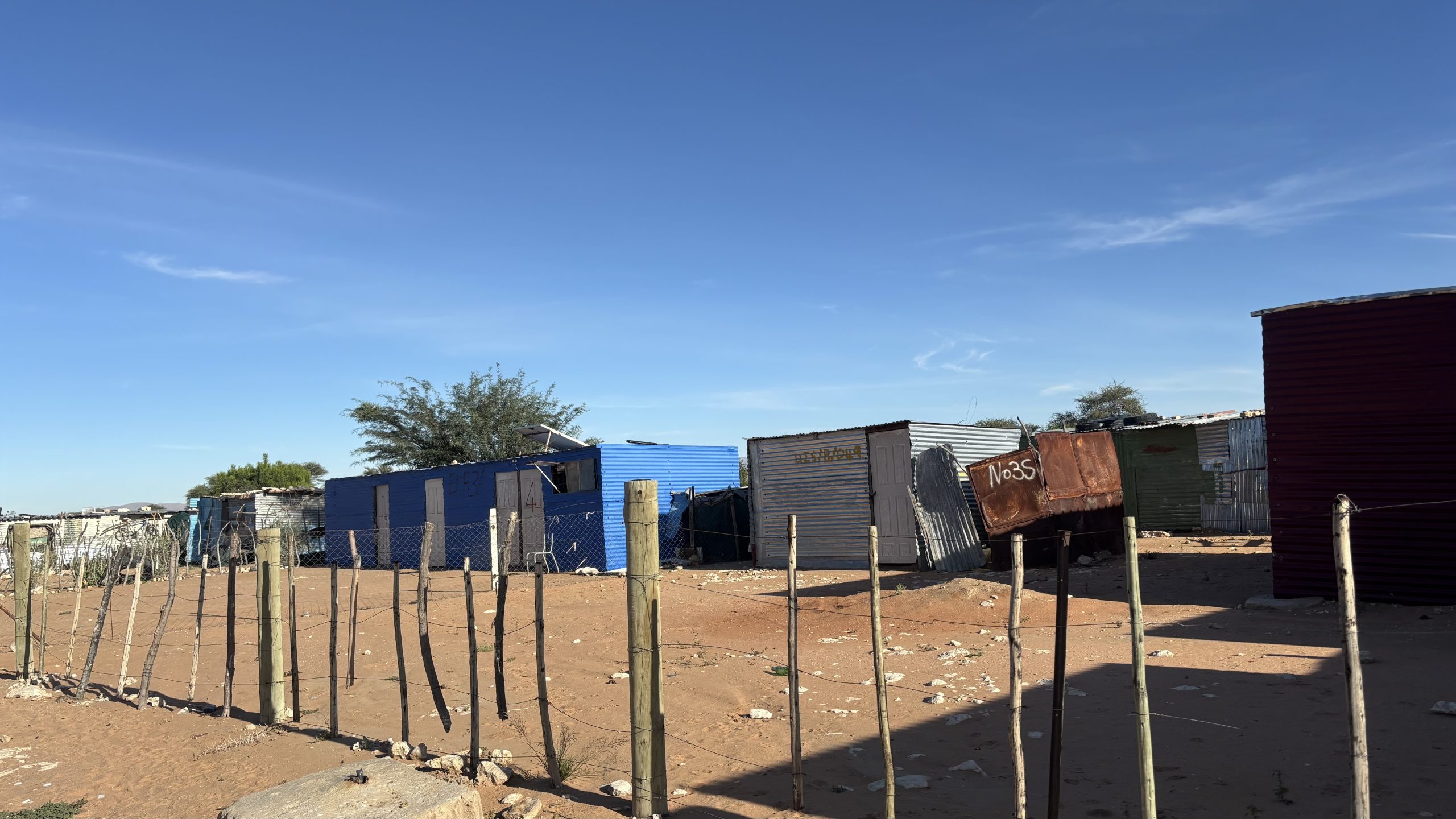

NEU SCHWABEN – About 300 people living at the outskirts of Karibib at the Neu Schwaben settlement have been battling to access clean water.
The residents, most of them small-scale miners, say that access to potable water remains an illusive dream.
The settlement is also home to 20 learners commuting daily to Otjimbingwe or Karibib for school.
When New Era visited the settlement recently, residents said they rely on untreated water sources for drinking, cooking and small-scale farming, despite the health risks involved.
Pakekarua Lucky Metirapi, who represents the small-scale miners in the settlement, said the water issue has been a concern.
However, they have no choice but to use the available water.
“We understand the health risks, but it is the only water currently available for consumption, cooking and gardening,” he said.
He added the Navachab mine donated two water tanks to the community years ago; however, they still struggle to get them connected to the local water supply system.
As a result, the community is currently raising funds among themselves to improve their situation. “We are currently raising N$2 200 to pay for our own water meter that will allow us to be connected to the main water supply to get safe water,” he said.
As a result, he said residents have begun raising funds among themselves to improve their situation.
Also, in Otjimbingwe, residents are also facing prolonged water shortages, a situation local leaders say has been worsened by increased demand linked to mining activities in the Karibib district.
Local councillor and resident of Ondjeombaranga resettlement, Chris Mukua, said the increased mining activities in the area have also placed additional pressure on already strained water infrastructure.
Apart from the Navachab Gold Mine, Karibib is also home to the Twin Hills Gold Project that is under construction, while other operations include the Rubicon Lithium Mine and the Helikon 1 Lithium Mine, as well as projects linked to Lepidico. Several marble and dimension stone operations are also operating in the area.
As a result, Mukua added, water consumption demand for both human and mining operations has significantly increased.
According to him, the area is also experiencing frequent water supply interruptions that can at times last between five and seven days, particularly when pipelines are closed or when infrastructure fails.
“These residents are forced to make alternative arrangements to get water, especially those that are not close to the main water pipeline,” he said.
Additionally, most households here also rely on small storage tanks of between 5 000 and 10 000 litres, which are often not enough during prolonged outages.
He further explained the system is also dependent on pumps and electricity, meaning any breakdown or power interruption affects supply.
“Residents often fetch water from sections along the main pipeline where direct connections still exist. Others travel long distances to access water, which is very challenging,” he said.
Mukua said the shortage of water has also had a direct impact on food production in the area, with many residents forced to abandon small-scale gardening.
“You cannot grow anything in these conditions,” he said.
At the recently held Erongo Development Forum, governor Natalia /Goagoses said some rural communities in the region still face challenges in accessing basic services.
She said that despite progress since independence, poverty and poor service delivery remain in some areas.
/Goagoses said policies must translate into real improvements in people’s lives.
“Behind every policy we discuss, there are real families and communities waiting to experience change,” she said.
She added that rural development must address water shortages, unemployment among youth and limited opportunities for farmers.
-edeklerk@nepc.com.na