


Isabel Bento
KARIBIB – Financial constraints and limited manpower are slowing efforts by the Karibib Town Council to address mounting housing and service delivery pressures as rapid population growth continues to reshape the town.
In a recent interview with Nampa, Karibib CEO Tangeni Enkono said while the council has initiated several development projects, progress is being hindered by a lack of funding.
“At this point in time, financial constraints remain one of our biggest challenges. Key projects such as the development of a new landfill site had to be put on hold due to a lack of funds, and this has a direct impact on our waste management capacity,” he expressed.
The council is hopeful the project will resume in the next financial year once additional resources are secured.
Enkono further noted that manpower shortages continue to affect service delivery, particularly in sanitation.
“We do not always have sufficient personnel to respond to demand, especially during peak periods. As a result, we often employ temporary workers to support our sanitation teams and ensure that basic services are maintained,” he explained.
At the same time, Karibib is experiencing an influx of residents from surrounding farms and towns, driven largely by economic opportunities linked to mining activities in the Erongo region, including Navachab Gold Mine.
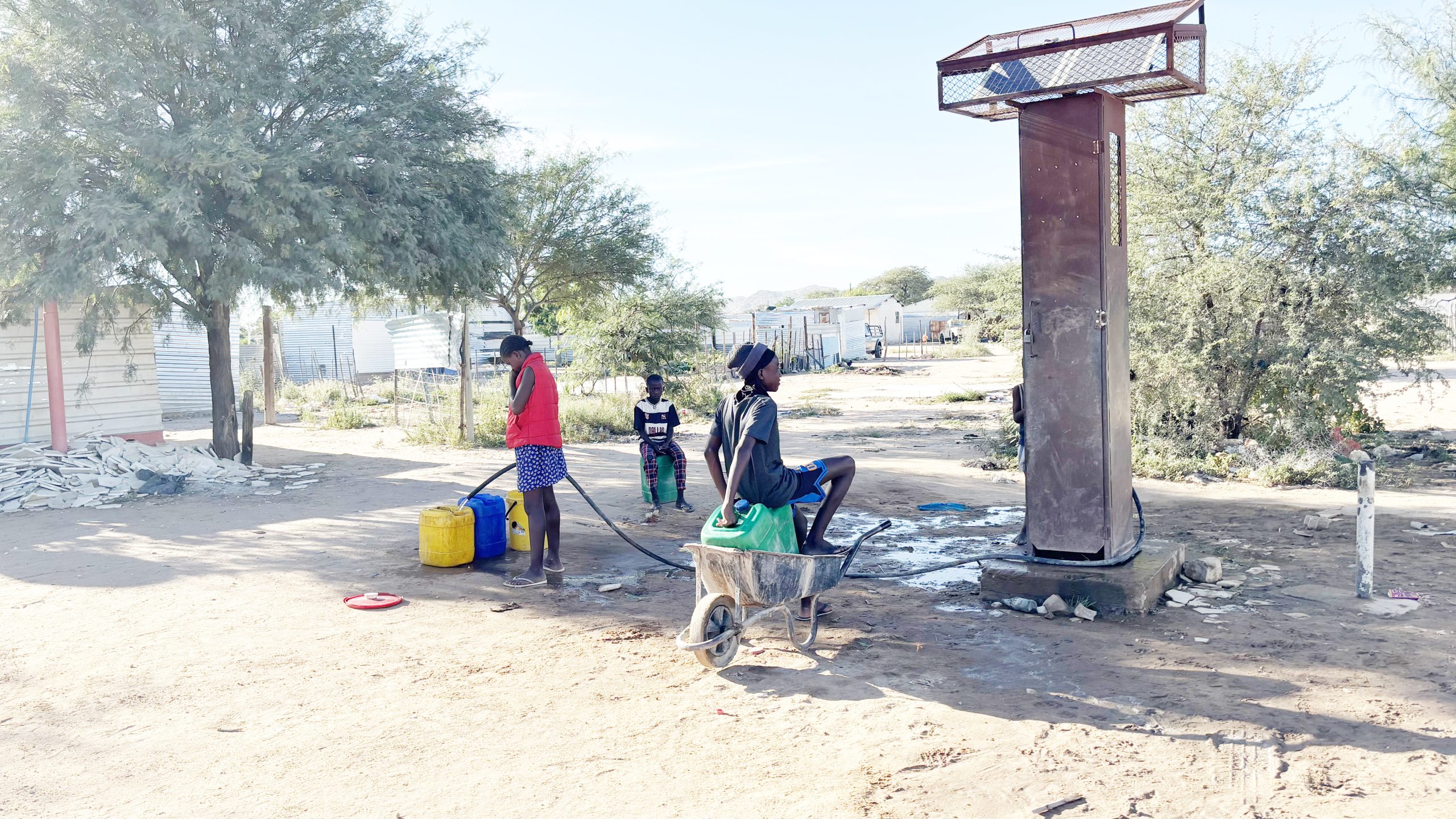
“This has significantly increased pressure on land and housing and resulted in the rapid expansion of informal settlements, which remain one of our biggest challenges as a local authority,” he said.
Two informal areas are currently being prioritised. The Usab informal settlement, commonly known as “UIS”, is nearing formalisation into a proclaimed township.
“That area is quite advanced. We are now at a stage where we are moving towards full formalisation so that residents can have secure tenure and access to proper services,” Enkono said.
As for the second informal settlement, Extensions 7, 8 and 9 (also known as Harambee), are still in the early stages. Initial land servicing and regulation in these areas have commenced to ensure residents have access to basic services while formalisation processes continue.
The town’s housing backlog is estimated at around 1 000 units, reflecting both demand for formal housing and residents awaiting land allocation.
“To address this, we are planning ahead through projects such as Extension 4, which will provide more than 120 erven once funding is secured and once we get the allocation, we plan to commence servicing from July this year. In addition, we are considering establishing a reception area where residents can be temporarily accommodated while township development is ongoing,” the CEO stated.
Residents, however, say the pace of development remains slow. A community member from Harambee, Maria Kambonde, told Nampa that while efforts to formalise the area are welcome, basic services remain inconsistent.
“We appreciate that the council is trying, but we still struggle with sanitation and waste collection. Sometimes it takes too long for services to reach us,” she said.
Another resident, Johannes //Garoëb, said overcrowding continues to be a concern.
“Many people are coming here for work, but there is not enough space or housing. We hope the new extensions will be developed faster,” he said. -Nampa