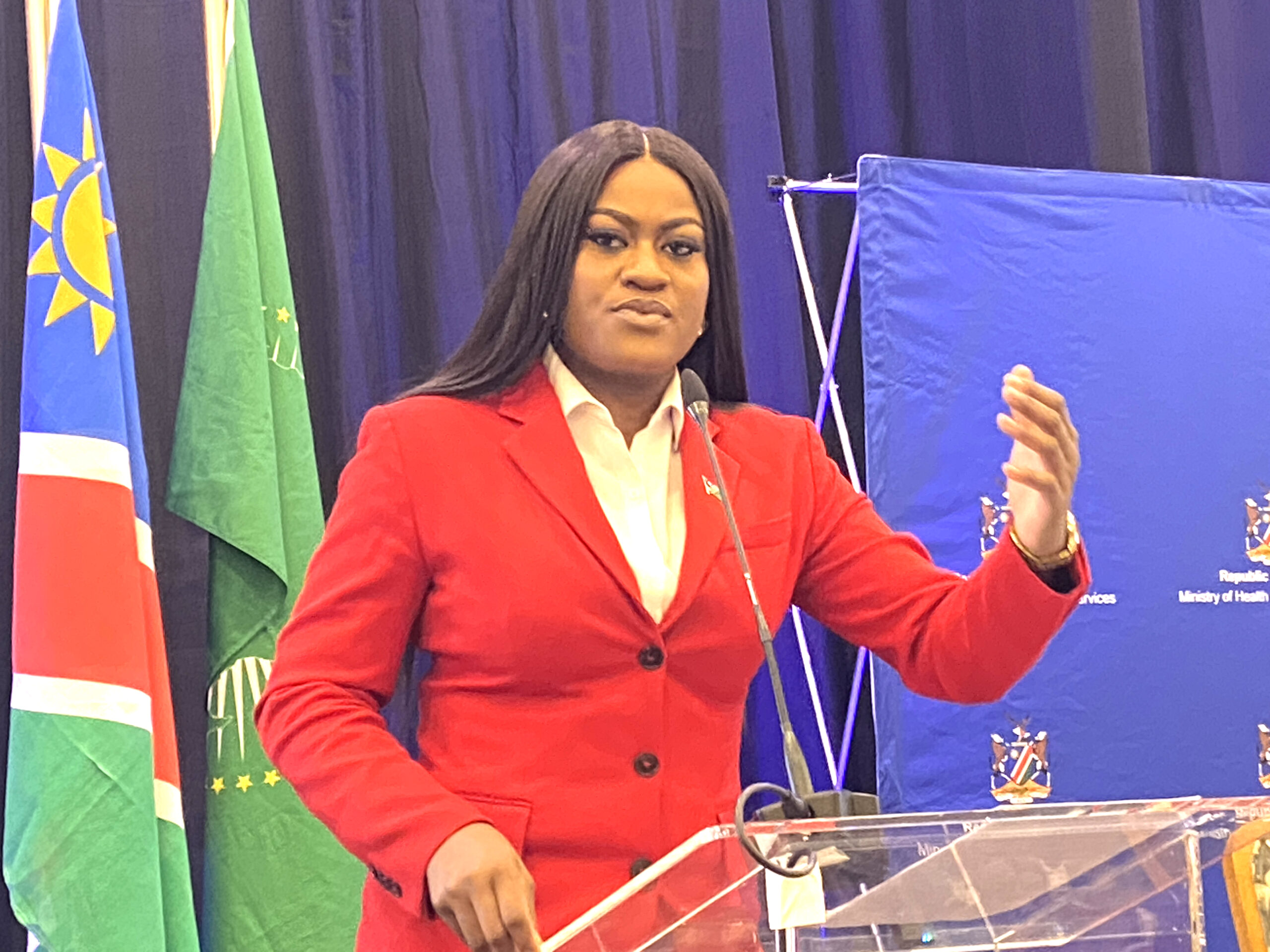

WINDHOEK – The Ministry of Health and Social Services (MOHSS) has intensified the decentralisation of healthcare services by officially handing over several delegated functions to Regional Councils (RCs).
The core functions being decentralised include disease prevention, health promotion, community-based social welfare services, curative services, pharmaceutical stock management at regional facility level, management of capital projects including general maintenance of health facilities, human resource development and management, and information and communication technology services.
During the proceedings held in Windhoek recently, the Minister of Health and Social Services, Dr Esperance Luvindao, noted that the decentralisation of services is key to improving efficiency.
“If we want to operate a bit more efficiently, a little bit more effectively, we want to be a bit more strategic. Namibia is small by population, but size is big, so it’s very vast.
In order to control healthcare and make sure that you give good quality care and services, it would be very strategic for you to break that down into smaller groups,” Luvindao said.
In the presence of chief regional officers, chairpersons of regional councils and other government officials, Luvindao emphasised that one of the determining factors in championing decentralisation is that, with Vision April 2026 approaching, it is crucial for regions to start practising accountability within their respective jurisdictions.
The vision is a health sector transformation initiative by the health ministry aimed at improving the quality, accessibility, and functionality of public healthcare facilities by April 2026.
Also speaking during the event, the Minister of Urban and Rural Development, James Sankwasa, acknowledged that different challenges will be encountered following the delegation of duties.
“As we take on the decentralised functions of the Ministry of Health, we should remain seized with the understanding that such takeover comes with both political and administrative challenges,” Sankwasa said, noting that administrative obstacles are likely to arise in the application of laws at the delegated level.
“I therefore would like to express my heartfelt appreciation to the Honourable Minister and her team for taking a step to delegate functions to the regional councils,” he added.
-Nampa