

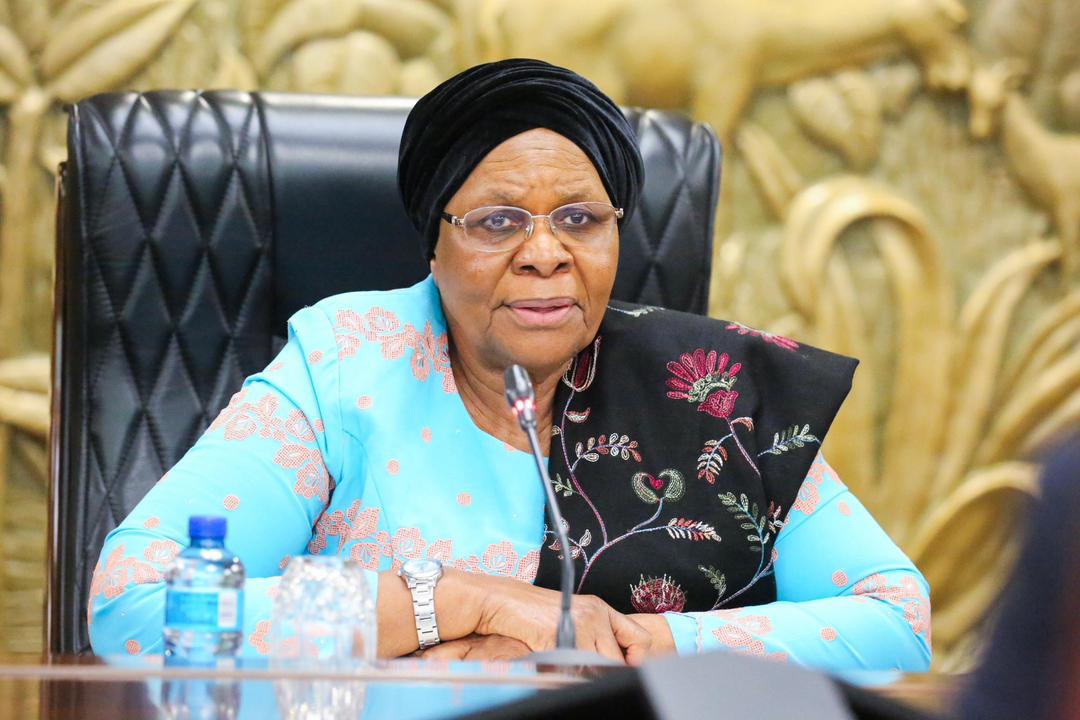

Namibia’s high unemployment, land reform and other socio-economic issues affecting the country dominated Friday’s discussion between President Netumbo Nandi-Ndaitwah and Swanu leaders at State House.
The meeting formed part of the President’s consultations with political parties.
The consultations are meant to promote dialogue and exchange of views between the government and political parties.
“This invitation is based on a commitment I made last year during the State of the Nation Address, where I undertook to create space for consultation and exchange between the president and the political parties in the National Assembly,” she said.
She said some meetings had already taken place last year but were delayed by the regional and local authority election campaigns.
“Some I met last year, but understandably, last year was very busy, as all of us were busy with the regional and local authority election campaign. But it’s good that we are finding time in the first half of the year to do this consultation,” said the head of State.
On his part, Swanu’s represantative in the National Assembly, unionist-turned-politician Evilastus Kaaronda said the discussions were extensive and covered several areas of concern to the public.
“We discussed a thorough issue already, from the economy, unemployment, especially among the youth, land, and the deficiencies within the land distribution or redistribution programme,” he said.
Kaaronda added that the meeting also touched on the manufacturing loan scheme, education and social welfare matters.
He said the recent increase in the old age pension grant was also discussed.
“The old age pension grant, for instance, the N$100 increment, came up as well. And then, of course, the person explained why that movement was made,” he said. According to Kaaronda, the engagement allowed both sides to exchange views on key national issues and government priorities.
“It’s also an opportunity for us to hear from the head of State exactly what it is that is on their menu – developmental, political and social,” he said.
He described the meeting as an important step in strengthening Namibia’s democratic processes.
“The significance of this exchange or consultation speaks to the overall democratic architecture of the country,” he said.
Kaaronda added that engaging directly with the head of State allows political parties to raise concerns affecting citizens.
“Here you have the head of State consulting members of different political parties, representatives of Parliament. I think it is in furtherance of that democratic culture,” he said.
He noted that while there were areas where the two sides agreed, there were also issues where their views differed.
“We were able to spend this long time not just dealing with issues superficially but dealing with all of them in great depth and finding each other. Where we didn’t find each other, we didn’t find each other,” he said.
Kaaronda added that despite political differences, dialogue between parties remains important.
He also highlighted the historical relationship between Swanu and Swapo, saying the two organisations share roots in the liberation struggle.
“You must appreciate the fact that Swanu and Swapo shared ventures during the liberation struggle days and years. So we are bound to see a lot of things in almost the same way,” he said.
However, he stressed that differences on policy issues should not prevent continued engagement.
“We are bound to have critical differences in areas that we feel are important to us without necessarily dropping the need to always consult or talk to each other,” Kaaronda said.