


Namibia should avoid falling for the belief that the old global order of respect for sovereignty, rule of law and UN Charters will protect its economic and social interests.
As an emerging oil and gas powerhouse on the continent, Namibia should take a cue from Venezuela, the country’s ambassador to Namibia, Magaly Henríquez González, has warned.
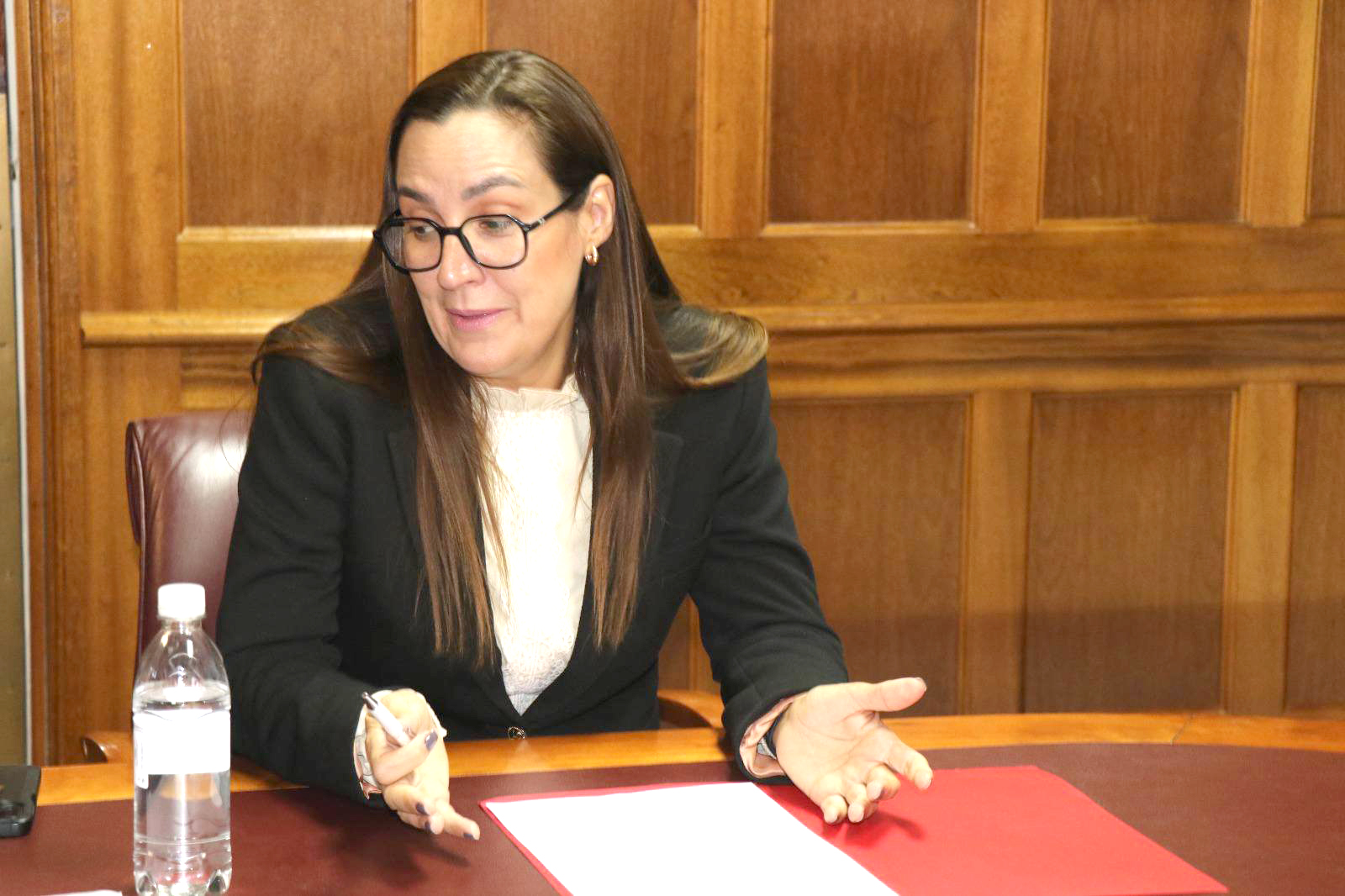
González, paid a courtesy visit to the National Youth Council (NYC) for further strengthening of diplomatic and bilateral ties between the countries. He strongly advised Namibia to draw lessons from Venezuela’s recent political turmoil, which led to the kidnapping of its president, Nicolás Maduro, by the United States (U.S.) armed forces.
During yesterday’s gathering at the NYC, González said that weeks after Maduro’s kidnapping, it has now become clear and evident to the entire world that the U.S. agenda was never about combating narco-terrorism, cocaine trafficking, and possession of destructive devices, but it has “always been about our oil.”
“Even now as we speak, the U.S. does not have any evidence to prosecute our president Maduro, and that is why we continue to demand his immediate release along with our first lady Flores. Just as president Maduro warned the world, everybody can now see that it was always about our vast oil reserves. The U.S. was after our oil and not after the so-called narco-terrorism, cocaine trafficking, and the possession of destructive equipment,” said González.
Namibia, along with hundreds of other countries, rallied behind Maduro following his capture by U.S. military forces, with Namibia calling the U.S. operation a violation of international law and national sovereignty.
In Latin America, Brazil, Colombia, Mexico, Cuba, Chile, and Uruguay have all condemned the raid, urging diplomacy over military intervention.
Beyond the region, key global powers, including Russia, China, and Iran, denounced the action as armed aggression, warning it sets a dangerous precedent for international relations.
Lessons for Namibia
For Namibia, which is a fast-emerging petroleum epicentre in Africa, she cautioned that the country must abandon the idea and believe that the old international order of respect for sovereignty, rule of law and UN treaties will safeguard its interests.
“The old global order is not to be relied upon anymore. I mean, we all saw what happened to my home country and how a freely elected sitting president was abducted by foreign forces on our home soil.
Namibia should perhaps learn some lessons from what occurred in Venezuela.
It [Namibia] should develop mechanisms, policies and strategies that will protect its own interests. You must do everything to protect yourselves and your industries, especially the petroleum sector.
We all saw what happens when countries become too reliant on Western partners,” stated the ambassador.
Namibia has attracted heightened international attention since 2022 after a series of offshore discoveries in the Orange Basin, including Total Energies’ Venus discovery and Galp’s Mopane complex, which have positioned the country as a key emerging oil and gas frontier.
The country is estimated to hold 11 billion barrels of oil and 2.2 trillion cubic feet of natural gas.
By 2024, 28 offshore and 10 onshore exploratory wells had been drilled, along with 15 appraisal wells, involving international oil majors in partnership with the National Petroleum Corporation of Namibia (Namcor).
In addition to these explorations for oil, Namcor, in partnership with the Norwegian company BW Energy, is looking to develop the Kudu Gas Fields in the northern Orange sub-basin, approximately 130 km off the southwest coast of Namibia.
The Kudu Gas reserves have the potential to transform Namibia into a net electricity exporter through gas-to-power production.
Experts have predicted that a combination of oil and gas discoveries means Namibia is poised to become a significant player in the oil and gas industry. If proven commercially viable, the country’s GDP could double by 2040.
Just last week, Patrick Pouyanné, CEO of TotalEnergies, and Paula Amorim, chairman of Galp, held a joint meeting with President Netumbo Nandi- Ndaitwah, where they reiterated their longterm commitment to the country.
The two entities also provided an update on the progress and next steps of their recently announced partnership across key offshore licences in the Orange Basin.
This meeting follows the agreement were TotalEnergies will become the operator of Petroleum Exploration License (PEL) 83, home to the Mopane discoveries, while Galp will enter PEL 56 and PEL 91, home to the Venus discovery.
During this meeting , TotalEnergies and Galp reaffirmed their strong confidence in Namibia as a future oil- and gas-producing country and assured Nandi-Ndaitwah of responsible development of Namibia’s energy resources, nationwide value creation and close cooperation with government institutions.
-ohembapu@nepc.com.na