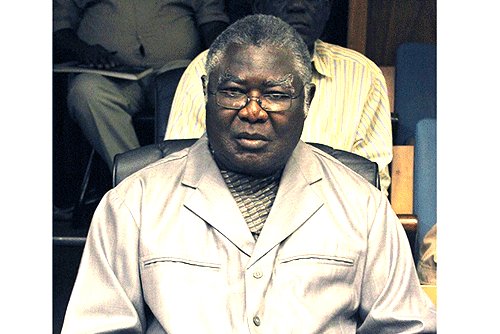

KATIMA MULILO – The United Democratic Party (UDP) has expressed concern over the conditional release of Caprivi high treason convict Geoffrey Mwilima, saying the restrictions imposed undermine the meaning of remission and amount to continued intimidation.
Speaking to New Era yesterday, UDP Elders’ Council member Alfred Kapolota said while the movement acknowledges Mwilima’s release from prison, it does not accept the conditions attached to it, particularly those barring him from associating with UDP members or participating in party activities.
“With us from the UDP side, the release itself is okay; we accept it. But what we didn’t want were conditions. When we petitioned the government, we were clear that our people must be released fully, without conditions,” Kapolota said.
Mwilima, (70) was released from prison in December last year on remission, which allows for the cancellation of a sentence after a convicted person has served a portion of it. The former DTA lawmaker had been incarcerated since August 1999 following the Caprivi secessionist attack and began serving a 15-year sentence in December 2015.
Kapolota argued that imposing restrictions on an elderly and ill man defeats the purpose of remission and prolongs suffering caused by years of incarceration.
“This is an old person, already sickly. He was brutally beaten, and that beating has affected his health. Now he is released, but with fear – fear that anytime they can come and take him again,” he said.
According to Kapolota, the conditions have gone as far as preventing UDP members from even visiting Mwilima.
“Up to today, we have not gone to visit him because he was told he should not mingle with us or talk to us. Even if it is your uncle and you are among UDP, that becomes a violation,” he said.
Kapolota described the restrictions as “house arrest without walls”, saying freedom under such terms is not freedom at all.
“By law, when you say a person is released on remission, it means the chains are removed. But this does not feel like freedom. It is like being under house arrest,” he said.
The UDP elder also raised concern that similar conditions were imposed on other former detainees, including John Samboma, who reportedly served his full sentence but was still subjected to post-release restrictions.
“So you see, intimidation continues. Our people are arrested, and when they are released, conditions are added again. We are worried because it means we are not totally free,” Kapolota said.
UDP maintains that if the government decides to release detainees, it must do so unconditionally, especially given their age, health conditions, and the length of time already spent in custody.
“There should not be conditions saying when you do this, we will do that. That is what we don’t want for our people,” Kapolota stressed.
– anakale@nepc.com.na