


Namibia has called on Chinese investors to move beyond buying raw materials and instead invest in local industries.
International relations minister Selma Ashipala-Musavyi made the appeal during a Namibia-Shenzhen Networking Cocktail Reception on Monday.
This is as the government seeks to reduce a growing trade deficit by promoting value addition, industrialisation and job creation. She said Namibia continues to export products such as uranium, copper and other minerals to China while importing machinery, vehicles, textiles and other manufactured goods.
This, she noted, has resulted in a persistent trade deficit.
“We still experience a negative trade deficit with China and many other countries. This deficit can only be closed if Namibia and her cooperation, as well as trading partners, add value to its resources. The deficit can only be closed if Namibia and her partners add value to its resources,” she said. China is one of Namibia’s top trading partners, ranking second in imports and third in exports.
Trade between the two countries increased from about US$1.2 billion in 2019 to US$1.44 billion in 2024, reflecting steady growth. Despite this growth, the minister said Namibia wants a shift towards a more balanced and mutually beneficial relationship.
She urged Chinese companies to invest in processing industries within Namibia, particularly in mining, agriculture and manufacturing, instead of exporting raw materials for processing abroad.
Ashipala-Musavyi said Namibia is rich in natural resources, including lithium, cobalt, copper and rare earth minerals, which are critical for modern technologies such as electric vehicle batteries.
However, she stressed that exporting these resources without local processing limits economic benefits.
“We seek investments in minerals processing,” she said, adding that Namibia aims to become part of the global value chain through local production.
The minister also highlighted new opportunities in oil and gas following recent discoveries, as well as in renewable energy, including green hydrogen projects.
She said Namibia’s natural conditions, such as abundant sunlight and wind, position the country as a potential energy hub. In addition to mining and energy, Ashipala-Musavyi pointed to agriculture and fisheries as key sectors for investment.
She said opportunities exist in meat processing, fish processing, fertiliser production and other value-added activities. Namibia has already signed an agreement with China to export goat and mutton products and is in discussions to expand exports to include grapes and aquatic products.
The minister further outlined Namibia’s ambition to become a manufacturing hub for Southern Africa, citing its strategic location and access to regional and international markets.
She said infrastructure such as the ports of Walvis Bay and Lüderitz, as well as trade agreements like the African Continental Free Trade Area (AfCFTA), provide opportunities for companies to reach wider markets from Namibia.
“Operating from Namibia provides seamless, wider market access – not just to our nation, but to the entire Southern Africa region and the continent at large,” she said. To attract investment, Namibia is finalising amendments to its foreign investment laws and developing Special Economic Zones aimed at supporting manufacturing, processing and value addition. Ashipala-Musavyi said Namibia offers a stable political environment, sound economic policies and a reliable labour system, making it an attractive destination for investors.
She also encouraged business leaders attending the event to translate discussions into concrete projects with clear timelines.
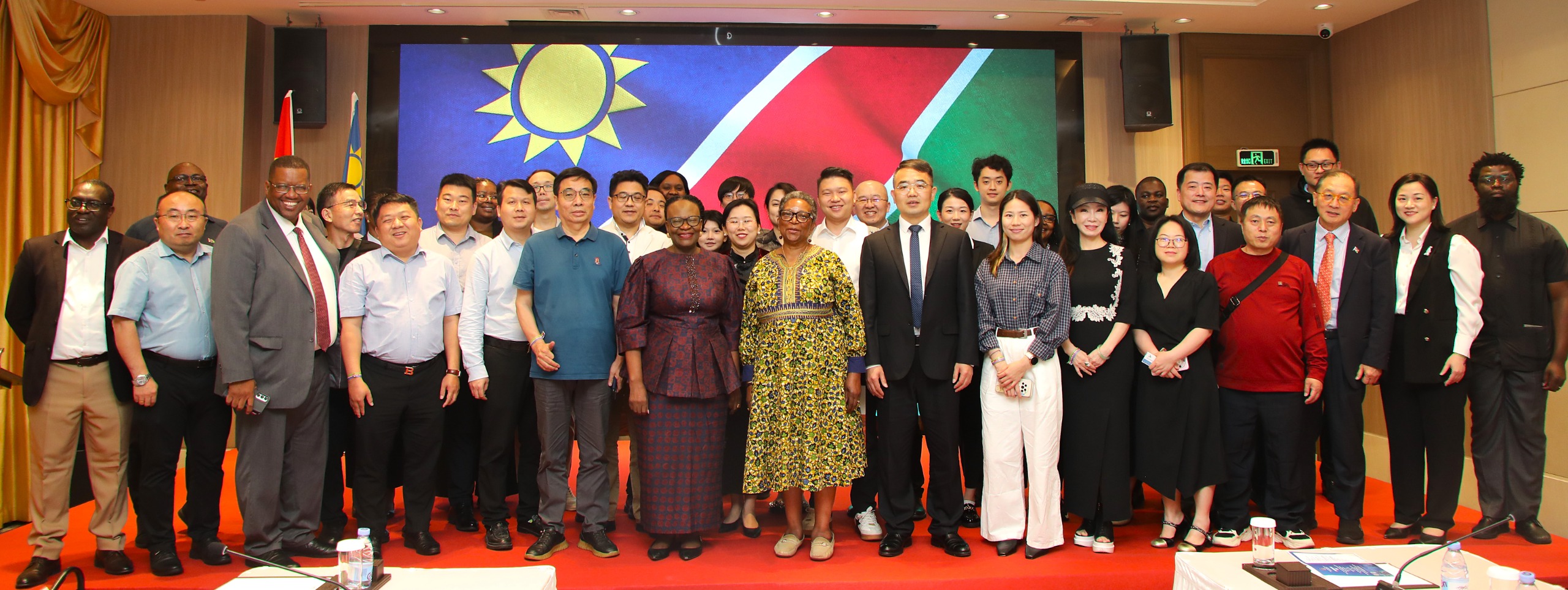
The networking reception brought together government officials and private sector representatives from both Namibia and China to explore trade and investment opportunities.
While acknowledging the strong historical ties between the two countries, which date back to Namibia’s liberation struggle, the minister said the focus must now shift to economic transformation.
She said Namibia is ready to deepen its partnership with China but stressed that future cooperation should deliver tangible benefits, including job creation and improved living standards.
“We are ready to strengthen and increase the business we do with China,” she said.