


Loide Jason, Dalene Kooper, Victoria Immanuel, Otniel Hembapu, Eveline de Klerk
President Netumbo Nandi-Ndaitwah reaffirmed Namibia’s unwavering commitment to seeking recognition, justice, and reparations for the atrocities committed during the genocide against the Nama and Ovaherero.
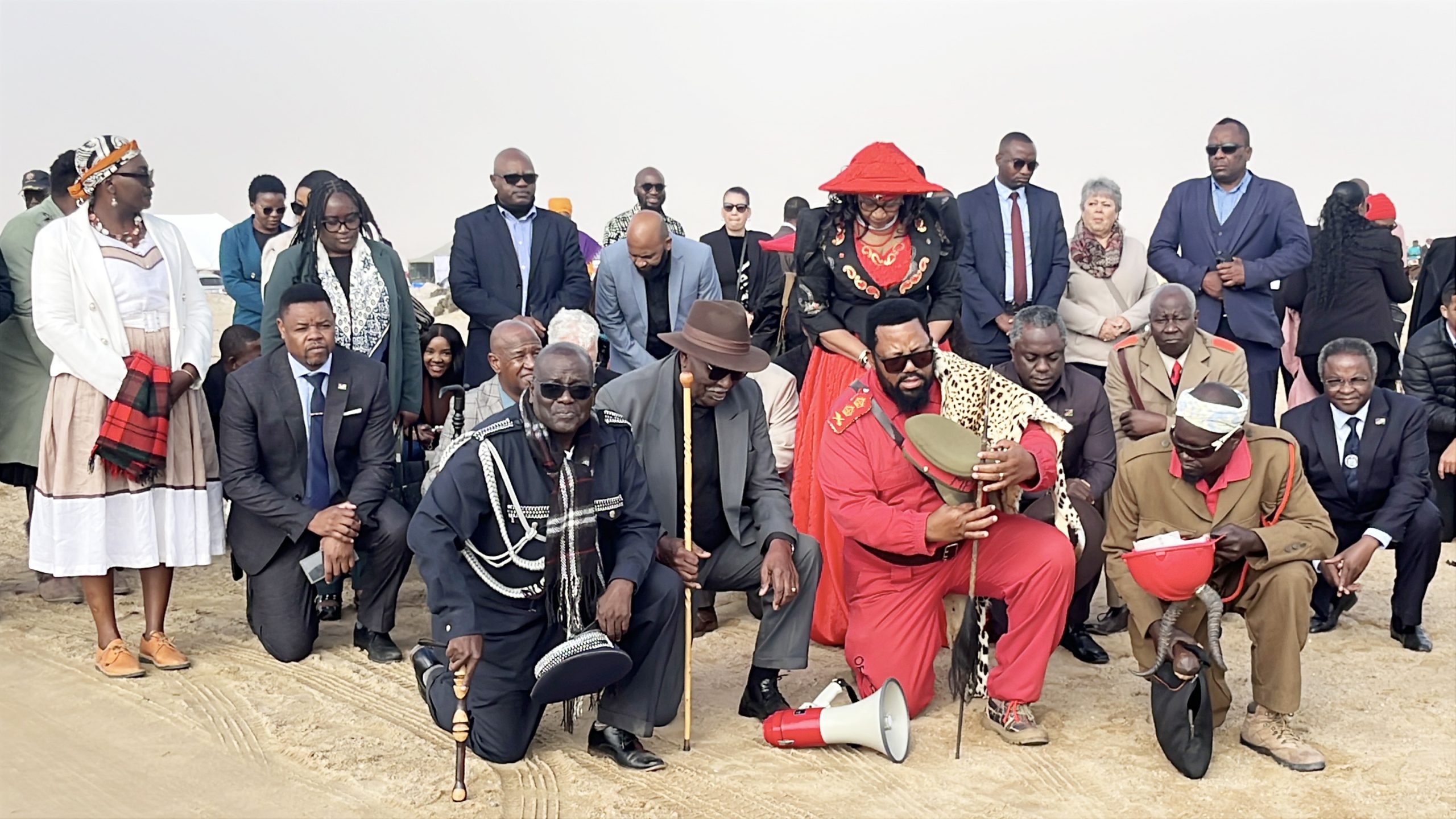
As Namibia marked the second national Genocide Remembrance Day yesterday, the president emphasised that the pain inflicted by these events continues to resonate across generations.
Nandi-Ndaitwah highlighted Namibia’s dedication to ensuring that the genocide receives the same recognition and moral attention as similar crimes worldwide.
“The pain and impact of the genocide continue to be felt generations later. As a nation, we therefore remain committed to ensuring that the atrocities committed against the Ovaherero and Nama people receive the same recognition, historical acknowledgement, and moral attention accorded to genocides and crimes against humanity committed elsewhere in the world,” she said.
She also reaffirmed ongoing engagement with the German government, underscoring Namibia’s resolve to seek a just resolution regarding the genocide, including formal apologies and reparations.
“Namibia will continue engaging the German government until these issues are resolved in a just and meaningful manner,” she stated.
Nandi-Ndaitwah called on Namibians to continue using the occasion as a unifying moment, honouring the victims of the 1904-1908 genocide and preserving the truth of these dark chapters in history.
“As Namibians commemorate Genocide Remembrance Day today, we pause to reflect on one of the darkest chapters in our nation’s history and honour the memory of the thousands of innocent Ovaherero and Nama lives lost during the 1904–1908 genocide,” she said. The Head of State also paused to pay tribute to those who resisted colonial oppression, noting that their courage and resistance played a vital role in inspiring Namibia’s liberation struggle.
“The genocide formed part of the broader history that inspired future generations during Namibia’s liberation struggle. The events of that period were not isolated from the broader story of our nation. They formed part of the foundation upon which the spirit of resistance and national consciousness was built, ultimately inspiring future generations in the long struggle for freedom and independence,” she added. She emphasised that the day is significant not only for affected communities but for all Namibians, as it serves as a reminder of the sacrifices made for the country’s independence and national unity. “It is a day of national remembrance, reflection, and learning, particularly for the younger generation, who must continue to understand the painful history that shaped our country and the sacrifices that were made for the Namibia we know today,” she highlighted.
Ohangwena remembers
At the Eenhana Memorial Shrine in the Ohangwena region, Vice President Lucia Witbooi led activities of the Genocide Remembrance Day commemoration, where she urged Namibians to take ownership of documenting their history.
She warned that failure to preserve their stories could lead to the loss or distortion of the truth, saying stories on genocide must continue to be taught in universities, preserved in museums and recorded in publications both in Namibia and internationally.
“As Namibians, we must continue to tell our own stories through our own voices and lived experiences, rather than depend solely on others to narrate our history on our behalf,” she stated. Witbooi highlighted the crucial role of local creatives, filmmakers, musicians, writers and storytellers in preserving the memory of the genocide, which saw the killing of over 100,000 Ovaherero and Nama between 1904 and 1908.
“Their pain became our purpose. Their resistance became our foundation. Their sacrifice became the freedom of the Republic of Namibia. Let this Day also be a call to action for the youth of our nation to take ownership of Namibia’s economic and social development by striving for educational excellence, innovation, and economic empowerment,” she said.
The 800 Ondonga soldiers
The commemoration also included reflection on the historical involvement of the Ondonga community during the Oshikoto region’s leg of the Genocide Remembrance Day held at Ompampa yaNangolo dhAmutenya in the Olukonda constituency.
There, Ondonga King Fillemon Shuumbwa Nangolo narrated how the Ondonga community played an active role in the Ovaherero-Nama war against the Germans when they [Aandonga] deployed approximately 800 soldiers to support the conflict.
“The Ondonga community was also affected by the genocide, following decisions taken in the broader conflict period when late Omukwaniilwa Kambonde KaMpingana played a significant role in ensuring that 800 soldiers were assigned to support the war effort. Under the leadership and command of the late King KaMpingana, this community assisted the two tribes who were under attack,” he pointed out.
Nangolo stressed the importance of shared history and acts of compassion, citing a case where a Herero family was sheltered by the Ondonga community during the violence. He warned against tribal divisions, urging unity and understanding among Namibians.
“Onamambili village, located within this jurisdiction, once provided refuge to a Herero family fleeing the violence, a gesture which helped preserve lives and contributed to the survival of members of the affected community. Such acts of humanity should be remembered alongside the painful history of war,” he said. Meanwhile, Oshikoto governor Sacky Kathindi echoed this sentiment, praising the resilience and unity that were shown by the men and women of the country during the rough times of colonial brutality.
“Despite the cruelty of colonial oppression, Namibians demonstrated resilience and refused to surrender their identity and hope for freedom,” he remarked.
Ozombuzovindimba
At Ozombuzovindimba in Omaheke’s Otjinene constituency, Prime Minister Elijah Ngurare opened his address with the song ‘Namibia, let’s unite’, which he said calls for unity of purpose on such a sacred day in the country’s history.
Ngurare was joined by Omaheke governor Pijoo Nganate, Kavango East governor Hamunyera Hambyuka and representatives of Khomas governor Sam Shafiishuna Nujoma Jr as well as the regional leadership at Ozombuzovindimba Memorial Site.
“It has not been easy to reach the stage where we are today. We should always remember that 28 May could not have been declared a public holiday had it not been for our collective resolve and efforts to address this genocidal chapter in our history. Remembrance Day should, therefore, be dedicated to the unity of the Namibian people as we soldier on towards our shared destiny as a nation,” appealed Ngurare.
He quoted President Nandi-Ndaitwah’s Genocide Remembrance Day inaugural address last year, where she said, ‘We may all be aware that consensus does not mean unanimity.’ Accordingly, I am calling on our people, in particular the Ovaherero and Nama communities, to understand the situation and to say, ‘finally, we have a day in a year that unites us as a nation to remember the victims of the 1904-1908 genocide.’ ‘A day on which, as individuals and communities, we can come together in any form and at any place to remember that dark chapter of our history’,” said the premier.
Ngurare further underscored that the Genocide Remembrance Day has, therefore, entered Namibia’s calendar of public holidays to symbolise and strengthen the unity of the people.
“The place where we gather here today is a place of major historic significance in our country. Ozombuzovindimba occupies a permanent place in the history of Namibia because it was here, on the 2nd of October 1904, that General Lothar von Trotha issued the first extermination order against the Ovaherero people. On the 22nd of April 1905, the same brutal Von Trotha issued an extermination order against the Nama people. The order was explicit in its intention,” he said.
Ghost of Shark Island
At Lüderitz, the traditional authority of the Aman people joined the rest of the nation in commemorating the Genocide Remembrance Day, where they expressed support for development initiatives, including the planned harbour expansion, saying progress and development must, however, respect the memory of genocide victims.
Chief of the !Aman Traditional Authority Johannes Frederick stated that Shark Island, the site of many atrocities, remains a sacred ground and a symbol of suffering.
He said the day serves as a reminder of the killings and inhumanity that took place, while also providing an opportunity for unity, dignity and hope.
“We honour the sacrifices made by our ancestors for this land, for our freedom, for our future, and for the generations that would come after them. This is not about excluding any group, not the Ovaherero, Damara, San, Nama, or any other affected group. Rather, it is about ensuring that all descendants and Namibians walk this journey together in mutual respect and unity,” said the chief.
At the same time, Frederick cautioned that the future of Shark Island should be approached with care, consultation and inclusivity involving all affected communities.
“We therefore remain in agreement with the harbour expansion and the broader development of Lüderitz, while recognising the positive impact it can have on the town, the ||Kharas region and Namibia as a whole. Development is important, and we support progress that benefits our people and future generations.”
The chief also appealed to churches to continue playing a role in healing, reconciliation and moral guidance, saying nation-building requires collective effort.
“We encourage our churches to continue standing in unity with government, traditional leaders, and communities as we work together toward healing, justice, peace, and national unity. The commemoration at Shark Island underscores the importance of acknowledging the painful history while fostering hope, unity, and progress,” he said.
Erongo
Furthermore, the situation was no different in Swakopmund, where chief Manasse Zeraeua of the Zeraeua Traditional Authority cautioned both Namibia and Germany against excluding affected communities from ongoing genocide negotiations, warning that any settlement reached without their direct participation would not endure.
Zeraeua said agreements imposed without the involvement of those most affected by the 1904–1908 genocide would lack legitimacy and risk collapse in the long term. He was speaking at the genocide memorial site in Swakopmund, where hundreds of residents and descendants gathered to honour those killed during the genocide.
He said affected communities, including the Ovaherero, Nama and Ovambanderu, had not been given meaningful space in the Joint Declaration (JD) negotiations between Namibia and Germany.
“We have been calling for their inclusion in any negotiations because history has shown that once we impose a settlement on people who are not representing themselves, that settlement is bound to fail one time or the other,” he said.
Zeraeua said he was previously part of the government delegation involved in genocide discussions but later withdrew after concluding that the process would not serve the interests of affected communities.
He is now part of the Okandjoze Chiefs’ Assembly on Genocide, a grouping of eight traditional authorities representing Ovaherero, Nama and Ovambanderu. Zeraeua said the grouping supports those opposing the JD and is calling for a national dialogue and a national conference instead.
“We stand with those opposing the JeD and calling for a national dialogue, a national conference,” he said. Also speaking at the commemoration is former parliamentarian Usutuaije Maamberua, who is largely credited for the existence of Genocide Remembrance Day through a motion he tabled in the National Assembly in 2016.
“We propose replacing the current bilateral model with a formal trilateral negotiation framework involving Germany, Namibia, and affected communities as equal partners,” Maamberua said.