


Lylie Joel
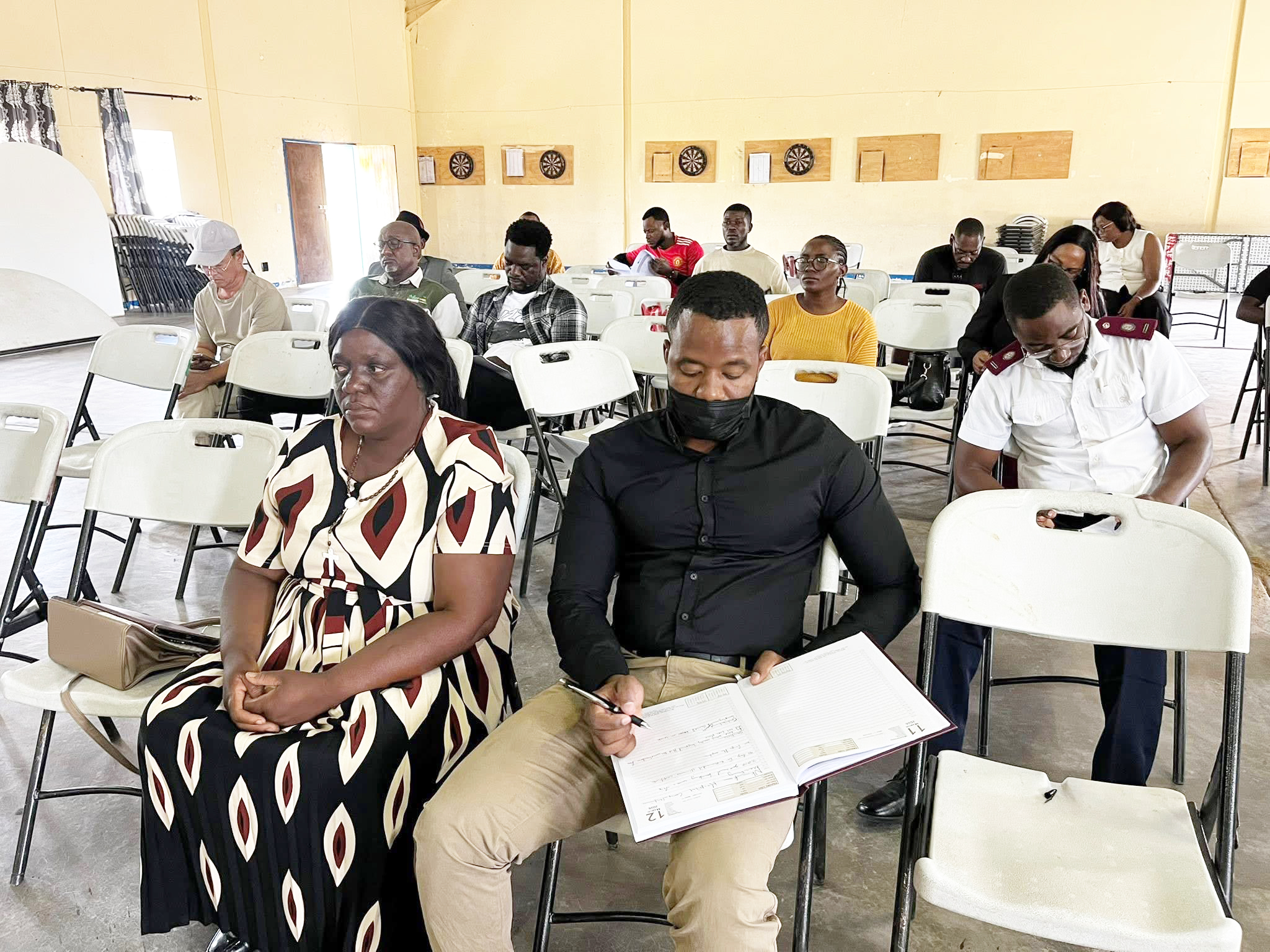
NKURENKURU – Consultants from KPM Environmental Consulting last week held an Environmental Impact Assessment (EIA) consultation for the proposed Nkurenkuru District Hospital, engaging residents, community leaders and stakeholders on the project scope and potential impacts.
KPM’s senior environmental assessment practitioner, Emmanuel Hamadziripi, said the process is a statutory requirement designed to ensure the hospital is developed responsibly.
“We are here to meet with stakeholders as part of the environmental impact assessment process to make sure this development takes place in a more sustainable manner, and how best we can mitigate against any negative environmental impact,” Hamadziripi said, citing the Environmental Management Act of 2007 and constitutional obligations to protect the environment.
The Nankudu District Hospital’s acting senior medical officer, Clementine Kabono, noted that current referrals to Rundu Intermediate Hospital, roughly 130 kilometres away, place patients at risk.
“We have lost a lot of lives. This hospital will have so much impact,” she said. While the plan refers to the new hospital as a district hospital, Kabono advised that it should function at intermediate or regional level to be “self-reliant”, with full specialist services to avoid long-distance referrals.
“We need it to be equipped to the capacity of an intermediate hospital or a regional hospital,” she said, adding that the project has stalled since its 2014 launch, despite fenced land donated by the town council.
Nkurenkuru local authority councillor Gabriel Tenga called for a modern, well-equipped facility with reliable water supply, effective waste systems and essential utilities, and questioned the choice of a district-level hospital given the presence of Nankudu District Hospital.
He urged government to deliver “a proper hospital up to standard”, and pressed for accountability over a decade of delay after free land was allocated.
“We are very, very disappointed. Up to now, it’s not developed,” he said, adding that community input must be respected and reflected in decisions. The hospital aligns with the Ministry of Health and Social Services Roadmap for 2030 to decentralise care, with Kavango West prioritised to finally receive a hospital more than a decade after the initial announcement.
Tenga further advocated that at least 70% of staff be recruited from the Kavango West region to strengthen local capacity.
-Nampa