

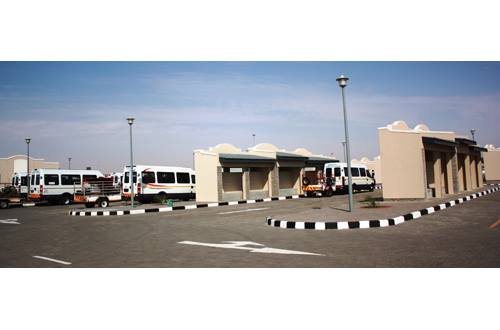

OSHAKATI – The Oshakati Town Council has directed all long-distance transport service providers to load and offload passengers only at the bus terminal at the Oshakati Open Market, commonly known as Omatala.
The directive, issued in collaboration with the Road Transportation Board of Namibia, comes after years of the terminal being largely ignored by operators, who prefer informal loading points along the town’s roadsides.
Town spokesperson Martin Kapuka said Omatala is the official facility for all long-distance public transport in Oshakati.
“The Oshakati Open Market bus terminal is the official facility designated for all long-distance buses and minibuses to load and offload passengers. Operators are therefore required to make use of this facility,” Kapuka said.
The move comes after growing congestion in areas like Okatana Service Station, where operators frequently pick up passengers along the roadside. This has created disorder and safety concerns.
Due to the daily chaos at informal loading points, passengers risk losing their belongings as drivers compete for customers and fights occasionally break out between operators, the town has noted.
Some drivers, particularly those operating smaller vehicles such as seven-seaters, expressed concerns that Omatala is unsuitable for them due to limited space and designed mainly for larger buses.
“These smaller vehicles do the same routes, but it will be difficult to compete if we are all crowded in one area,” said one operator.
Another driver, Soini Hauwanga, noted that the terminal is less visible than their current operating point, which could affect passenger numbers.
“We are worried because the place is hidden, and our customers are used to finding us here,” he said.
The Oshakati Open Market complex was officially inaugurated, in March 2016 by the late president Hage Geingob. The facility was designed to serve as a central hub for traders and public transport in the town.
However, drivers only operated from the terminal for a short period after its inauguration before gradually moving back to informal roadside loading points around Oshakati. Over time, many transport operators settled along busy areas such as Okatana Service Station, where they continued picking up passengers despite the presence of the designated terminal. Kapuka acknowledged that space constraints exist, but emphasised that all operators must comply to maintain order and safety. He warned that failure to adhere to the directive will result in extra measures, including fines and tickets, once the operation officially begins.
The council highlighted that centralising transport operations at the Open Market terminal will help reduce roadside congestion and traffic hazards, improve safety for both passengers and drivers, ensure that passengers’ belongings are more secure, and create a more orderly and professional public transport system.
-taimihaihambo2000@gmail.com