


Namibia is a youthful nation brimming with ambition, energy, and untapped potential. More than half our population is under 35. On paper, this demographic should be a powerful economic advantage. In practice, however, it has become one of our greatest social challenges.Across the country, young people wake each morning with qualifications in hand and uncertainty in their hearts.
They hold diplomas, degrees, and certificates earned through sacrifice, their own and their families’. They attend interviews, submit applications, and wait for responses that rarely come.This is the silent struggle of Namibian youth.According to the Namibia Statistics Agency, youth unemployment remains alarmingly high. While numbers fluctuate, the lived experience behind those statistics tells a deeper story. Each percentage point represents a young person navigating rejection, financial strain, and emotional pressure.Unemployment is often discussed as an economic issue. But for young people, it is far more than that. It is about dignity. It is about identity. It is about purpose.In cities like Windhoek and towns across the regions, it is common to see young graduates lining up outside ministries, municipalities, and private companies. Some wear borrowed suits.
Others hold brown envelopes, carefully containing their documents. All carry the same thing: hope.The queue is not just physical; it is digital. It lives in online portals, email inboxes, and recruitment databases. Applications are submitted in silence. Weeks pass.
Months passed. Eventually, hope grows quieter. Yet despite rejection, youth continue to try.What we rarely talk about is the emotional toll of prolonged unemployment. A graduate who returns home without a job faces not only financial hardship but also expectations. Parents who invested everything expect support. Younger siblings look up to them as examples. Friends who have secured employment unintentionally become reminders of stagnation.
Young people report increased anxiety, low self-esteem, and feelings of invisibility. Unemployment is not laziness. It is not a lack of ambition. It is not a moral failure. It is systemic.Education in Namibia has long been presented as the pathway to success. But what happens when that degree does not translate into employment?
We are witnessing a growing mismatch between education and the labour market. The result is frustration on both sides: employers claim graduates lack practical skills, while graduates insist they are never given the chance to gain experience.Across the country, young people have created alternative paths. They sell airtime, repair phones, run catering businesses, manage social media pages for small companies, and trade goods in informal markets. Hustling is resilience in action.
When formal employment fails, young people create micro-economies.However, survival entrepreneurship is not the same as sustainable economic transformation. Without access to capital, mentorship, and policy support, many youth businesses remain trapped at the subsistence level.The struggle is not identical for everyone. Young women often face additional burdens, such as caregiving responsibilities and limited access to finance. Young men face societal expectations to be providers, which intensifies pressure when they are unemployed.
Unemployment influences behaviour. When opportunities remain out of reach for years, desperation can blur moral boundaries. Prevention lies in investment in skills, mentorship, mental health support, and accessible entrepreneurship funding.Technology has reshaped how young Namibians navigate their reality. Social media platforms have become spaces of expression, activism, and business. For many, digital platforms are the only arenas where they feel heard.Addressing youth unemployment requires coordinated effort: aligning education with labour market needs, expanding vocational training, providing paid internships, simplifying access to funding, investing in rural development, and integrating mental health services into youth programs.Namibia’s youth are resilient, innovative, and adaptable. What they lack is not ambition, but structural opportunity.Namibia’s greatest natural resource is not its minerals or land. It is its young people. If we invest in them intentionally, we build a future defined by innovation, stability, and shared prosperity.The youth are ready. The question remains: Is the nation ready to meet them halfway?
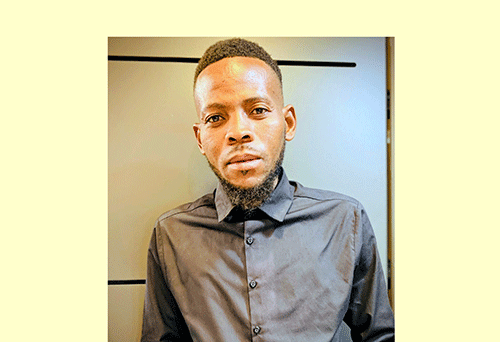
*Erastus Andreas writes in his personal capacity.