


Stigma towards people with mental illness and their families remains a problem notwithstanding advances in treatment and care methods. (Mascayano, Armijo& Yang 2015; McGinty et al. 2015). According to American Psychiatric Association [APA)], (2022). more than half of people with mental illness don’t receive help for their disorders. Often, people avoid or delay seeking treatment due to concerns about being treated differently or fear of losing their jobs and livelihood.
That’s because stigma, prejudice and discrimination against people with mental illness are still very much a problem. Hence, it is imperative to note that Namibia is not exceptional. Challenging stigma associated with mental illness is crucial. Learning the facts about mental illness and sharing them with family, friends, work colleagues and classmates is vital in challenging stigma. Moreover, do not judge, label or discriminate when you meet people with mental illness. Likewise, treat all people with respect and dignity.
Furthermore, getting to know people with personal experiences of mental illness so you learn to see them for the person they are rather than their illness. Remember, that other people’s judgments often come from a lack of understanding rather than anything else. These judgements are made before they get to know you, so do not believe that their views have anything to do with you personally.
In addition, saying something positive when you hear people around you making stereotypical or in accurate comments about mental illness. Also, sharing your own experience of mental illness (if you have experienced it). This will help dissipate the myth and encourage others to do the same. Mental illness is not something shameful that needs to be hidden (Mayo Clinic,2015).Here are some ways you can deal with stigma; Get the mental health treatment you need, try not to let the fear of being labelled with mental illness stop you from getting help from a psychiatrist or medical doctor. Besides, be honest about treatment in normalizing mental health treatment just like other health care treatment. Do not hide away, many people with mental illness want to isolate themselves from the world. Reaching out to people you trust such as family, friends, coaches, traditional and religious leaders, including seeking professional help from a psychologist or a social worker can help you get the support you need. Similarly, connect with others by joining a mental health support group available in your community that can help you deal with your feelings of isolation and make you realize that you are not alone in your feelings and experiences. It is also very imperative to note that you are not your illness. Do not define yourself by your illness as other people might see you. Instead of saying “I am Bipolar” rather say “I have Bipolar” there’s is power in language. Above all, choose empowerment over shame by saying: “I fight stigma by choosing to live an empowered life. To me, that means owning my life and my story and refusing to allow others to dictate how I view myself or how I feel about myself”-Val Fletcher (APA, 2022; Mayo Clinic, 2015).
Therefore, it is important to note that everyone has a role to play in creating a mentally healthy community, one that is inclusive, rejects discrimination and supports recovery. You can help challenge stigma by speaking up when you hear people around you make negative or wrong comments about mental illness. In addition, mental illness is not a sign of weakness and is rarely something you can deal with on your own. Talking about your mental health issues with health care professionals will help you on your road to recovery. Continuously, remember seeking help is strength, not weakness!
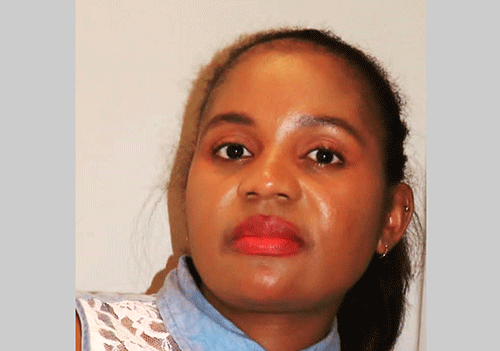
*Mwenda Mubuyaeta-Sanandwa is a GBV specialist (MA criminology and social policy), social worker (BA (Hons) social work) and Community Counsellor holding a Diploma in HIV/AIDS management and counselling with over 14 years working experience in a helping profession.