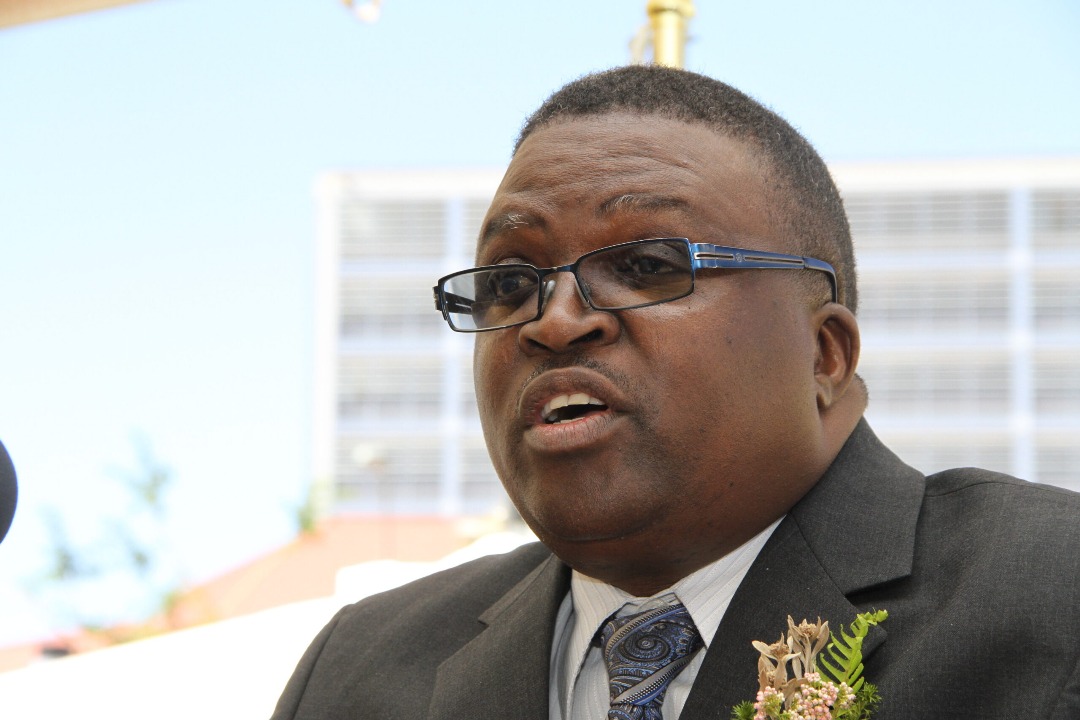

Lahja Nashuuta
The Oshana Regional Council has received an adverse audit opinion for the 2022/2023 financial year due to irregularities, misrepresentations, and non-compliance with International Public Sector Accounting Standards (IPSAS).
According to the report signed off by the Auditor-General Junias Kandjeke, the adverse opinion was issued primarily because of unclear investments in a joint venture and other accounting discrepancies that compromised the accuracy of the council’s financial statements.
“An adverse audit opinion is being expressed due to, among others, unclear investments in a joint venture,” Kandjeke noted in the report.
Unclear Investment in Joint Venture
The audit revealed that the council holds shares in the Regional Council Electricity Company (RCEC), which in turn owns shares in NORED (Pty) Ltd. The council disclosed an investment amounting to N$5 million in RCEC; however, there were no supporting documents to substantiate the value of this investment.
According to the auditor this raised concerns that the investment may be misstated in the council’s financial statements.
The report further highlighted discrepancies between the provision for doubtful debts recorded in the financial statements and that calculated through the auditor’s age analysis.
A difference of N$885 737 (2023) and N$1,143 595 (2022) was identified, indicating that the provision for doubtful debts was understated, while trade receivables were overstated.
Although the council provides for debts older than 90 days, the auditor’s recoverability tests showed that the provision was inadequate and understated by N$810,084 (2023) and N$276,951 (2022).
The audit also found inconsistencies in the reconciliation of net cash flow from operating activities to the surplus or deficit, as required by IPSAS 2 (paragraph 29).
The council included balancing figures of N$627 575 (2023) and (N$160 075) (2022), meaning the reconciliation did not fully align with IPSAS 2 standards.
The council was also faulted for failing to recognise a provision for the rehabilitation and land restoration of its Eheke dumpsite after its useful life, contrary to IPSAS 19 and the Environmental Management Act (Act No. 7 of 2007).
Section 3(2)(j) of the Act obliges any entity that causes environmental damage to cover the costs of rehabilitation and pollution prevention.
The Auditor-General emphasised that this legal obligation should have been reflected in the council’s financial statements.
Another major non-compliance issue was the failure to disclose information on key management personnel, as required by IPSAS 20 – Related Party Disclosures.
The standard mandates entities to disclose the aggregate remuneration of key management personnel, as well as any benefits or loans extended to them or their close family members.
Kandjeke warned that the absence of such disclosures reduces financial transparency and creates a risk of non-compliance with international accounting standards.
The report also found that the council failed to submit Value Added Tax (VAT) returns to the Namibia Revenue Agency (NamRA) on time for several months specifically during the 2021/2022 financial year.
“This contravened Section 24(1) of the Value-Added Tax Act (Act No. 10 of 2000) and resulted in a penalty of N$5,000 for late submission,” the report reads.
Additionally, the council’s financial statements for the years ending 31 March 2022 and 31 March 2023 were not submitted on time to the Auditor-General as required by Section 40(1) of the Regional Councils Act (Act No. 22 of 1992).
Instead, they were submitted on 8 April 2024 and 4 December 2024, respectively both well after the statutory deadline.
Oshana Audit