

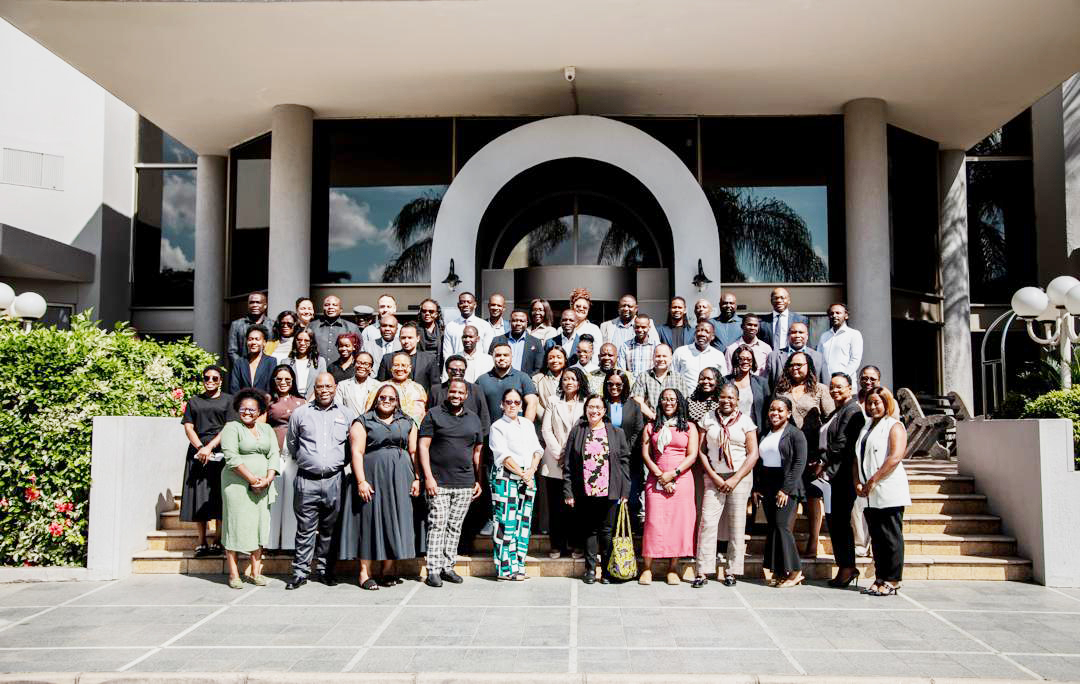

International relations minister Selma Ashipala-Musavyi has called on Namibia’s former ambassadors to share their international experience and wisdom with the new crop of diplomats.
Addressing a meeting of the Namibia Association of Former Ambassadors (NAFA) in Windhoek last week, Ashipala-Musavyi said the current global environment requires Namibia to urgently draw on the experience of retired diplomats to safeguard its sovereignty and advance economic interests. “We live in a world of changing geopolitical dynamics. International law is being blatantly violated by some. The UN Charter, which is meant to protect especially small states, is being disregarded,” she said.
She warned that sovereignty and territorial integrity are increasingly under threat as global peace and security challenges deepen.
“We are witnessing unprecedented global tension and uncertainty. Global alliances are intensively shifting, and never before have Africa’s natural resources been so much in demand,” Ashipala-Musavyi said.
The minister said this global situation makes the role of NAFA more important than ever, describing the body as a critical think tank for government.
“This meeting comes at the most opportune time. We need to combine your experience with the youthful energy of the ministry staff to help navigate Namibia through the current geopolitics,” she said. NAFA was established 12 years ago to serve as an advisory arm to the ministry. At the time, the association was commissioned by the then foreign affairs minister, President Netumbo Nandi-Ndaitwah.
“The experience, wisdom and networks you formed are an invaluable reservoir of knowledge,” she said. She praised NAFA’s leadership for its continued contribution to foreign policy, noting that despite challenges, the association has assisted the ministry with key assignments, including reviewing the foreign policy white paper, diplomatic manuals and serving as election observers in the SADC region.
The minister also highlighted a major policy shift in Namibia’s diplomacy following the expansion of her ministry’s mandate to include international trade and investment.
“That strategic decision was informed by the desire to place economic content in our diplomacy. It is about ensuring better coordination so that diplomacy delivers real economic growth at home,” she said.
She said the ministry’s focus in the next financial year will be on trade and investment to support Namibian businesses, especially small and medium enterprises, as well as women- and youth-led initiatives.
“The true value of diplomacy lies in tangible benefits for Namibian citizens. These include jobs, investment, skills transfer, stability and improved livelihoods,” Ashipala-Musavyi said.
She added that Nandi-Ndaitwah has placed the welfare of Namibians at the centre of government priorities, with seven national development sectors identified, including agriculture, youth empowerment, education, health, housing and sanitation, supported by enablers such as green hydrogen, oil and gas, mining and tourism.
“For Namibia to continue its active participation on the global stage, we require continuous learning, adaptation and collaboration. “NAFA plays a pivotal role in this,” she said.
The minister also called on retired diplomats to mentor young officials through the Namibia School of Diplomatic Studies.
“They will take over from us tomorrow, but we need to prepare them,” she said.