

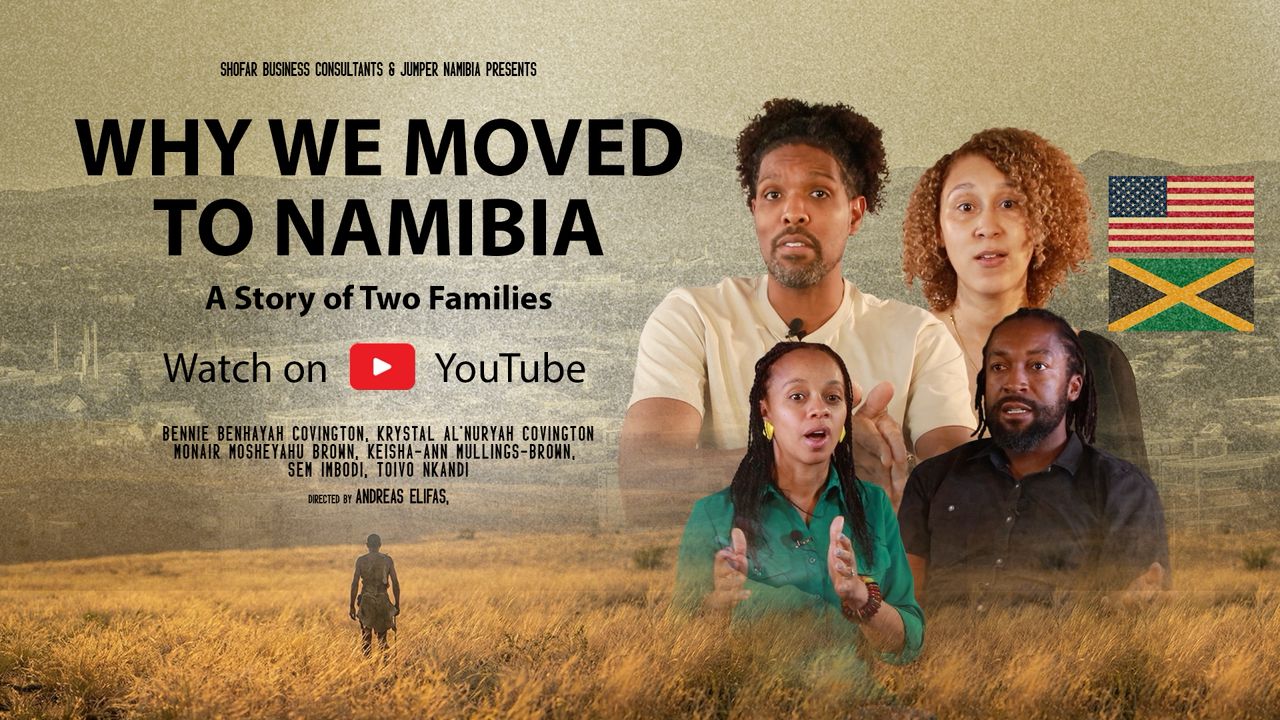

Traditional filmmaking often requires time, capital, and complex logistics, creating limitations for many storytellers that often stop great stories from ever being told, says filmmaker Andreas Elifas.
The cinematography underscored that, as Africans, there is a need to leverage opportunities such as Artificial Intelligence (AI) to reclaim these narratives.
“We have the power to document our history and transform the stories of our grandparents into stunning visuals. We no longer need a room full of expensive equipment to honour our past. With just a laptop, an internet connection, and a creative mind, we can show the world our true potential,” said Eliphas.
He noted that AI production speeds up the process, cuts costs, and simplifies logistic and they used AI on one of their documentaries to tell a story of an American and Jamaican couple who moved to Namibia.
“We had to use AI; we would have been limited in creating the starting scene the way we did because of financial constraints,” he stated.
Bennie Covington and his wife, Krystal from the US, Monair Brown and his wife, Keisha-Ann from Jamaica, moved to Namibia.
While 80% of this documentary features traditional cinematography, the team strategically used AI to craft the opening sequence. This allowed them to visualise a Khoisan man journeying across vast landscapes, which is a concept that would have otherwise been logistically and financially prohibitive due to travel and production costs.
In a traditional production, bringing this vision to life would have required scouting remote locations and casting a specific Khoisan elder to lead the story, logistics that were simply beyond the budget at the time.
“One of the most ambitious scenes shows the old man on a dune, watching ancient European ships approach our coast. Executing that practically would have been nearly impossible for us. Thanks to AI, we were able to bridge that gap and bring this historical concept to life,” Eliphas said.
He indicated that AI should not be seen as a replacement for filmmaking but as a supplement and an opportunity to create scenes that are impossible or costly to do in real life.
“I used AI as a collaborator for my work. It’s great for creating work faster than the traditional way. I was able to use AI to brainstorm and refine my story. And also come up with scripts within a day or two. However, as much as it can create things fast, it’s still up to us humans to evoke emotions with the videos we create,” he added.
He hopes for the audience to tap more into their roots and ensure that their stories are told through platforms like documentaries or short films.
“We are missing a lot of our indigenous knowledge and practices in the modern world. We need to learn about the history of Africa. Understanding African history means acknowledging where we all began. Over 400 years ago, our people were forcibly removed to develop other parts of the globe. Now, the tide is turning. We are in an era of return, where the diaspora is reuniting with the continent to contribute to Africa’s growth,” he shared.
Eliphas believes that it is important to create awareness about the diaspora and their willingness to invest in Africa. However, they encounter significant structural challenges that hinder their ability to invest in their full potential.
-psiririka@nepc.com.na