


RUNDU – For most students hailing from marginalised communities, attaining a tertiary qualification has been a distant dream. However, through concerted efforts from the government, parastatals and private entities, many young Namibians in informal settlements and rural villages have broken this ceiling.
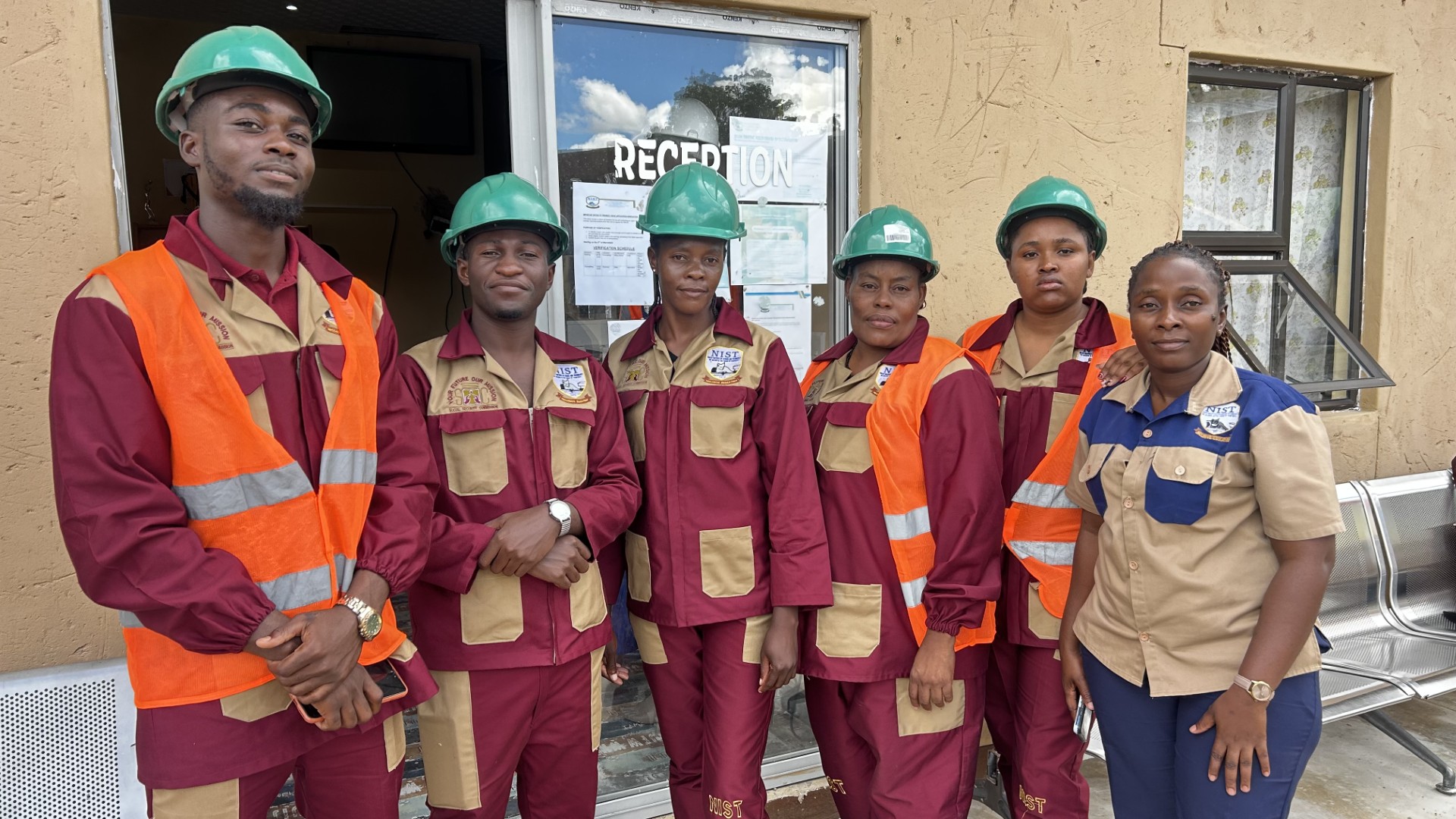
A case in point are 15 trainees at the Ngato Institute of Science and Technology (NIST) in Rundu, where the Social Security Commission (SSC) is funding what would otherwise remain a mirage.
Clad in their new uniforms and fuelled by a newfound sense of purpose, these trainees, hailing from the Zambezi, Erongo, Kunene and the four ‘O’ regions as well as the rest of Namibia, are currently undergoing intensive training in Occupational Health and Safety (OHS) Levels 4 and 5.
The two-year programme is fully bankrolled by the Social Security Commission (SSC), specifically targeting those from marginalised and disadvantaged communities.
“The criteria were clear,” says NIST centre manager Maria Shitaku. “Aspiring trainees had to provide proof of their disadvantaged backgrounds. This fund doesn’t just pay tuition. It covers accommodation, uniforms and everything they need to study, including support during job attachments,” she said.
Lifeline
For the trainees, the programme is a literal lifeline. Katalina Simuma Kakura, a local from Rundu’s Ndama suburb, heard the call for applications over the radio. Today, she studies without the crushing weight of financial stress.
“School is going well. They pay my fees and I get a stipend. My life is changing,” she said.
The programme’s reach is truly national. Wilbard Shimpanda travelled from Oshikuku in the Omusati region after attending a NIST information session.
He now sets his sights on leadership. “I see myself becoming a centre manager one day,” he said confidently.
Beyond individual ambition, the funding serves as a tool for social transformation.
Safiena Gawases, who travelled from the Oshikoto region, believes such initiatives are the only way to steer youth away from the “alcohol and drug abuse” prevalent in areas with high dropout rates.
Her journey was one of persistence. She was rejected the first time she applied but refused to give up.
“People must just keep trying,” Gawases urged.
“I want to be a safety officer in a mine when I graduate,” she said. “I completed grade 11, and I came here for this programme. I want to be a safety officer in a mine when I graduate. When I saw the advert, I was discouraged because when I first saw this opportunity, I applied and didn’t make it, but then I just decided to apply again. This time, I was successful. People must just keep trying. To our sponsor, thank you,” she said.
Naomi Kambueza from the Otjozondjupa region said she learnt about the funding from her friends’ WhatsApp status.
She said the SCC will pay for tuition and accommodation.
It further provides pocket money to trainees who meets the requirements.
“And then I applied, and I was accepted. Now I’m in Rundu at NIST, getting educated and getting more practical and theoretical training. This is slowly improving my life,” she said. As the group prepares for their June/July assessments, the atmosphere at NIST is one of gratitude and grit.
Through this partnership, between the SSC and private institutions like NIST, the narrative for marginalised youth is shifting from one of struggle to one of specialised skill and professional promise.
– jmuyamba@nepc.com.na