

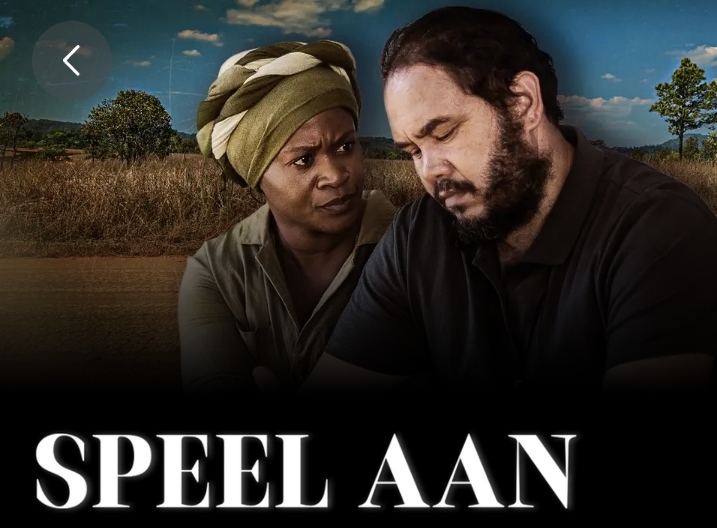

Award-winning Namibian film Speel Aan (Play On) is earning recognition for its powerful portrayal of tragedy, depression, and redemption, following its success at the Namibia Film and Theatre Awards (NFTA).
The story follows Peter Cloete, a successful high school soccer coach whose life is shattered by a tragic accident following a major victory. After serving three years in prison, Peter struggles with the emotional aftermath and alcoholism.
His path to healing begins when he reluctantly accepts a job coaching a struggling team, forcing him to confront his past to build a new future. Directed by Errol Geingob and starring Dawie Engelbrecht and Hazel Hinda, the film won five out of its eight nominations at the NFTA. These included Best Director, Best Male Actor, Best Female Actor, Best Feature Film, and Best Script.
According to Geingob, Speel Aan is ultimately a story about grief, redemption, and healing.
“The film encourages us to forgive ourselves, because only through self-forgiveness can we truly begin to heal and move forward. It also speaks to a deeper human truth that no matter the crime or the weight of our past, everyone deserves a second chance. That message of hope and renewal was central to everything we wanted to communicate,” he explained.
Geingob noted that the Best Feature Film award stood out to him most, as it reaffirmed his long-standing belief that story is king.
The film was nominated alongside other Namibian productions such as ‘#Land of the Brave’ and ‘The Skeleton Coast’, which Geingob initially believed would be strong competition. “When we won, it reminded me that what truly connects with audiences is the story and the emotional truth within it. It also highlighted the power of authentic performances from the cast and the dedication of the crew.”
From ‘The Journey Home’ to Speel Aan
The project was commissioned by MultiChoice under its Ombura initiative. Initially pitched under the title The Journey Home, the film later evolved into Speel Aan during development and was adapted to be predominantly Afrikaans for kykNET and Kie.
The development phase proved intense and deeply personal. Geingob had recently lost his grandson in December 2023, and as development began in January 2024, this grief became a significant emotional driver of the script.
Casting and production challenges
When it came to casting, Geingob emphasised the importance of emotionally grounded performers.
“After multiple callbacks and chemistry tests, we found that in Dawie and Hazel,” said Geingob. He believes that a film is a living entity that “chooses the people it needs,” and his team at Desert Films understands his careful and deliberate casting process.
The production also faced challenges, particularly with first-time actors cast as the soccer team. At one point, they had to make the difficult decision to release the entire group after they arrived late, causing the loss of a full day of shooting on a crucial scene.
“It was a tough moment, especially on a tight schedule, but we acted quickly by recasting, restructuring the schedule, and pushing forward. It required strong decision-making and adaptability from the entire team,” said Geingob.
Authentic Namibian storytelling
Geingob believes the film’s success lies in its emotional honesty and authentic storytelling.
Namibian storytelling is at the heart of Speel Aan. While its themes are universal, they are expressed through a deeply local lens reflected in the language, environment, and characters. The use of Afrikaans and Khoekhoegowab, along with the setting and cultural context, creates a strong sense of identity that resonates with local audiences.
According to Geingob, Namibian stories carry a unique authenticity, rooted in real experiences, struggles and resilience.
A growing industry with potential
The success of Speel Aan is both affirming and motivating for the director, as it reinforces his commitment to meaningful storytelling and raises expectations for future projects.
“There’s now a greater responsibility to keep growing, to keep pushing creative boundaries, and to continue telling stories that resonate deeply with audiences,” said Geingob. He believes the film’s achievements contribute to the growth of the Namibian film industry by demonstrating that local productions can compete at a high level.
Geingob says moments like these show that Namibian stories, told by local filmmakers, have real value.
The more success stories there are, the more confidence is built across the industry.
Best male actor
Lead actor Dawie Engelbrecht said he was drawn to the role of Peter because of the script’s authenticity.
“From the auditions to the first table read, Peter came across as a very real, layered person, not just defined by one trait or storyline. I was especially drawn to his emotional journey and the way the script allowed him to grow over time, facing situations that felt honest and relatable, with little dialogue,” said Engelbrecht.
To prepare for the role, Engelbrecht spent time analysing the script, understanding Peter’s motivations and relationships and building a deeper backstory beyond what was written. Reflecting on the recognition received after the awards, Engelbrecht described the moment as deeply meaningful.
“I have been in this industry for more than two decades and never thought of giving up, whether recognised or not. It was always about the love and passion for film and theatre, never the fame or awards. But this recognition means a lot, it’s like saying, ‘we see you, Dawie.’”
Geingob currently has several projects in development, many of which focus on human relationships, personal struggles, and redemption, stories grounded in real life but told in a compelling cinematic way.