


The state has a duty to ensure that public prosecutors can perform their roles without intimidation, hindrance, or harassment, and, where possible, to extend these protections to close family members when their personal safety is threatened.
The state must ensure that prosecutors have safe working conditions, including adequate security. Protection is required when personal safety is jeopardised by the nature of investigations, particularly in cases involving organised crime, terrorism, and corruption.
Physical protection of public prosecutors includes workplace security, personal safety measures for them and their families, and legal protections to prevent intimidation. The prosecution authority also ensures they can work without fear, often via a specialised law enforcement unit. Implementing high-security measures is essential.
Prosecutors’ role
Public prosecutors are vital to criminal justice, representing the state and public interest. They decide on investigations, charges, or plea bargains, influencing case outcomes, defending rights, and upholding the rule of law.
The public prosecutor’s role is crucial for maintaining order, ensuring justice, and balancing rights with system effectiveness. They ensure fair law application, protecting both accused and victims.
The risks
Physical protection of public prosecutors in Namibia has become a critical concern due to rising threats, intimidation, and assassination targeting those dealing with high-level organised crime cases, such as corruption and drug trafficking, just to mention a few. They face significant danger.
Recent incidents involve threats to public prosecutors and intimidations of investigators and witnesses.
The state must establish witness protection programs connected to prosecutors’ cases to ensure witness safety, with the Namibian Witness Protection Act, 2017, providing legal protection for witnesses facing threats due to their testimony.
In South Africa, the NPA Amendment Act 10 of 2024 authorises specialised investigations requiring heightened security for investigators and prosecutors. Despite resource limitations and pressures to protect prosecutors from syndicates infiltrating justice institutions, law enforcement must stay vigilant to identify risks, prevent breaches, and improve efficiency.
Retaliation, disruption of legal proceedings
Public prosecutors are targeted by criminals primarily because they represent the state and drive criminal investigations, charges, and convictions, making them a central obstacle to criminal activity. Public Prosecutors, as officials with broad, often discretionary power, are directly responsible for prosecuting offences, making them high-value targets for intimidation, retaliation or disruption.
In addition, criminals, especially those involved in high-stakes cases like organised crime, corruption, or murder, may target prosecutors to retaliate against the successful prosecution of their associates or themselves.
By targeting prosecutors, criminals may attempt to intimidate them into dropping charges, weakening their cases, or accepting plea bargains, especially when the prosecutor’s office has a reputation for being tough on crime.
Also, prosecutors operate in the public eye and hold significant power to make decisions that change lives, from filing charges to setting bail. It is this influence that makes them direct targets for people frustrated with the criminal justice system.
Physical protection
Physical protection measures for prosecutors include residential security, personal security details, case-based police involvement, and information security to prevent leaks. The situation remains critical due to threats from high-profile cases, requiring ongoing review of security protocols by law enforcement. Essentially, when managing high-profile or dangerous cases of that magnitude, there’s a need to create a specialised threat assessment unit, preferably under a law enforcement establishment, which is a proactive process used to identify, evaluate, and manage individuals or situations that may pose a threat or a risk of targeted violence against prosecutors, rather than reacting only after an incident occurs. This investigative function primarily focuses on distinguishing between “making” a threat (venting) and “posing” a threat in a form of planning or intent. In the final analysis, the responsibility for public prosecutors’ security should be shared among the individual prosecutor, their office (ministry), and law enforcement. Let’s take full advantage of the favourable time while they last.
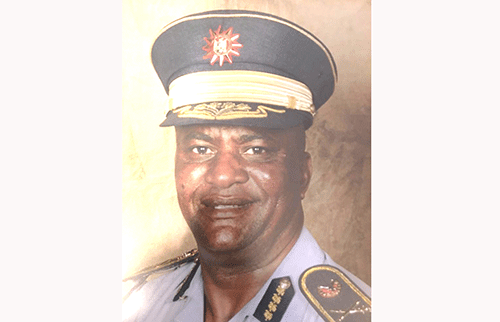
*Maj. Gen. (RTD) J. B Tjivikua is a Criminal Intelligence Analyst.