


David Matheus
Toilet paper is a basic commodity for every household, yet in recent years, prices have soared — prompting calls from consumers for its regulation.
The price of toilet paper has jumped from as little as N$5 per roll in 2020 to N$12 per roll at some retail outlets in 2025. For some Namibians, the increase is manageable, but for many others, toilet paper has become a costly luxury, leading to appeals for government intervention.
In several communities, toilet paper is not even part of daily life, let alone being part of a household vocabulary. In others it is seen as a luxury and only used when available or when visitors come by. Residents resort to alternatives such as sticks, leaves, dry cow dung, old newspapers or sand when nature calls.
Robert Ndinomwaameni, a resident of Ondungulu village in Ohangwena constituency, said a large number of the people in the village depend on rags and newspapers as replacements for a toilet paper.
Maria Haufiku from Oshipya village, shared similar sentiments. Haufiku said she barely has access to toilet paper in the village, unless she travels to town – for other activities – and bring along some toilet paper rolls. “We mostly rely on old newspapers,” she said.
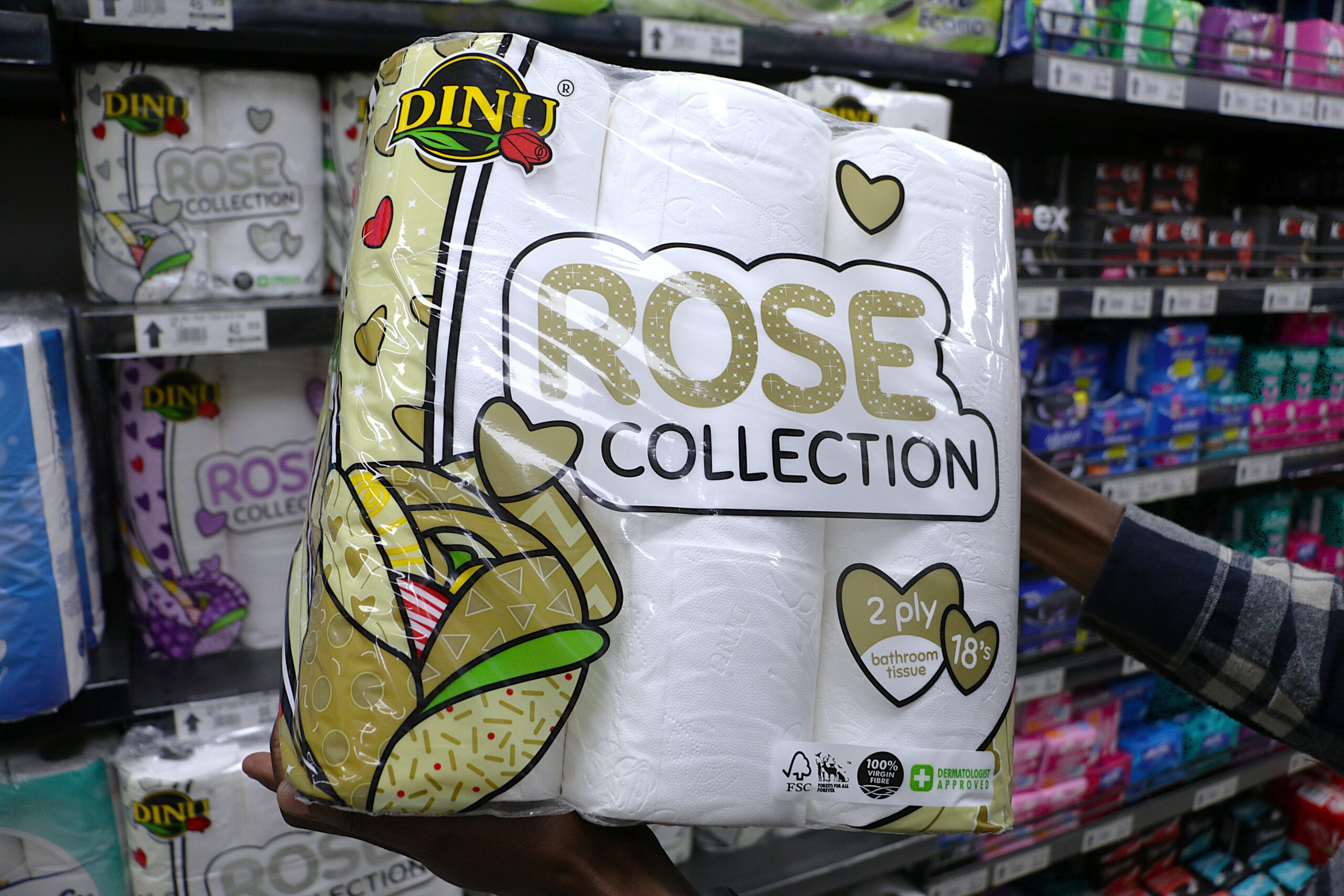
Paulus Haufiku Shihepo, a resident of Havana informed settlement in Windhoek, said toilet paper prices have risen sharply and should be regulated. “I spend about N$175 for an 18-pack of 2-ply toilet paper each month. Back in 2019, the same quantity cost me only N$130,” Shihepo said.
In Kuisebmond, Jennitha Subes expressed similar frustrations. “Each time I buy toilet paper, I spend at least N$140, which is quite expensive. Sometimes, I have to cut my food budget depending on how often I buy toilet paper,” she said.
Meanwhile, Thomas Hafeni, a resident of Eenhana, said when toilet paper runs out in his household, they look for cheaper alternatives. “Sometimes, by the middle of the month, one cannot afford toilet paper. We use wipes or whatever is available in the house,” Hafeni said.
However, not all consumers feel the pinch. Gerson Menas, from Windhoek West, believes toilet paper in Namibia is fairly cheap, depending on the brand or quality one chooses. Similarly, Elizabeth Ingashitula, an Otjomuise businesswoman, said she has no problems affording toilet paper because she buys the type that suits her budget.
According to Statista Market Forecast, Namibia imported approximately US$5.2 million (N$95 million) worth of toilet paper in 2024, mainly from South Africa and China. Exports remain minimal, with the country exporting just US$140 000 (N$2.5 million) toilet paper products in the same year, mostly to Angola and Botswana.
Photo: Heather Erdmann