

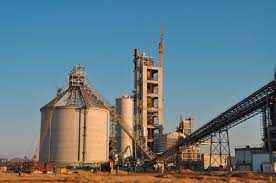

Namibia’s largest cement manufacturer, Ohorongo Cement, remains adamant that the domestic market, in its current form, is not large enough to sustain two cement manufacturers. The reasoning is that Namibia currently has demand for about 600 000 tonnes of cement annually but has the capacity to produce some 2.5 million tonnes per annum, which means there is a significant overcapacity in the local market.
This state of affairs is exacerbated by the fact that cement is a low value, high volume product that attracts huge logistics costs. What’s more is an inability to export cement within southern Africa, due to border closures in Angola and import bans in Botswana, Zambia and Zimbabwe and economies of scale in South Africa, is resulting in general regional overcapacity.
For an inside look into developments at Ohorongo, New Era (NE) recently sat down with the company’s chief executive officer, Hans-Wilhelm Schütte (HWS), who pointed out that cement production is capital intensive, and warned that overcapacity in a market such as Namibia’s can be economically detrimental.
NE: What is the status of the proposed merger between Schwenk Namibia and Whale Rock Cement? HWS: According to the Namibian Competition Commission (NCC), the proposed merger was declined.
There may be a cool-off period initiated by Schwenk Namibia, but this remains uncertain at present. A board meeting is scheduled for August, after which any significant developments or any strategic change will be communicated to the public, if any.
NE: What is Ohorongo Cement’s position on the potential consolidation of Namibia’s cement industry under a single controlling entity? HWS: The Namibian market, in its current form, is not large enough to sustain two cement manufacturers. This concern was raised even prior to the establishment of a second cement plant, as noted by independent economists.
Cement production is capital intensive, and overcapacity in such a market can be economically detrimental. It is a reality that, over time, the market may only support one major producer.
It is also important to consider the market in a broader SACU context, rather than defining it solely within Namibia’s borders. Export potential should form part of the competitive landscape.
It is important to clarify that Ohorongo Cement has never operated without competition. Even during the period when Infant Industry Protection was in place, exemptions were granted—such as those to Jacks Trading—and Whale Rock Cement was later established. Ohorongo welcomes fair competition, provided that all industry players are held to the same regulatory standards.
NE: Do you believe this proposed transaction risks creating a monopoly or reducing healthy competition in the domestic cement market? HWS: Ohorongo Cement believes that any structural changes in the industry should ultimately support Namibia’s economic growth, safeguard jobs, and ensure a stable and high-quality cement supply. Further a healthy sustainable manufacturing industry in Namibia is important to ensure a continuous operations for generations to come.
We recognise the need for healthy competition and trust that the NCC will always make a decision based on thorough economic analysis and in the best interest of Namibian consumers. It is also important to consider the market in a broader SACU context, rather than defining it solely within Namibia’s borders. Export potential should form part of the competitive landscape.
NE: Given previous Competition Commission rejections of similar deals due to competition concerns, what’s different this time, in your view? HWS: Each proposed transaction is assessed in the context of its specific market conditions, ownership structure, and public interest outcomes.
While Ohorongo Cement respects the insights and past decisions of the NCC, we also observe that public sentiment appears to have shifted, as evidenced by broader engagement during the recent consultation process. In the past, local ownership interest was virtually absent, whereas today, this is receiving increased attention.
The current situation is simple: One factory would close and one foreign investor would simply be replaced by another one. The future remains uncertain, and we await further guidance from Schwenk following the upcoming board discussions.
NE: In recent years, there have been calls for greater local ownership in strategic industries. Would the proposed acquisition by Whale Rock Cement promote or reduce Namibian ownership in Ohorongo Cement? HWS: There would be no immediate change in Ohorongo Cement’s local shareholding as a result of the proposed merger, as it was declined through the legal process by NCC.
Local ownership through the Development Bank of Namibia (DBN) remains intact . It is worth noting that Schwenk Namibia actively sought local investors, appointing Cirrus Capital and IJG to explore such opportunities. However, no viable local partners were identified at the time. Ohorongo Cement supports efforts to increase local participation in key industries and remains open to any recommendations that further Namibia’s long-term development and empowerment objectives.
NE: What message does this proposed deal send to Namibian stakeholders and policymakers regarding foreign investment and control in essential industries? HWS: Foreign direct investment (FDI) has played a critical role in Namibia’s industrial development, including the establishment of Ohorongo Cement.
It raises the question on why a foreign investor, after all their attempts to sell its shares, has failed to do so successfully.
If foreign investors are later unable to sell their holdings, it could deter future FDI not only in the cement sector, but across the broader economy. A healthy investment environment requires clarity, predictability, and the ability to exit when appropriate, otherwise you lose investor confidence.
NE: Would Ohorongo Cement support any local ownership conditions if stipulated as such by the Competition Commission regarding the proposed merger? HWS: Yes, Ohorongo Cement would support any conditions put forth by the NCC that serve Namibia’s broader socio-economic interests, including increased local ownership. We remain aligned with government-led initiatives aimed at inclusive growth and empowerment.
As market dynamics evolve, we believe there may be greater interest from local stakeholders in possible future transactions.
NE: There have been several previous attempts to acquire Ohorongo Cement, including by International Cement Group and West China Cement. What lessons did the company learn from those efforts? HWS: These experiences have underscored the importance of transparency, regulatory alignment, and inclusive stakeholder engagement.
Schwenk Namibia has taken previous feedback seriously and remains committed to ensuring that any future partnership or sale meets Namibia’s economic and regulatory expectations, including local participation where possible. Ultimately, overproduction in a small domestic market is unsustainable, regardless of the industry, but especially so in the cement industry, which is very capital intensive.
It is critical that government also plays an active role in facilitating access to export markets, which would strengthen the sector and create much-needed employment.
NE: Ohorongo Cement has taken strides toward sustainability through its biomass energy programme. Will a change in ownership affect these green energy initiatives? HWS: Ohorongo Cement’s commitment to environmental responsibility remains central to its operations.
While future ownership may influence strategic direction, we believe the business case for sustainability is clear. Through initiatives such as biomass, woodchips, charcoal fines, and Refuse Derived Fuel (RDF), we have not only reduced CO₂ emissions, but also created employment in new sectors.
We trust that any future owner will continue building on this foundation.
Ohorongo Cement is one of the few companies in Namibia which is adding 100% value addition to raw materials, and that all within the borders of Namibia.
We believe in building the “Namibian House”, which has a foundation of Quality, walls consisting of Environment, Innovation, Empowerment and Value addition, and a roof supporting Vision 2023, Growth At Home, NDP5 and the Harambee Prosperity Plan.
NE: Do you think the proposed buyer, Whale Rock Cement, shares Ohorongo’s environmental and sustainability vision—particularly through Energy for Future (Pty) Ltd? HWS: While we cannot speak on behalf of another entity, we believe that responsible industry participants increasingly recognise the importance of sustainability. Ohorongo Cement hopes that any future shareholder will embrace the opportunity to expand Namibia’s green industrial capacity, using platforms such as Energy for Future (Pty) Ltd, which oversees our biomass and waste-to-energy programmes.
NE: What is Ohorongo Cement’s message to Namibian consumers, farmers (involved in biomass supply), and employees who may be uncertain about the implications of the merger? HWS: We recognise that periods of change can bring uncertainty.
However, Ohorongo Cement remains steadfast in its commitment to its employees, suppliers, and broader community partners. Our brand is built on quality, availability, trust and longevity. With limestone resources sufficient for over 300 years of production, we are dedicated to leaving a lasting legacy and continuing to serve the Namibian nation for generations to come.