

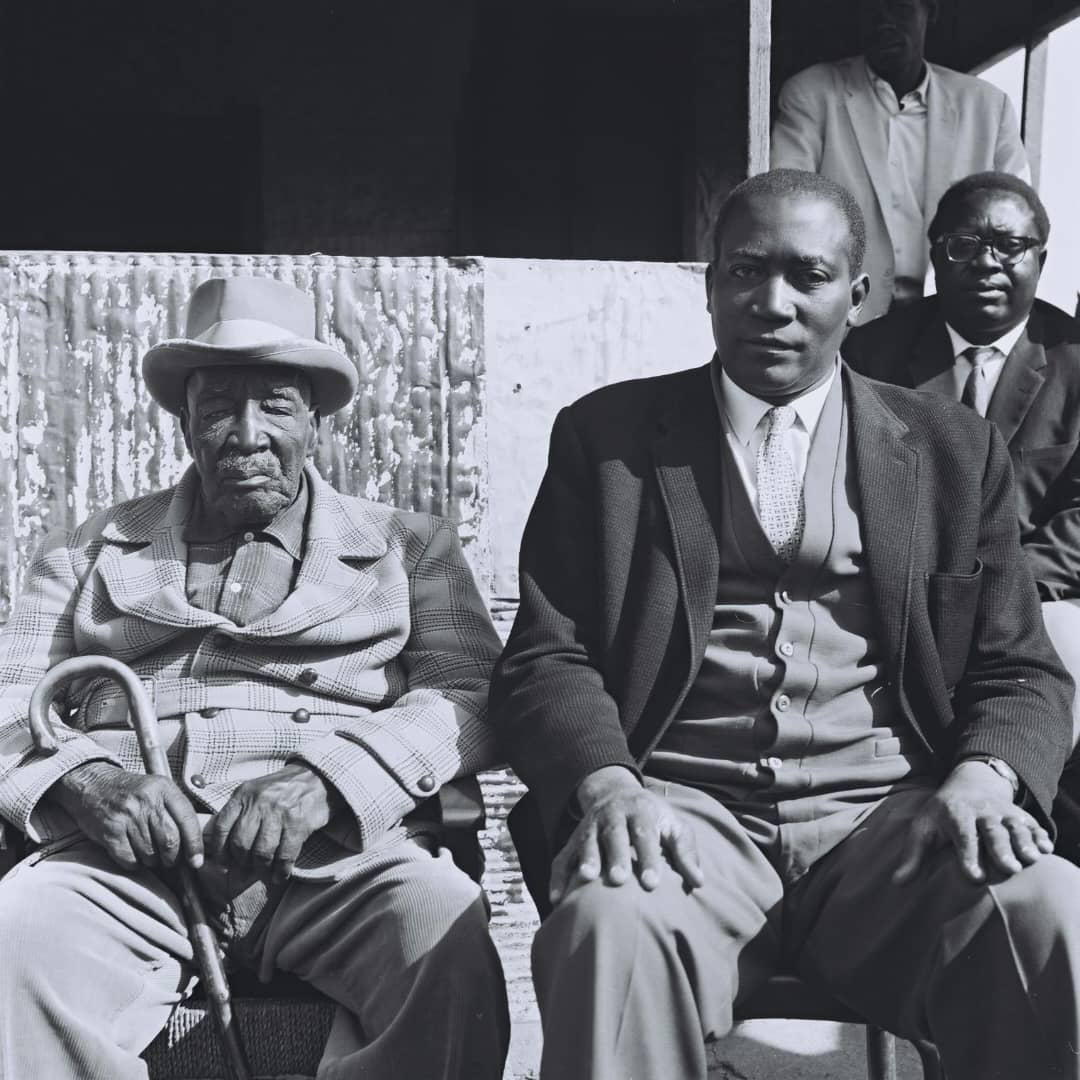

TOASIS – Hosea Katjikururume Komombumbi Kutako, the late paramount chief of Ovaherero, an unparalleled nationalist, commander, and prisoner of the German-Herero war of 1904/08, indisputably remains the most consequential Namibian of the past century.
The month of August is of utmost importance in Namibia’s long and brutal history, especially when discussing the country’s bloodstained colonial and apartheid past, where two significant dates come to mind: 11 August and 26 August. On 11 August 1904, the supreme commander of the German colonial troops, Lieutenant General Lothar von Trotha, abandoned negotiations with the Herero and tried an aggressive encirclement at the Battle of Waterberg, where between 3 000 and 5 000 Herero fighters were killed.
Yet, despite the brutal tactics of the Germans, most of the Herero managed to escape into the Omaheke desert. Under Trotha’s command, German troops ruthlessly pursued thousands of Herero men, women, and children who were attempting to cross the Kalahari Desert to reach the British Protectorate of Bechuanaland (modern-day Botswana). Thousands of Herero died from being shot to death, poisoned through drinking water wells, and from starvation in the desert. The remaining Herero who were captured and incarcerated in the concentration camps were subjected to lethal conditions (with a mortality rate of 47-74%), and prisoners endured poor hygiene, little food, forced labour, and medical experiments.
By the end of the conflict on 31 March 1907, approximately 50 000 to 65 000 Herero had been killed by German forces. Chief Kutako was amongst those who fought and survived the brutal German onslaught, which resulted in the first genocide of the 20th century. In fact, he suffered two severe bullet wounds, one on his right cheek just beneath his eye and another on his chest. Chief Kutako, who was born in 1870 at Okahurimehi, near present-day Kalkfeld, and died at age 100 on 18 July 1970 in Aminuis, was a man who fought through it all, saw it all, and lived through it all.
He was among those who escorted Ovaherero paramount chief Samuel Maharero to the safety of Bechuanaland. Chief Maharero sent him back to Namibia to care for the scattered Herero people, and upon his return, Kutako was arrested and spent time in various German concentration camps.
As a young Herero soldier, he defeated a German patrol led by Lieutenant von Bodenhausen in a skirmish betwaeen Waterberg and Ozondjahe on 6 August 1904. Later, he was wounded and captured in Omaruru but managed to escape inland after learning that the Germans planned to secretly kill him. From confronting the merciless German forces to eventually witnessing the end of a brutal genocide in 1908, to later playing an instrumental and far-reaching role in the fight for Namibia’s statehood, Chief Kutako was at the centre of it all.
Second chapter
The other most important date in Namibia’s history is 26 August, which is a national public holiday celebrated every year and marks the start of the war for Namibia’s independence on 26 August 1966, at Ongulumbashe. It is known as the Battle of Ongulumbashe, and like 11 August, both events are closely connected with the life and struggle of Chief Kutako.
Irrespective of how you look at it, Chief Kutako sits distinctively on our nation’s historical foundations as an exit point in the first resistance phase when Namibians fought valiantly against a genocidal Germany and remains a noteworthy entry point to Namibia’s struggle for independence from the apartheid South African regime.
By 1959, at the advanced age of 89, Chief Kutako and his Chiefs’ Council established the South West African National Union (SWANU), one of the first political parties created as an umbrella organisation for anti-colonial resistance groups, including the Ovamboland People’s Organisation (OPO), the DEC, and the Herero Chiefs’ Council, among others. In September 1959, Swanu was officially launched at a public meeting in Windhoek with support from the Herero Chiefs’ Council under Chief Kutako and OPO under Sam Nujoma and Jacob Kuhangua. Jariretundu Kozonguizi was elected president, and the executive included representatives from OPO, the Herero Chiefs Council, and DEC representing the Damara community under Fritz Gariseb.
Chief Kutako’s fight against oppression transformed his homestead at Toasis into a stronghold of resistance, a place where strategies for Namibia’s freedom were conceived and nurtured.
Importantly, Chief Kutako was instrumental in putting South West Africa into the international arena at the United Nations, which ultimately paved the way for Namibia’s independence in 1990. He is regarded as the “Father of Namibian nationalism.”
He was one of the earliest nationalist leaders who led the country’s modern independence movement by directly petitioning the United Nations alongside astute leader Nikanor Hoveka.
Chief Kutako brought the plight of South West Africa to the world’s attention at the UN through his fierce resistance to the country becoming part of the Union of South Africa, and his leadership style was anchored on all Namibian tribes coming together to fight for freedom and independence.
Since his passport was held back by the South African apartheid authorities, Chief Kutako asked British Anglican priest Reverend Michael Scott to advocate for Namibia’s case at the United Nations in 1946. Scott was officially recognized as a representative for the people of South West Africa in 1949.
Chief Kutako also mentored many future leaders, including Clemens Kapuuo, Sam Nujoma, Fanuel Kozonguizi, Zedekia Ngavirue, Mburumba Kerina, among others. Together they submitted petitions (along with several others) to the UN in the 1950s and 1960s, bringing the situation of South West Africa to the world’s attention and gaining recognition of the country by the UN.
Resistance
In 1966, the UN General Assembly revoked South Africa’s mandate to govern South West African territory and placed it under direct UN administration. South Africa refused to recognize this resolution, which then led to Swapo launching an armed struggle through its armed wing, the People’s Liberation Army of Namibia (PLAN).
Many of its erstwhile commanders were in exile, but PLAN began to infiltrate the north of Namibia to establish training camps. Ongulumbashe was one such training camp, established in June 1966 by PLAN commander John Ya Otto Nankudhu. The group under Nankudhu had just started to build defensive structures and planned to train about 90 soldiers there.
On 26 August 1966, eight helicopters from the South African Defence Force attacked guerrilla fighters at Ongulumbashe. At the time of the attack, only 17 soldiers were in the camp. This marked the first armed battle of Namibia’s liberation war.
Today, Ongulumbashe settlement in the Tsandi electoral constituency of the Omusati region is declared as one of the Heroes Acre in Namibia.
Compatibly, 26 August 1923 also marks the day Chief Maharero was reburied at Okahandja in a ceremony that was attended by over 3,000 Hereros, following his death on 14 March 1923 while in exile.
When all is said and done, Chief Kutako will forever be remembered as more than a political leader but as a revered cultural custodian who safeguarded the traditions and identity of his people amid turbulent circumstances across two bloody wars.
His mentorship of freedom fighters like Namibia’s first president, Sam Nujoma, cements his legacy as both a unifier and a man who shaped Namibia’s destiny.
Chief Kutako’s legacy extends beyond Namibia, as his memory is kept alive at the UN headquarters in New York with a bust that honours his contributions to self-determination and human rights, while Namibia’s foremost international airport and street are also named after him.
-ohembapu@nepc.com.na