

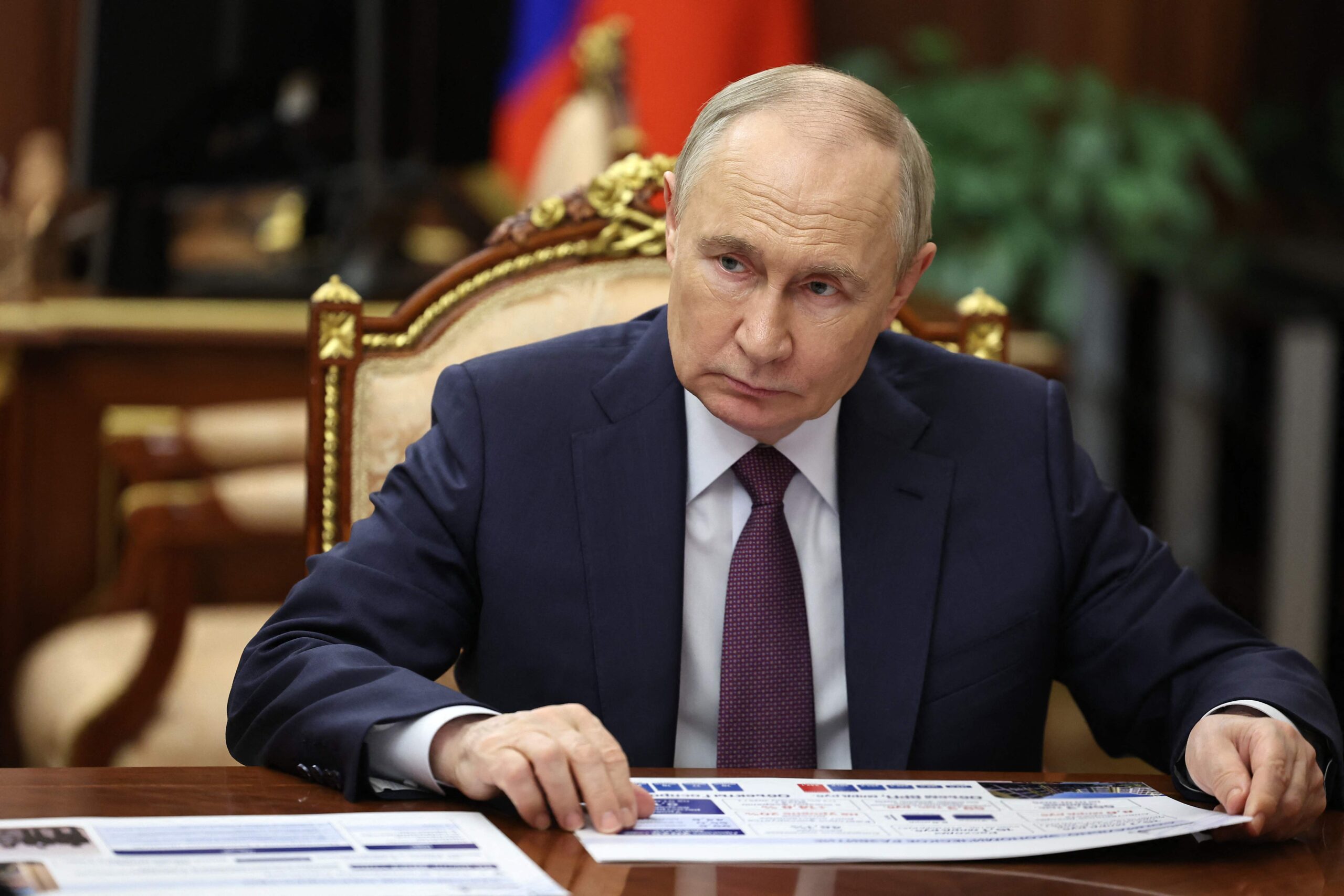

TIANJIN – President Vladimir Putin landed in the northern Chinese city of Tianjin yesterday to attend a summit hosted by counterpart Xi Jinping with around 20 other world leaders.
The Shanghai Cooperation Organisation summit is being held in the port city until Monday, days before a massive military parade in the capital Beijing to mark 80 years since the end of World War II on Wednesday.
The SCO comprises China, India, Russia, Pakistan, Iran, Kazakhstan, Kyrgyzstan, Tajikistan, Uzbekistan and Belarus — with 16 more countries affiliated as observers or “dialogue partners”.
China and Russia have sometimes touted the SCO as an alternative to the NATO military alliance.
In an interview published on China’s Xinhua news agency on Saturday, Putin said the summit will “strengthen the SCO’s capacity to respond to contemporary challenges and threats, and consolidate solidarity across the shared Eurasian space”.
“All this will help shape a fairer multipolar world order,” Putin said, Xinhua reported.
As China’s claim over Taiwan and Russia’s invasion of Ukraine have seen them clash with the United States and Europe, experts say that Beijing and Moscow are eager to use platforms like the SCO to curry influence.
“China has long sought to present the SCO as a non-Western-led power bloc that promotes a new type of international relations, which, it claims, is more democratic,” said Dylan Loh, an assistant professor at Singapore’s Nanyang Technological University.
“In short it offers a Chinese-inflected multilateral order that is distinct from the western-dominated ones in international politics,” Loh told AFP.
More than 20 leaders including Iranian and Turkish presidents Masoud Pezeshkian and Recep Tayyip Erdogan will attend the bloc’s largest meeting since its founding in 2001.
“The large-scale participation indicates China’s growing influence and the SCO’s appeal as a platform for non-Western countries,” Loh added.
Beijing, through the SCO, will try to “project influence and signal that Eurasia has its own institutions and rules of the game”, said Lizzi Lee from the Asia Society Policy Institute.
“It is framed as something different, built around sovereignty, non-interference, and multipolarity, which the Chinese tout as a model,” Lee told AFP.
– Nampa/AFP