

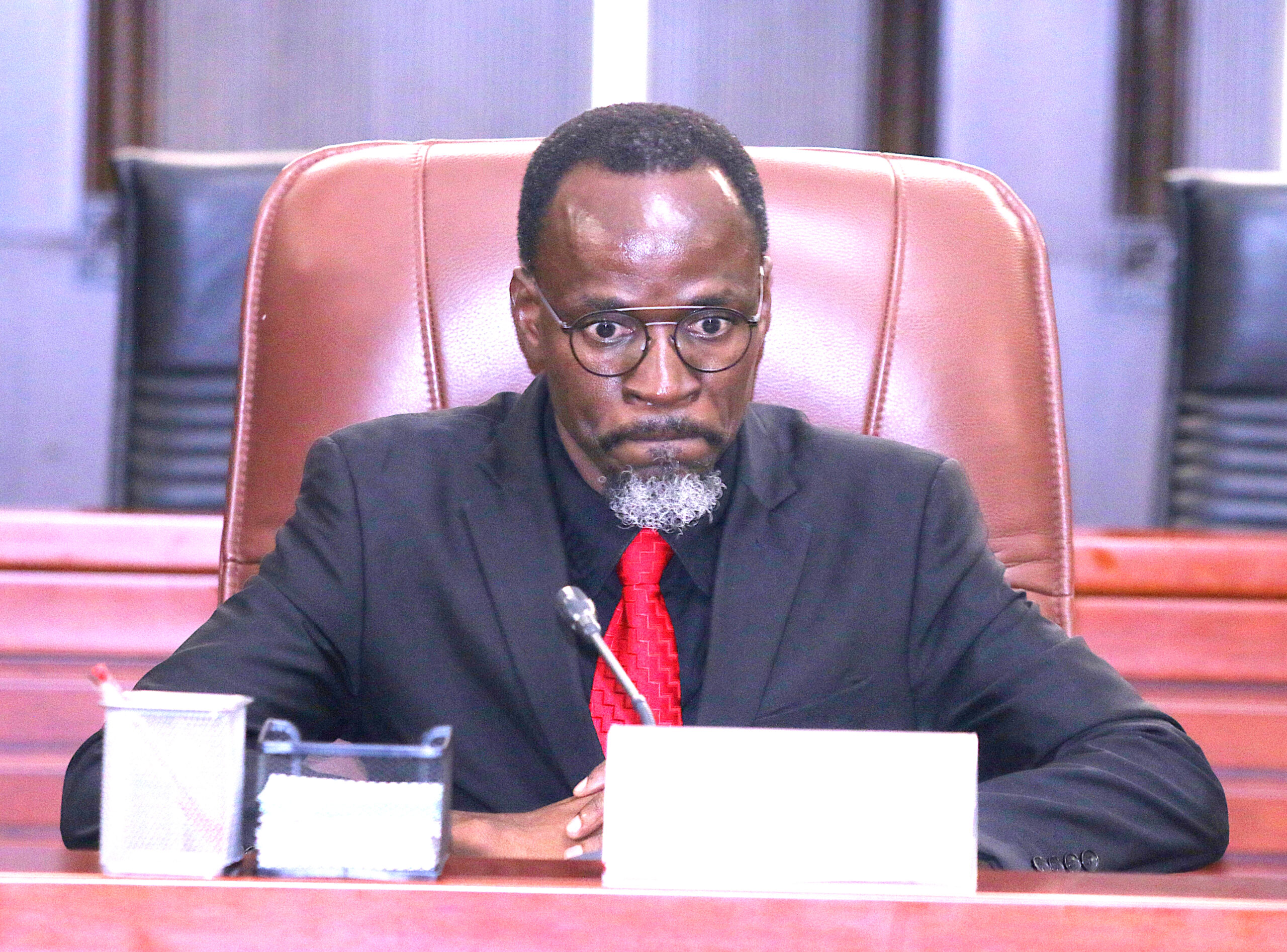

Rudolf Gaiseb
Minister of Justice and Labour Relations Wise Immanuel said trade unions must execute court proceedings on behalf of their members.
This follows after infamous reports and an issue raised by the official opposition political party, Independent Patriots for Change, that workers’ unions representing security guards fail to open labour cases.
“While I acknowledge the failure of some trade unions to fulfil their mandate, I strongly urge employees to take the initiative and report their labour-related disputes if support is not forthcoming from their unions,” Immanuel said in a recent response to IPC lawmaker Mulunga Lizazi.
Section 59 of the Labour Act provides that a registered trade union has the right to bring cases on behalf of its members and represent them in any proceedings brought under the Labour Act.
The minister noted that despite neither the ministry nor the Office of the Labour Commissioner having jurisdiction to interfere in the internal affairs of trade unions, employees have the right to demand accountability and justice from their trade unions.
Immanuel urged affected employees to also lodge their labour case complaints directly with the Office of the Labour Commissioner or the Ministry of Justice and Labour Relations if they do not receive assistance from their trade unions.
In July 2025, Lizazi raised concerns that some employers are non-compliant with the implementation of the national minimum wage, highlighting that only 51 labour inspectors are available nationwide.
“With such a thin inspectorate, abusive employers slip through the cracks. Indeed, labour experts warned that many employers ignore basic conditions and minimum wage rules, knowing the chance of inspection is slim,” he stated at the time.
The National Minimum Wage was implemented on 1 January 2025.
Recently, Immanuel said that labour inspectors are well capacitated in terms of ensuring that the labour laws, including the National Minimum Wage, are implemented effectively.
He added that this does not, however, mean they cannot be capacitated further to maximise their enforcement capabilities.
“With regard to the mechanisms that the ministry has in place to enforce the National Minimum Wage, the ministry has long embarked on an ongoing public awareness to inform and educate the public, including employers and employees of the NMW. The ministry has also revived its SMS line (66111) for the purpose of effective implementation of the NMW,” he said.
Labour inspectors countrywide are busy conducting workplace inspections in all sectors of the economy (both in rural and urban areas) as per their quarterly plans as well as investigating labour complaints lodged with this ministry.
He emphasised that section 126 of the Labour Act, 2007 (No. 11 of 2007) empowers labour inspectors to issue a compliance order to an employer if they have reasonable grounds to believe that such an employer has not complied with a provision of the Act.
Photo: Heather Erdmann