


Kaviveterue Virere
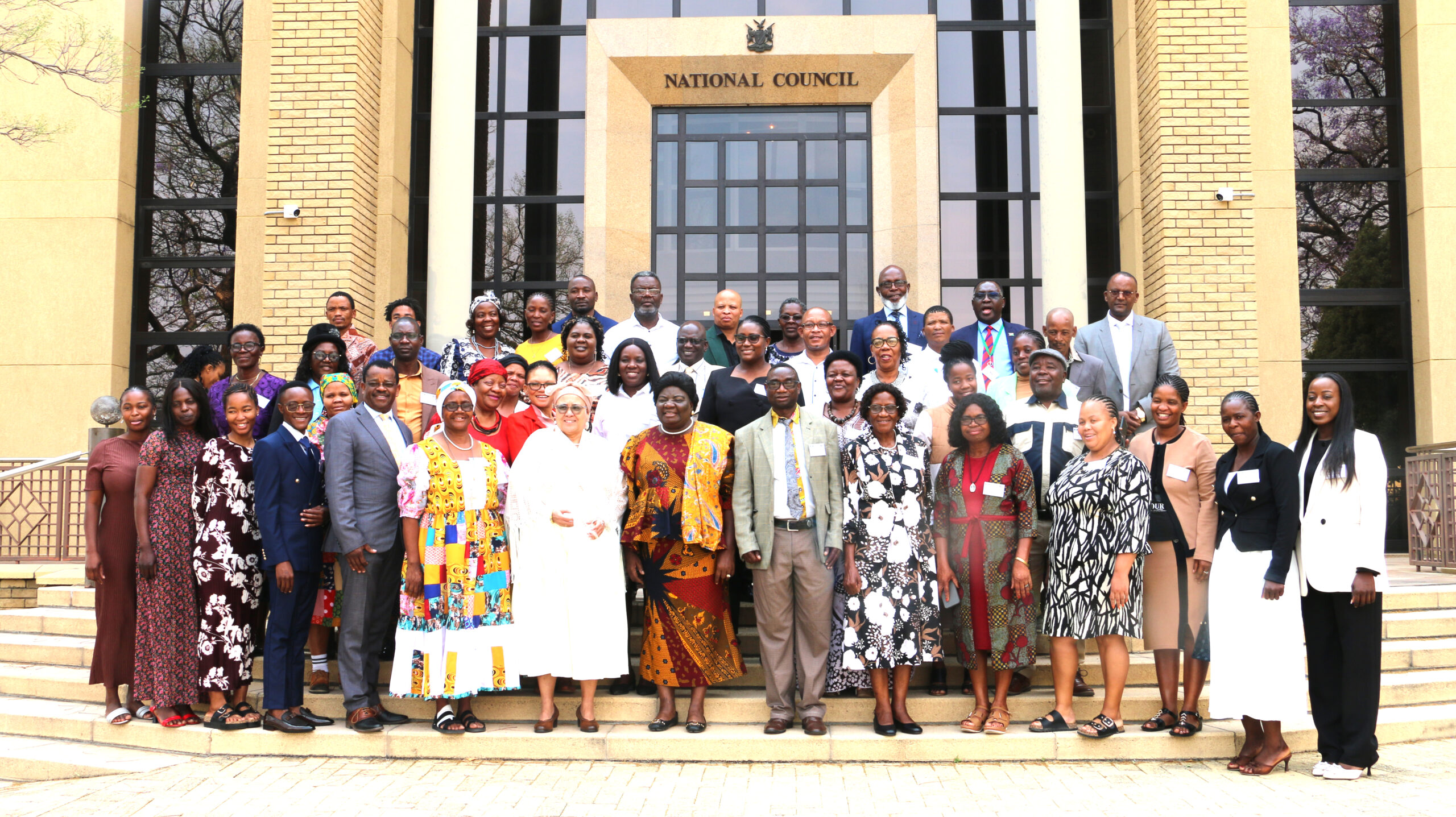
The 8th Session of the Rural Women Parliament started on Monday at the National Council, bringing together delegates from all 14 regions to address the challenges facing rural women and their areas.
The session was officially opened by Vice President Lucia Witbooi, who referred to rural women as the “backbone of our agricultural economy, food systems and family life.”
Witbooi said this year’s theme, “Breaking Barriers: Advancing Sustainable Support and Services for Rural Women and Men”, was a basis of hope and empowerment for rural communities, in addition to providing a forum for discussion.
The VP emphasised that men and women must work together to empower women. She stated that men should be viewed as supporters and advocates for shared responsibility, rather than as barriers to women’s rights.
With more women in leadership and governance, Namibia has made progress toward gender equality, she said. She did, however, issue a warning that poverty, inadequate infrastructure, restricted access to healthcare and the consequences of climate change remain a problem for many rural communities.
In addition to addressing gender-based violence and child abuse, she asked for increased support in the areas of youth empowerment, digital education, skills training and agriculture.
“We must deliver concrete action,” Witbooi urged. “Every barrier we break brings us closer to a more equitable world.”
Victoria Kauma, Vice Chairperson of the National Council, welcomed delegates and described the Parliament as a vital space for inclusive dialogue. She explained that each of the 14 regions is represented by two women and one man, giving a total of 42 members from across Namibia.
“This is where rural women’s and men’s voices are not only heard, but also recognised and magnified,” Kauma stated.
According to her, the Rural Women Parliament makes sure that the government’s development strategy is linked to the realities of those who reside in rural areas.
Representatives from different regions brought attention to the everyday challenges that women in their respective areas face.
According to Berta Shikesho, a representative from the Oshana region, many women choose the risk of giving birth at home because medical facilities are too far away and transportation costs are high. “They lose their babies sometimes. For us, that is a difficult moment,” she remarked.
Naumi Libala, who is from the Zambezi region, identified the main obstacles that women face in the area as being limited access to education and training, a lack of funds, inadequate infrastructure that jeopardizes food security, a lack of knowledge and mental health issues. “Although mental health is a silent crisis, efforts are being made to raise awareness,” she said.
Delegate Vijanda Karuaihe expressed worries about the high rates of drug and alcohol misuse among young people in the Omaheke region, as well as adolescent pregnancies. To protect young people, she said, more health awareness and education are required.
To overcome these obstacles, the vice president stated that cooperation between the government, civic society, and development partners is essential. She emphasized that the Rural Women Parliament should be viewed as more than just a platform for talks. “Let’s make this Parliament a forum for action as well as a forum for discussion,” she stated.
The 8th session of the Rural Women Parliament will continue until tomorrow, with deliberations focusing on gender equality, sustainable development, and giving rural communities a stronger voice in governance.