


Lahja Nashuuta
Forty-two young Namibians have been selected as the first beneficiaries of the newly launched National Youth Fund (NYF).
The government committed N$500 million toward youth development, of which N$257 million is allocated for the 2025/26 financial year.
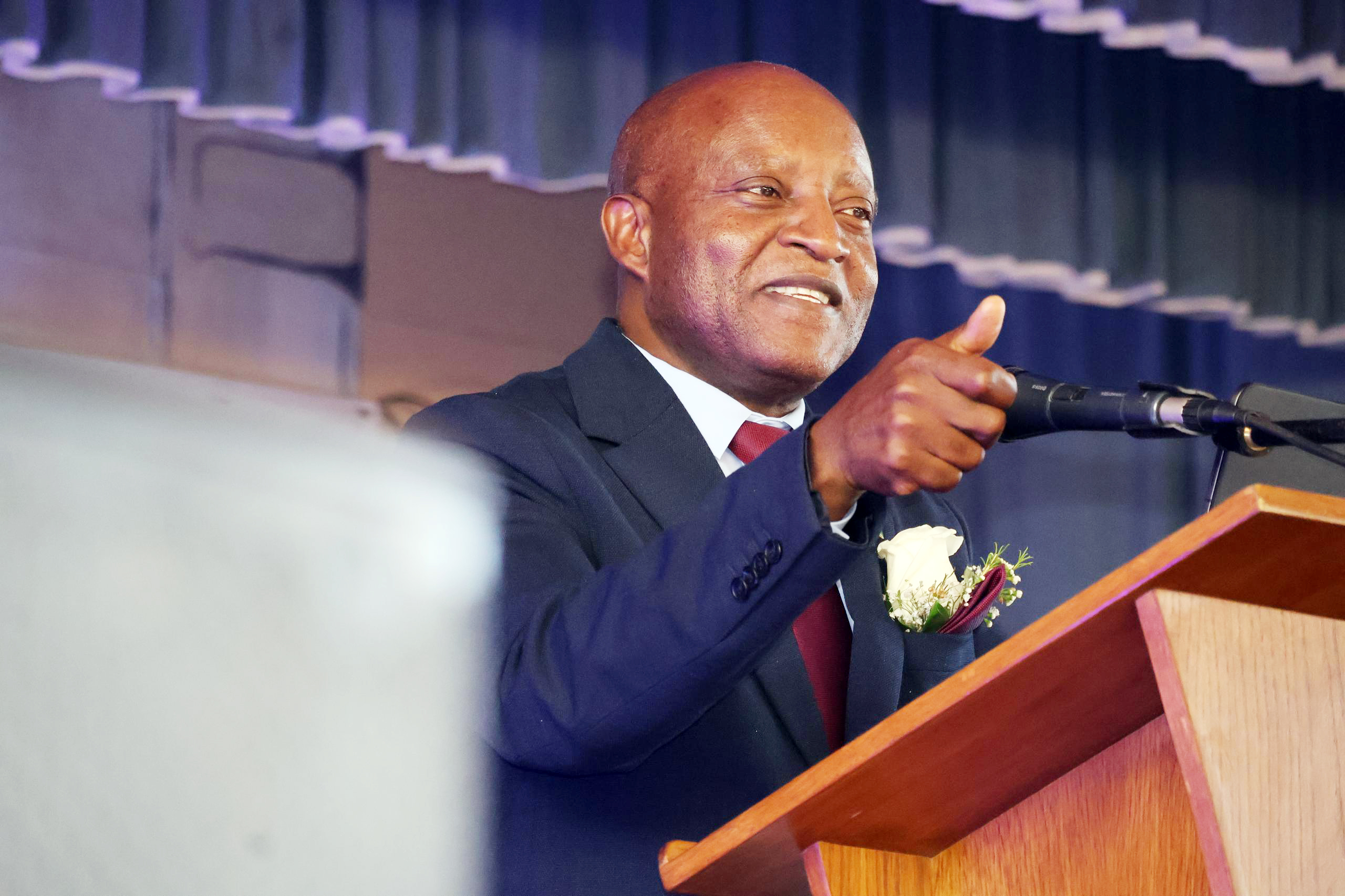
Prime Minister Elijah Ngurare launched the Fund on Monday in Gobabis, Omaheke region.
He said the pilot phase of the programme, which ran from 1 August to 4 September 2025, attracted 11 475 applications from all regions.
Of these, 6 111 projects were assessed by the Development Bank of Namibia (DBN), 5 070 agricultural proposals by Agribank and 294 eco-friendly projects by the Environmental Investment Fund (EIF).
From Omaheke alone, 391 applications were submitted.
“This demonstrates that the young people of Omaheke are ready to seize opportunity,” said the Prime Minister.
Each region saw at least three young Namibians benefitting from the Fund.
Ngurare emphasised that announcing 42 beneficiaries does not mean only those chosen will benefit from the N$250 million Youth Fund allocation.
“It means only 42 successful applicants are being announced today, with more beneficiaries to be revealed in due course,” he clarified.
Inclusive
All beneficiaries will now undergo entrepreneurship training to prepare them for the market.
The financing model stipulates that start-ups can access loans between N$60 000 and N$200 000 at an interest rate of 2%, while growth-phase enterprises can borrow between N$200 000 and N$1 million at an interest rate of 3%.
Expansion enterprises exceeding N$1 million will be financed at a 4% interest rate.
Besides that, businesses will enjoy a grace period of up to 12 months before repayment begins.
Importantly, no collateral is required.
The Fund will now be rolled out nationally under the finance ministry, with implementation through DBN, Agribank and EIF.
NamPost is expected to join once its systems are ready.
The NYF will also provide a grant window below N$60 000, complementing existing schemes such as the Credit for Youth in Business (Ministry of Education, Youth, Sports, Arts and Culture) and the Income-Generating Activities scheme (Ministry of Gender and Child Welfare).
To ensure long-term sustainability, the Fund will be supported through an endowment managed by the Bank of Namibia, with interest reinvested to create opportunities for future generations.
In addition to funding, the Fund will offer mentorship, training and market access.
Ngurare affirmed that transparency and accountability will guide the implementation.
The Fund will be protected, with a youth-led monitoring and evaluation framework supported by an integrated data system managed by the Office of the Prime Minister, the National Planning Commission and the information and communication ministry.
“Success will be measured by enterprises financed, jobs created, sustainability of funded businesses and overall resource mobilisation,” he stated.
He encouraged applicants who did not make the first round not to lose hope, adding that projects meeting the criteria would be approved on a rolling basis.
Those that fall short will receive capacity-building support to strengthen resubmissions.
Ngurare expressed gratitude to early contributors, including NamibRe, which donated N$5 million. The Development Bank of Namibia (DBN) committed N$18 million, NIPAM provided in-kind training support for 300 youth, and the Bank of Namibia hosted the operational and endowment accounts representing 35% of the Fund’s resources.
International partners have also pledged support, with the African Development Bank (AfDB) committing technical assistance and the United Nations providing backing through the Global Accelerator on Jobs and Social Protection for Just Transitions.
-lnashuuta@nepc.com.na