


SWAKOPMUND – A second case of Mpox has been confirmed by the Minister of Health and Social Service Dr Esperance Luvindao.
The minister yesterday in Parliament said the second case was officially confirmed on Monday, while the first case was confirmed on 18 October 2025.
She said patients are receiving comprehensive treatment at the Swakopmund District Hospital and are in isolation.
Luvindao said the first case was linked to cross-border travel within the Southern African Development Community.
The second case is not yet linked to any cross-border movement.
“However, suspected cases include one from Rundu, who has not been confirmed as a positive case. Therefore, the positive cases stand at two,” she said in Parliament yesterday.
She stated that Namibia’s robust surveillance systems continue to track individuals showing signs and symptoms consistent with Mpox.
She said this allowed for the prompt identification, testing and treatment of suspected cases.
Dispelling misinformation, the minister yesterday said that Mpox is a zoonotic disease caused by a virus that results in a smallpox-like illness in humans.
“However, the current global outbreak is predominantly spread through human-to-human transmission,” she stated.
The virus was first discovered in monkeys in 1958 and later identified in humans in 1970.
Since then, Mpox has been reported in several countries across the world, including about 17 countries in Africa, including Zambia, Malawi and Tanzania.
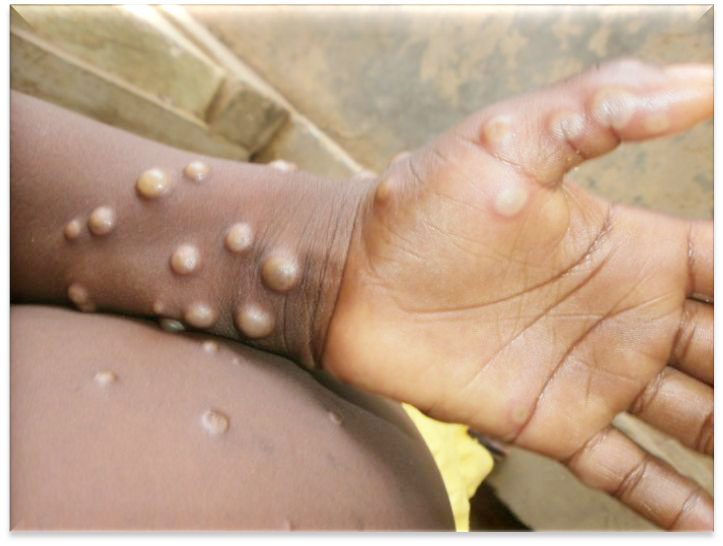
Luvindao said the symptoms include fever, intense headache, swollen lymph nodes, muscle aches and a rash that usually appears a few days after the onset of symptoms.
The rash develops into blisters that later crust over.
“The rash tends to concentrate on the face, the palms of the hands and the soles of the feet, but can also affect the mouth, genitals and eyes. These symptoms and the skin rash generally last between two to four weeks. During this time, an infected person can transmit the virus to others,” she said.
She clarified that Mpox can spread through face-to-face interactions, such as talking or breathing in proximity, skin-to-skin contact, kissing, mouth-to-skin contact and through respiratory droplets or aerosols from prolonged close contact.
– edeklerk@nepc.com.na