

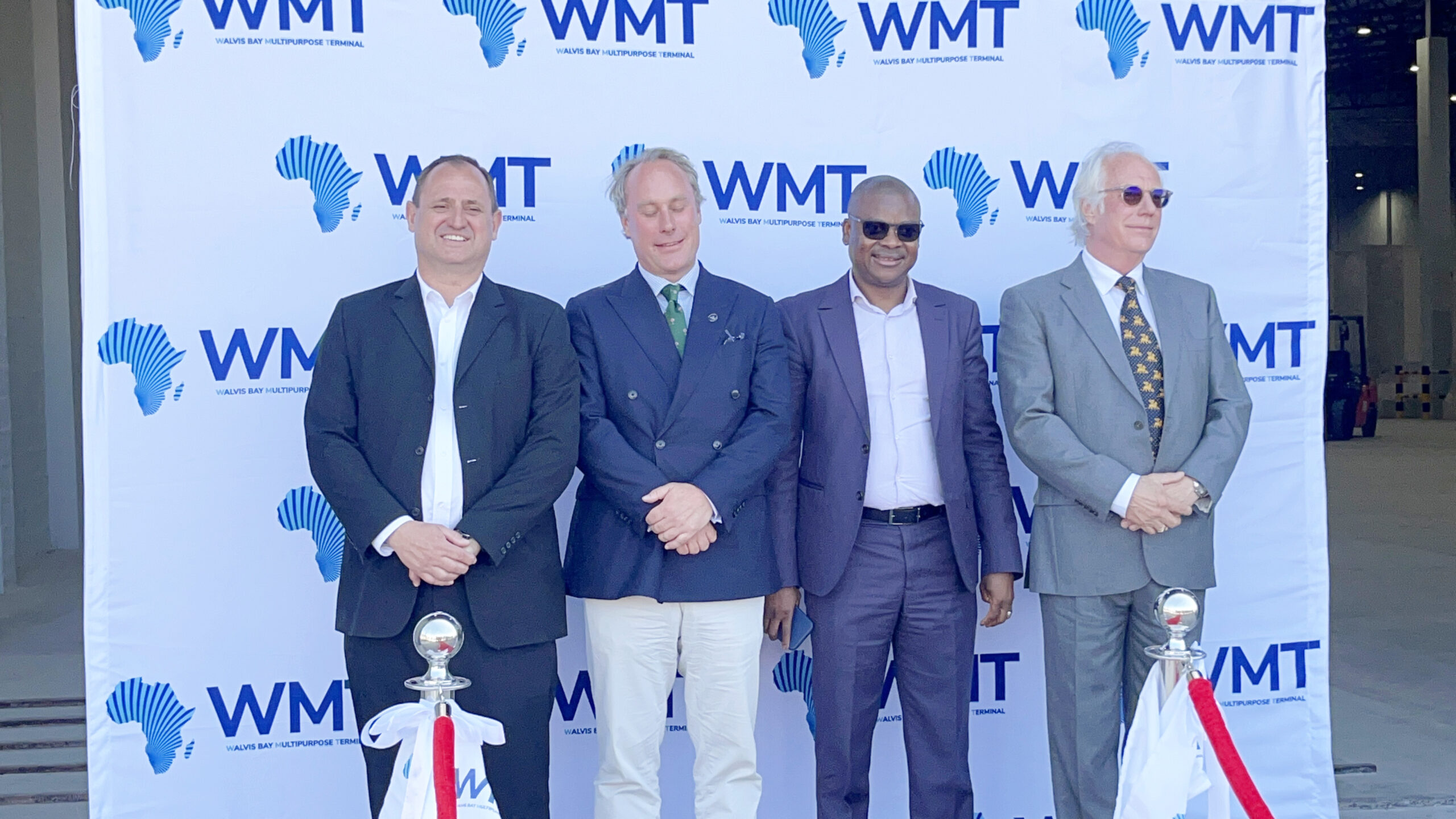

WALVIS BAY – African Global Logistics (AGL) has officially opened a new terminal at the Port of Walvis Bay, investing close to N$200 million in the facility. The Walvis Bay Multipurpose Terminal is designed to increase the port’s capacity and handing of bulk and break-bulk cargo. It also provides an alternative corridor and gateway for regional trade thereby improving connectivity to global markets.
The facility aims to reduce turnaround times and offer more competitive freight rates. It also supports Namibia’s goal of becoming a strategic logistics hub in Africa while enabling private-sector participation in port operations.
Speaking at the official opening of the terminal, Ben Stenning, managing director of AGL, said the terminal reflects the company’s commitment to Namibia. He said that Namibia is a strong alternative corridor and gateway in the region, with improved connectivity and more competitive freight rates.
“We are committed to transforming Walvis Bay into a world-class gateway for Africa. The facility will drive efficiency, lower freight costs, and provide the capacity needed to handle the largest vessels. It is a bold statement of our confidence in Namibia and our determination to support its growth as a strategic logistics hub,” he said.
Stenning also said that they have not only invested in the terminal in Walvis Bay, but has also started with the construction of two oil and gas bases under the AGL Energies brand.
The two developments he says is a 25-hectare base in Walvis Bay and the other a 5-hectare base in Lüderitz.
“These facilities are expected to be ready by late next year as Namibia transitions from exploration to production,” he said.
Stenning said that they are currently employing 120 people and want to give back to the community through their social responsibility arm.
Namport CEO Andrew Kanime also said the commissioning of the terminal is a key development for the country’s ports.
He says this demonstrates that critical developments are executed in collaboration with
their partners, marking a bold step forward in the country’s journey to transform Namibia’s ports into a leading integrated logistics hub.
“Partnerships with the private sector are essential. Five years ago, we recognised the modest means at our disposal and the need to recalibrate our focus. We quickly realised that achieving our vision of becoming the best-performing seaports in Africa would depend on working together and building partnerships,” he said.
According to Kanime, this approach allows Namport to focus on common use infrastructure while enabling private sector participation.
“It enhances Namibia’s competitiveness and complements government efforts towards national development and economic growth,” he said.