

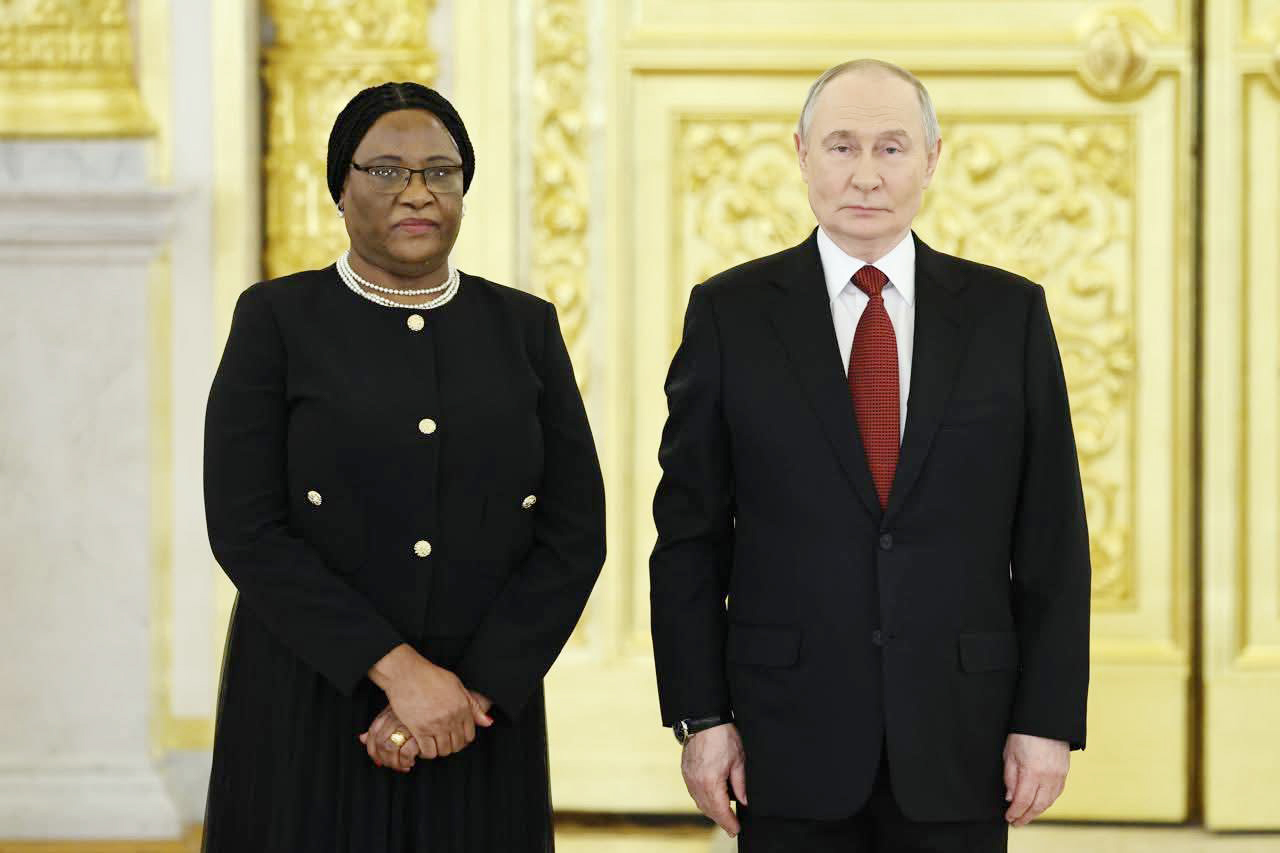

Namibia and Russia are moving to shift their long-standing political relationship into a more structured economic partnership following a visit by Namibia’s Minister of International Relations and Cooperation, Selma Ashipala-Musavyi, to Moscow from January 12 to 14.
Russia–Namibia trade remains modest but is growing. Bilateral trade turnover nearly doubled in 2024 to about US$11.7 million and reached US$17.3 million in the first ten months of 2025.
Ashipala-Musavyi held meetings with Russian deputy prime minister Yuri Trutnev, Foreign minister Sergey Lavrov, and senior executives from Rosatom, Russia’s state-owned nuclear corporation.
The discussions centred on building a framework for cooperation across mining, energy, agriculture, logistics, education, and technology, while insulating economic ties from broader geopolitical tensions.
During the engagement, Trutnev said the figures “fully reflect the potential for increasing bilateral contacts in various sectors of the economy,” signalling that current volumes fall far below what both governments see as achievable.
Meanwhile, while the symbolism of Ashipala-Musavyi’s visit was not lost, more than 30 years after Namibia’s independence and over six decades since the former Soviet Union backed the South West Africa People’s Organisation (SWAPO) during the liberation struggle, the focus of talks was firmly on trade, investment, and industrial cooperation.
Officials on both sides described the engagement as an effort to translate political goodwill into commercially viable outcomes.
Trutnev and Ashipala-Musavyi co-chaired the 10th session of the Namibia–Russia Intergovernmental Commission on Trade and Economic Cooperation on 13 January. The commission reviewed existing projects and identified new areas for collaboration, with both sides confirming that the 11th session would be held in Windhoek this year. A Russia–Namibia business forum, held alongside the commission, sought to draw greater private-sector participation into the relationship.
Russia and Namibia’s escalating economic partnership ambition comes at a time when Namibia has positioned itself as a stable, resource-driven economy within the Global South. Namibia’s GDP stands at about US$30 billion, with per capita GDP around US$11 000. Growth reached 4.2% in 2023, driven largely by mining and oil exploration, and is expected to stabilise around 3% before accelerating again this year.
A central outcome of the Moscow talks was progress on peaceful nuclear cooperation, particularly around uranium. Namibia is already the world’s third-largest producer of uranium oxide, with the potential to supply up to 10% of global nuclear fuel demand.
Russia and Namibia are in advanced negotiations on an agreement covering uranium mining and nuclear energy cooperation. Rosatom plans to complete uranium exploration in Namibia by 2026, with commercial mining targeted for 2029, subject, of course, to regulatory approvals and international safeguards.
Namibian officials emphasised that any nuclear cooperation would comply fully with International Atomic Energy Agency (IAEA) standards, a point aimed at reducing political and reputational risk.
Beyond mining, discussions also touched on Russia’s expertise in small and medium-scale nuclear reactors as a potential long-term complement to Namibia’s solar and wind energy plans.
Moreover, the talks extended beyond uranium. Namibia’s mineral endowment includes diamonds, gold, zinc, lithium, cobalt, copper, and rare earth elements. With Namibia banning exports of unprocessed lithium, the country is seeking partners willing to invest in downstream processing and value addition, an approach that aligns with Russia’s industrial capabilities.
Interestingly, Russia already supplies fertiliser to Namibia, which is a critical input for food production. Namibia, in turn, is exploring exports of beer, beef, seafood, and horticultural products to the Russian market. Officials cited Windhoek Lager and premium beef as products with potential appeal to Russian consumers.
Logistics was another key pillar of the recent discussions. The Port of Walvis Bay, now capable of handling about 750 000 TEUs annually, has emerged as one of southern Africa’s most efficient gateways.
Its links to Zambia, Botswana, Zimbabwe and the Democratic Republic of Congo position Namibia as a regional hub, offering Russian exporters access to a wider southern African market.
Tourism cooperation was also discussed, including the possibility of improved air connectivity and, potentially, visa facilitation. Officials said stronger people-to-people links could support broader trade and cultural exchanges.
Both sides stressed that the relationship is guided by pragmatism rather than ideology. Namibia views engagement with Russia as part of a broader diversification strategy that also includes the European Union, China, and the United States.
Russia, facing sanctions and reorienting trade toward the Global South, is seeking partners aligned with long-term economic cooperation rather than short-term extraction.
Ashipala-Musavyi’s recent visit has set the stage for further high-level exchanges in 2026, including an anticipated visit by Lavrov to Namibia and a planned visit by President Netumbo Nandi-Ndaitwah to Moscow at the invitation of president Vladimir Putin. -ebrandt@nepc.com.na