

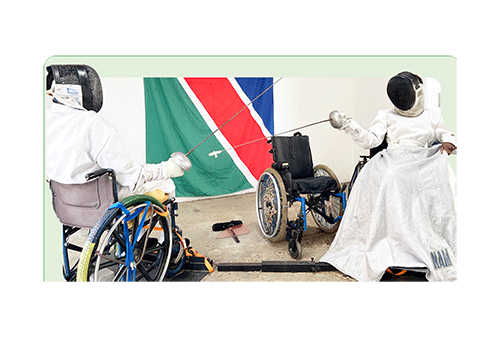

The Namibia Para Fencing Club was established in 2025 by Shekinah Mpunwa and Pandulo Sheehama, with the aim of encouraging people living with disabilities to participate in a dynamic and inclusive sport.
Para fencing uses the same equipment and follows the same basic rules as able-bodied fencing. However, sabre swords are currently unavailable in the country, with athletes using only foil and épée. Despite this limitation, the club has continued to introduce athletes to the sport and build capacity locally.
According to co-founder and assistant director Shekinah Mpunwa, the club faces significant financial challenges. Transport remains one of the biggest obstacles, as it can be difficult and costly for people living with disabilities to travel to training venues and events.
“The club is in need of sponsors to come on board and support us in order to get into the regions and broaden our support base,” Mpunwa said. Since its inception, the club has received support from Run Along, Challenged Athletes Namibia, as well as competition equipment from Denver Fencing, a foundation based in the United States. This assistance has played a vital role in getting the club off the ground and ensuring athletes have access to the necessary gear.
Classification for para-fencing athletes takes place at international competitions, which is why the club is planning to participate in global events this year.
The team aims to compete at the 2026 Para Fencing World Cup in the United States from 27 to 30 May, as well as the 2026 Para Fencing Americas Championships scheduled for late October.
These competitions will provide athletes with the opportunity to be officially classified and work towards achieving world rankings.
Locally, the club does not yet host events, as its current focus is on increasing visibility, recruiting more participants and strengthening its structures as a registered federation.
The sport accommodates athletes living with cerebral palsy, quadriplegia and amputations, offering them a competitive platform to showcase their abilities.
Mpunwa described the club’s growth as its most inspiring achievement so far.
“Seeing how far we have come and being registered as a federation motivates us to push for even greater milestones,” she said.
The club now looks ahead to expanding regionally, securing sustainable sponsorship and ensuring all its athletes are classified and internationally ranked.