


The start of a new year often invites reflection and resolve. We set goals to improve our health, advance our careers, and become more confident versions of ourselves. Yet one of the most powerful personal development skills is often overlooked: the ability to speak clearly and confidently without preparation.
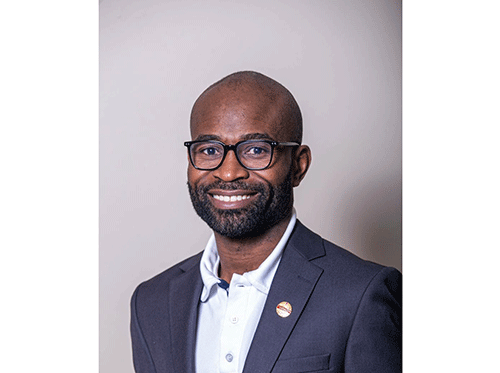
For many, the thought of being asked to “say a few words” on the spot is enough to cause anxiety. As Vice President for Education at Tarentaal Toastmasters, I regularly see this fear and also the remarkable transformations that occur when people choose to confront it.
Impromptu speaking strips away our safety nets. There are no notes to hide behind, no slides to guide us, and very little time to organise our thoughts. Most people fear saying the wrong thing, sounding uninformed, or being judged. This fear is deeply human. However, this is precisely why impromptu speaking is such a critical skill. Life rarely gives us advance notice. Opportunities, challenges, and leadership moments often arrive unannounced, and how we respond in those moments shapes how others perceive our competence and confidence. Public speaking is only one part of the picture. In the real world, spontaneous communication is essential in job interviews, performance reviews, meetings with senior leadership, client conversations, media engagements and even difficult personal discussions.
In Namibia’s professional environment, where relationships, clarity and credibility matter, being able to think on your feet is not a luxury; it is a necessity.
Those who can articulate their thoughts calmly and persuasively in the moment are more likely to be trusted, promoted, and listened to. One of the biggest myths about impromptu speaking is that it requires brilliance. In reality, it requires structure. My go-to mental checklist is simple: acknowledge the question by paraphrasing it briefly to buy time and show understanding, make one clear point by choosing a single message you want your audience to remember, and finally summarise your response by linking it back to the question. This structure turns panic into purpose and gives your audience clarity, even in a short response.
Strong impromptu speaking begins before you open your mouth. Active listening allows you to respond rather than react. By truly listening, without rehearsing your answer in your head, you pick up intent, tone and context. This leads to responses that are relevant, thoughtful and impactful. In many cases, good listening does more than clever wording ever could.
What makes Toastmasters unique is its supportive environment, and at Tarentaal Toastmasters, members are encouraged to try, to stumble, and to grow without fear of ridicule. Mistakes are seen as learning moments, not failures.
As Vice President for Education, my role is to guide members and guests through this journey, ensuring they are challenged at the right pace while feeling supported every step of the way. The applause you hear in our meetings is not for perfection, but for courage.
As we usher in a new year, consider personal development as an ongoing commitment, not a resolution that fades by February. If you are interested in mastering the art of public speaking, thinking on your feet, and growing in confidence, Tarentaal Toastmasters offers a welcoming space to begin.
You do not need to be fearless to start; you need to start. The confidence will follow.
*Dr. Benjamin Akinmoyeje is the Vice President for Education – Tarentaal Toastmasters.