
Matheus David
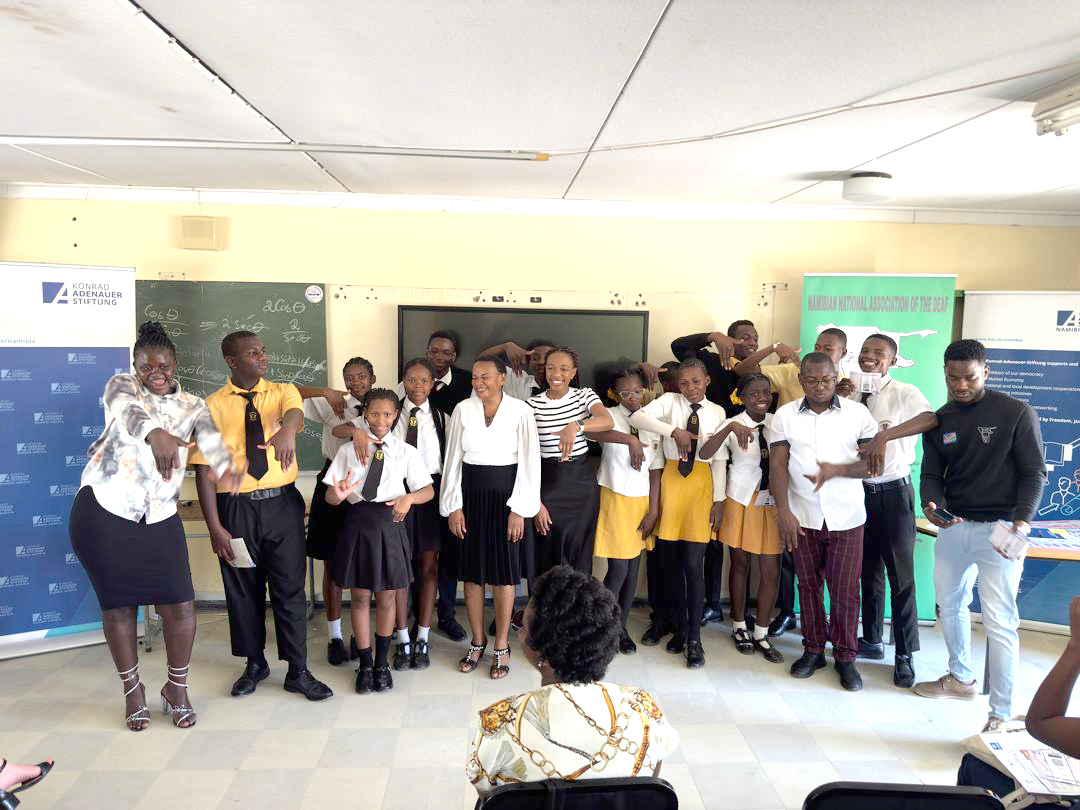
Members of the hearing-impaired community gathered for the official launch of the Namibian Sign Language Digital Application (NAMSLAP) at Cosmos High School on Friday, a groundbreaking innovation set to transform communication and inclusion across Namibia.
The event marked a milestone in the country’s ongoing journey toward digital empowerment and equality. The NAMSLAP app designed to make Namibian sign language easily accessible on mobile phones and digital platforms, aims to bridge communication gaps between hearing-impaired and hearing individuals while promoting greater understanding and inclusion.
Delivering a speech on behalf of the Minister of Information and Communication Technology Emma Theofelus, Rosalia Penda, president of the Namibian National Association of the Deaf (NNAD), described the app as “a powerful example of how innovation, guided by a spirit of inclusion and equality, can change lives.” She emphasised that the app is not merely a technological tool but “a bridge of communication, a symbol of connection, equality and opportunity.”
Penda applauded the NNAD and its partners for their commitment and tireless work in developing the application, highlighting that such collaboration between civil society, government and the private sector demonstrates Namibia’s collective effort toward ensuring no citizen is left behind in the digital era.
“The deaf community has long faced barriers to accessing information and opportunities,” she said. “NAMSLAP directly addresses this challenge by empowering both deaf and hearing people to learn, understand and use sign language, making everyday communication more inclusive,” she added. The launch also carried a strong message to Namibia’s youth. Penda encouraged learners to embrace creativity and innovation, urging them to “develop ideas that uplift your communities.” Teachers, too, were challenged to adopt the app as a learning aid to better engage learners with hearing impairment and foster inclusive classrooms.
Representing the NNAD, Hilaria Shiilqmo, one of the project’s dedicated staff members, extended heartfelt gratitude to the school, sponsors and partners who made the initiative possible. She thanked the United Nations Development Fund (UNDF) and various technology collaborators for their continued support, emphasising that the success of NAMSLAP was the result of “tireless teamwork and shared vision.” Shiilqmo also encouraged learners to spread awareness by sharing the app’s download link with their peers and families. “Please don’t throw away the paper with the QR code,” she urged. “Scan it, use it and pass it on to someone else.”
The programme at Cosmos High School was one of unity and optimism, with teachers and learners visibly moved by the powerful message of inclusion. The event not only celebrated technological progress but also reflected a deeper societal shift toward empathy, accessibility and shared understanding.
As the nation moves further into the digital age, the NAMSLAP initiative stands as a testament to what Namibia can achieve through compassion, collaboration and innovation, ensuring that every voice, spoken or signed, is heard and valued. –matheusshitongenidavid@gmail.com