
Auleria Wakudumo
The Ministry of Agriculture, Fisheries, Water and Land Reform has confirmed reports of suspected locusts’ infestation in Nehale Lya Mpingana constituency in the Oshikoto region.
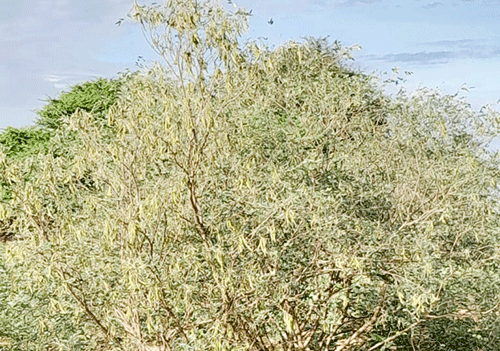
The ministry’s spokesperson Simon Nghipandulwa confirmed the presence of the grass locusts following a rapid investigation, stating that the locusts have been detected mostly on the grass and trees.
Nghipandulwa said that the response team has been activated and remains on high alert to address potential pest infestations nationwide.
The ministry has assured farmers and the general public that contingency plans are in place should the situation escalate.
“If the locusts begin invading cultivated fields, control measures will be swiftly implemented, including targeted spraying aimed at containing and reducing the infestation,” he said. While the locusts have caused concern among farmers, another growing worry in the northern communal farming area is the state of the mahangu crops, which is wilting due to delayed rainfall.
For many farmers, the prolonged dry spell has compounded the anxiety brought on by the potential locust threat, raising fears that the harvest may be poor this year.
Hilde Aron, a communal farmer from Ohakweenyanga village in the Oshana region, said that the dry conditions have put immense strain on her farming household.
“If the rain doesn’t come soon, I may have to replant everything, which is exhausting both physically and financially,” she said.
Similarly, Ismael Shipoke, a small- scale farmer from Eembaxu village, expressed his growing concern over the drying fields.
“I planted my mahangu, maize, millet, beans and ground nuts last year when we received the first rain. Now the crops are struggling and I fear that it may be too late to save them by the time the rain returns,” Shipoke said.
He stressed that the thought of losing the season is very stressful, especially for families like his that rely entirely on these crops for food and income.
Farmers have been urged to remain vigilant and to report any sightings promptly. The ministry stresses that early detection, strong community involvement and swift government response remain critical to preventing a repeat of past locust crises and safeguarding Namibia’s food security.