
Alexander Shapumba
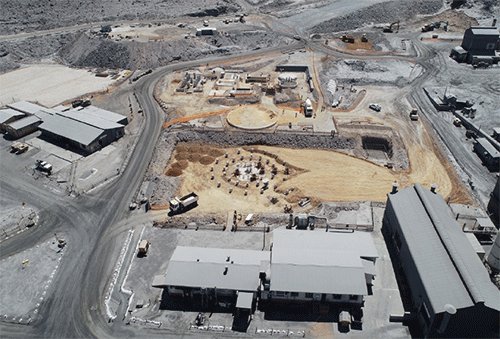
Rosh Pinah Zinc Corporation is embarking on a groundbreaking engineering feat; the construction of the WF3 Primary Exhaust Raise.
The project will not only mark a major milestone in the mine’s expansion journey, but it will also set a national record.
This ambitious project involves drilling the largest diameter raise bore ever attempted in Namibia: two vertical ventilation shafts, each 5.1 metres in diameter, reaching a combined length of 542 metres underground.
To put this in perspective, Namibia’s current underground ventilation raises are usually drilled 3 metres wide and 25 metres deep. The WF3 Exhaust Raise is over 20 times deeper and over three times wider, a scale unprecedented in the nation’s mining sector.
The engineering challenges are immense as drilling a shaft of this magnitude and depth requires unmatched technical precision, specialized equipment, and world-class expertise. That is why Rosh Pinah Zinc has engaged Master Drilling, a tier-1 international raise bore contractor and trusted partner with extensive global experience and a proven record of success.
“Master Drilling has been delivering high-quality work for RPZ for years, including critical production slot raise and paste fill drilling,” said Liina Kahenge, Principal Mining Engineer: Technical Services. “Their technical readiness, in-country experience, and proven ability to execute complex jobs made them the clear choice for this strategic project.”
This upgrade is not just about size; it is about securing the future. The WF3 ventilation system is essential for achieving the production goals of Rosh Pinah Zinc’s RP2.0 Expansion Project, which aims to increase ore production from 0.7Mtpa to 1.3Mtpa by 2027. Without this new exhaust shaft, air quality and equipment performance would fall short of mining regulations, directly impacting safety and productivity.
Ventilation is the lifeline of any underground operation. It ensures safe breathing air, regulates temperatures, and enables the operation of our diesel-powered fleet.
The WF3 Raise will significantly increase airflow, support deeper mining, and enhance underground working conditions. Gabriel Uutoni, Ventilation Engineer, emphasizes the significance of this development: “The new exhaust raise is essential to meet our future ventilation needs as we deepen our operations. It is an investment in both productivity and our people’s wellbeing.”
The successful execution of this project will rely on detailed planning, flawless coordination, and expert-level execution. Specialized surveying, engineering of concrete pads, underground drilling logistics, ventilation control, and safety systems are all part of the complex work required to execute the drilling of the two vertical raise bore holes, which comprise 0.38m diameter pilot drilling before back-reaming to 5.1m diameter. The first hole will connect the surface to the 200 Level, spanning 219 meters, while the second hole will extend from the 200 Level to the -120 Level, an additional 323 meters deep.
Pilot drilling started in June 2025 with Master Drilling’s 97R machine and will continue until February 2026. Head of Operations Richard Murrell emphasized the importance of avoiding delays: “Any postponement would jeopardize the RP2.0 schedule and cost the mine significantly in lost production time. Fast-tracking this project is both technically necessary and economically prudent.”
This is more than just another raise bore, it is a symbol of innovation, ambition, and the confidence we have in our people and partners to deliver world-class solutions. It will enable our team to mine smarter, deeper, and safer.
Employees are encouraged to stay informed and engaged. Progress updates and milestones will be shared on noticeboards and internal platforms throughout the duration of the project.
Let us celebrate this record-breaking moment, together we are engineering the future of Rosh Pinah.
*Alexander Shapumba is the Senior Mine Planner: Technical Services and Vent Shaft Project Manager at the Rosh Pinah Corporation.