
Lahja Nashuuta
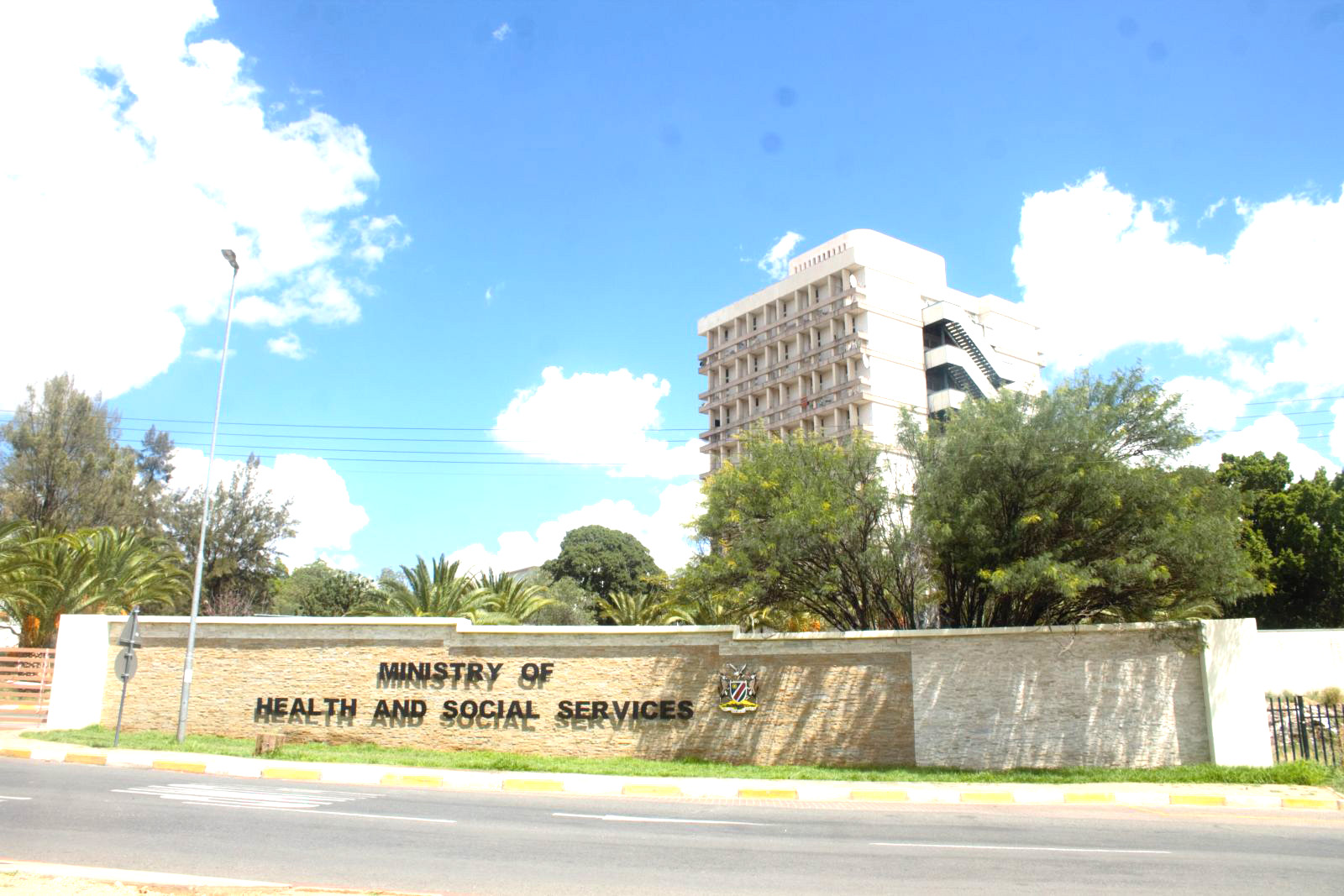
Lapses in financial management, unauthorised expenditures and the absence of imperative governance frameworks such as a risk management policy were some of the key shortcomings that were flagged by Auditor General Junias Kandjeke in the health ministry’s 2023/24 audit report.
As a result of the financial and administrative discrepancies, Kandjeke gave the ministry a qualified audit opinion for 2023/24 as he raised concern with the glaring material misstatements in the ministry’s books.
A qualified opinion is issued when the auditor has identified material misstatements in the financial statements, but these misstatements are not pervasive. In simpler words, the financial statements are still largely reliable despite the identified issues.
Kandjeke’s concerns were primarily around the financial and administrative lapses that undermine the globally renowned standards of accounting and effective service delivery in one of the country’s most critical ministries.
The audit brought to the fore unauthorised expenditure amounting to N$173.8 million, which according to him, contravenes provisions of the State Finance Act of 1991.
Kandjeke also reported outstanding commitments of N$61 935 127.30, showing that these payments were not settled by the end of the financial year despite as per the ministry’s commitment. The ministry also recorded under-expenditures of N$41 275 124.92, causing the financial statements to be understated by N$61 935 127.30.
According to the audit report, one main division exceeded its authorised budget by N$66.9 million (2.35%) while fifteen operational and five development subdivisions collectively exceeded their allocations by N$106.8 million after Treasury-approved virements, which is unauthorised in terms of Section 6(a)(iii) of the Act.
Procurement issues
The AG also found that the ministry misused emergency and direct procurement methods, which should only be used in urgent or special situations.
The ministry used the emergency procurement method to buy goods and services worth N$19.2 million, even though they did not qualify as emergencies under the Public Procurement Act of 2015.
Furthermore, direct procurement was also applied to buy from one supplier without an open bidding worth N$35.6 million. Kandjeke said this approach goes against the principles of fairness and transparency.
“Using non-competitive procurement methods without good reason creates room for waste, inflated prices, and possible abuse. On the other hand, competitive bidding is essential to ensure value for money and integrity in government spending,” said Kandjeke.
The ministry was also cited for unauthorised payments worth N$11.6 million, made during the reporting period for goods and services that were bought in 2022/2023. The auditors indicated that while the ministry later asked Treasury to approve these payments, the request was rejected.
The Ministry recorded outstanding financial commitments totalling N$61.9 million, which had not been settled by the close of the financial year despite being committed funds.
At the same time, the ministry reported under-expenditure of N$41.2 million, resulting in the financial statements being understated by N$61.9 million.
This means that payments already committed to suppliers and service providers were not honoured by year-end, creating discrepancies between the ministry’s budgeted and actual financial performance.
Underspending
The report reveals that the ministry did not spend all the money allocated to the institution attributing it to project delays, co-funding issues, and poor administration across divisions.
According to the report, N$8.9 million budgetary provision was made for the installation of network infrastructure at various health facilities across the country, only 2.16% was utilised.
Hence, some suppliers could not complete the required work on time due to delays in the acquisition of ICT materials.
Under Primary Health Care Services, a division that received N$1 720 956.30 during the financial year under review for the construction of accommodation facilities at border health posts such as Ariamsvlei and Noordoewer, only 9.18% was spent.
This is attributed to delays and contractor inefficiencies. Hence, the renovations at the Etagameno Rehabilitation Centre were also held up by delays in re-confirming consultants tasked with finalising bid documents.
Regional and referral hospitals failed to submit renovation requests on time, while the abandonment of the Regional Management Team (RMT) office construction further contributed to underspending.
Furthermore, the underspending of 14.27% is realised under the development capital budget. The report shows that while budgetary provisions of N$11 252 472.89 were made for capital projects, the ministry completed minor capital works at health facilities.
The delays in renovation requests from regional and referral hospitals is attributed to capacity challenges at the Department of Works, and the abandonment of the RMT Offices construction, which led to significant underexpenditure.
“The Ministry of Health and Social Services is a critical institution responsible for safeguarding the wellbeing of all Namibians. It is therefore vital that its financial management and governance systems reflect the highest standards of accountability and integrity” Kandjeke cautioned. lnashuuta@nepc.com.na