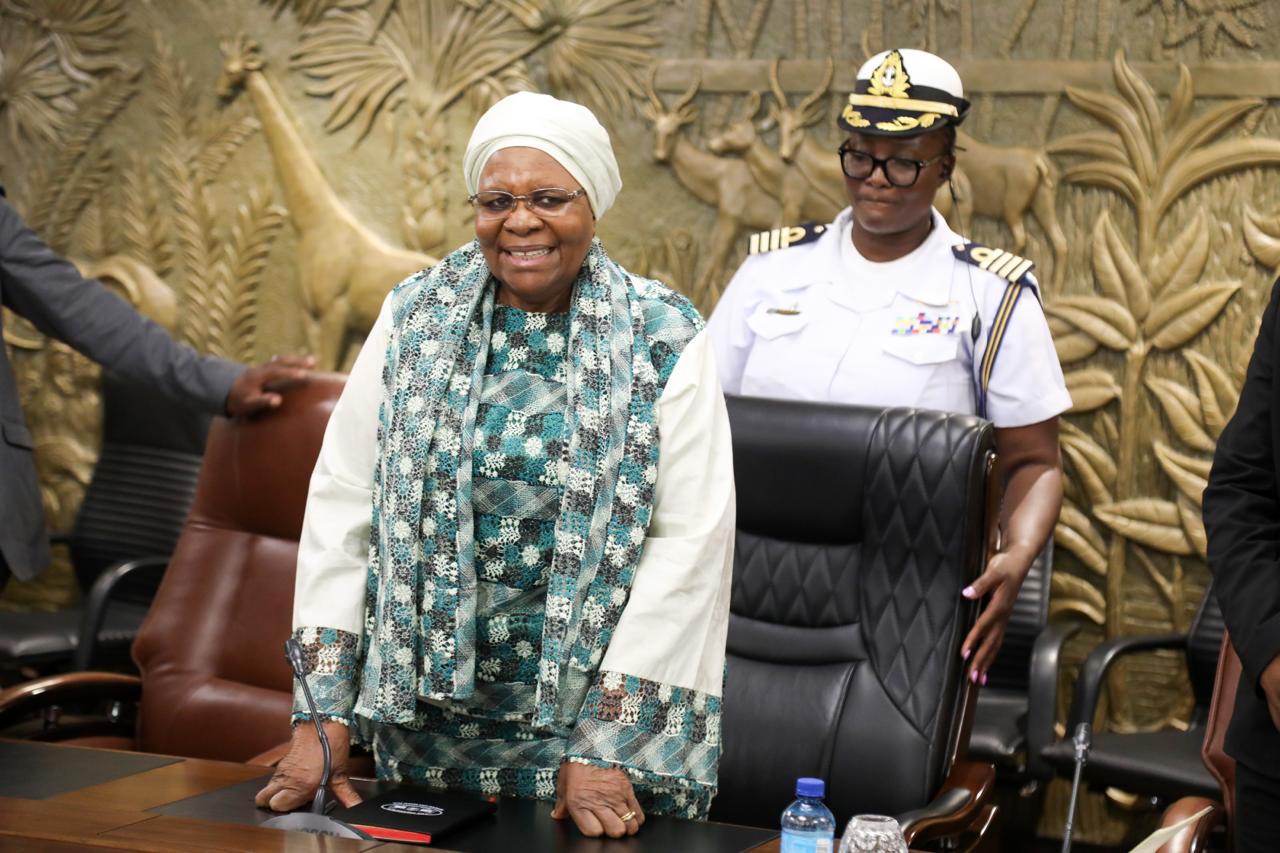

On 21 March 2025, Namibia witnessed a historic moment as Netumbo Nandi-Ndaitwah was inaugurated as the country’s first female President.
Her ascension to the presidency marked not only a significant milestone for gender equality but also a renewed commitment to national development.
In her inaugural address, President Nandi-Ndaitwah outlined a comprehensive vision for Namibia’s future, emphasising economic diversification, youth empowerment, good governance and regional integration.
Affectionately known as NNN, she has already made several historic gestures — one being that she became the first President to report back to the nation after her first 100 days in office.
She has also emerged as one of Africa’s most vocal and fearless leaders, advocating fair negotiations with foreign investors seeking opportunities on the continent.
Her advocacy is not confined to local or regional platforms.
At the recent United Nations General Assembly (UNGA), she made it clear that Africa is not seeking handouts but equal partnership and fair representation at the negotiation table.
NNN does not mince her words when she tells the world that Africa knows its worth.
“Africa is not poor, Africa is not seeking handouts, and Africa is not for sale,” she stated.
One of her notable quotes at the UNGA, in reference to the United Nations Pact for the Future and Africa’s rightful role within the UN system, was:
“It’s a moral commitment to build a future that is inclusive, sustainable and grounded in solidarity across borders.”
Beyond her international engagements, the President has been working hard to instil confidence within her nation, advising Namibians representing the country on global platforms to abandon a “begging mentality” and to approach all negotiations as equal partners.
As President Nandi-Ndaitwah celebrates her 73rd birthday alongside the Namibian people, it is worth reviewing her progress so far – benchmarking her early achievements against the promises made in her inaugural address.
Economic diversity
On her 100th day in office, President Nandi-Ndaitwah launched the Sixth National Development Plan (NDP6).
One of the central tenets of her vision is to reduce Namibia’s reliance on traditional sectors by diversifying the economy.
She highlighted the importance of increasing investment in agriculture, improving infrastructure and boosting productivity to enhance the quality of life for all Namibians.
In the months following her inauguration, tangible steps have been taken to realise this vision.
The government has initiated several infrastructure projects aimed at improving connectivity and stimulating economic activity across regions.
Among these are the revival of various agricultural initiatives, including the Uvhungu-Vhungu Dairy Farm, which had been dormant since the 1990s.
The Etunda Irrigation Scheme is another government project that has become visibly productive in the NNN era.
Additionally, the National Youth Service agricultural projects in Grootfontein have become active once again, with produce now reaching local markets.
Youth empowerment, education
Addressing the challenges faced by young people, particularly unemployment and access to education, was a key pledge in President Nandi-Ndaitwah’s inaugural speech.
She stressed the need to provide the youth with the skills and opportunities necessary to contribute meaningfully to the nation’s development.
In a landmark move, the government announced that, beginning in 2026, higher education at State-run universities and vocational training institutions will be fully subsidised, eliminating tuition and registration fees.
This policy aims to make education accessible to all Namibians, especially those from disadvantaged backgrounds.
In September 2025, the government also launched the National Youth Development Fund (NYDF).
The fund has been capitalised, and the pilot phase has already been completed, with several youth-led projects receiving funding.
Good governance
President Nandi-Ndaitwah has been vocal about her determination to eradicate corruption and promote transparency within government.
In her inaugural address, she equated corruption to treason, underscoring its damaging effect on national progress.
To reinforce this stance, her administration has strengthened anti-corruption institutions and introduced stricter accountability measures for public officials.
Notably, the removal of middlemen in government procurement, particularly in the health sector, has been implemented.
This week, the health ministry received its first batch of medication ordered directly through government procurement – a move hailed as a victory for transparency and efficiency.
It was also under her era that the Oilrot – potentially one of the Namibia’s biggest cases of corruption was unearthed.
While this case is still ongoing in the court of law, it forms one of her biggest stance and message to the corrupt wannabes.
Regional integration
Recognising the importance of regional cooperation, President Nandi-Ndaitwah has emphasised Namibia’s role in promoting peace, stability and economic integration within the Southern African Development Community (SADC).
Her administration continues to actively participate in regional forums and initiatives aimed at enhancing trade and collaboration among member states.
On the international stage, Namibia, under her leadership, has remained a strong advocate for global peace, climate action and sustainable development.
She has repeatedly called for the removal of unfair sanctions imposed on countries such as Zimbabwe and Cuba.
Challenges
While notable progress has been achieved, challenges remain.
The ambitious goals set by President Nandi-Ndaitwah require sustained effort and collaboration across all sectors of society.
Economic diversification, job creation and the eradication of corruption are complex and long-term undertakings.
The youth continue to face challenges related to unemployment and access to quality education.
While current initiatives show promise, ongoing evaluation and adaptation will be necessary to meet their evolving needs.
Although progress has been made in addressing mental health among the youth, President Nandi-Ndaitwah’s administration must continue to confront pressing social challenges, including suicide, gender-based violence and domestic abuse, to build a more inclusive and resilient Namibia.