
Kaviveterue Virere
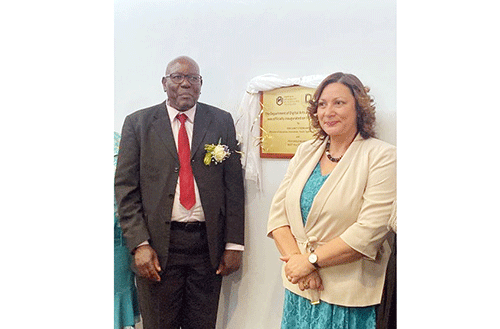
The Namibia University of Science and Technology (NUST) yesterday launched the Department of Digital Arts and Animation.
This marks a major step in the development of the country’s creative economy.
The event took place at the main campus of NUST in Windhoek.
The new department will first provide short courses in film, digital arts and animation before expanding out into full-time degree programmes in fields, including digital advertising, gaming and television production.
NUST also announced plans to collaborate with institutions such as the College of the Arts and the National Theatre of Namibia to strengthen feeder systems.
Delivering the keynote address, the Minister of Education, Innovation, Youth, Sports, Arts and Culture, Sanet Steenkamp stressed the importance of the new department.
She said the initiative aligns with Namibia’s Sixth National Development Plan and the upcoming Arts, Culture and Heritage Policy.
Opportunities such as these did not exist when I was a student.
“We need to make sure that our youth have more opportunities for development,” she stated.
Steenkamp said innovation is essential to growth and not a luxury.
She informed the audience that “creativity is a powerful driver of innovation, identity and inclusive growth”.
The minister promised government assistance via Namibia’s National Arts Council.
Steenkamp said the ministry will provide financial aid to students, initially for short courses and then for degrees.
“This is a long-term contribution to Namibia’s future, not charity,” she added.
Industry leaders praised the establishment of the new department.
Managing director of MultiChoice Namibia Roger Gertze described the launch as “the beginning of a new era for Namibia’s creative industries”.
He highlighted the company’s contribution through the MultiChoice Talent Factory, which had trained 13 Namibians at the Regional Film Academy in Lusaka, Zambia, since 2018.
He said some of the graduates are already active in the country’s film and television industry.
“This department will cultivate skilled professionals, create jobs and build a globally competitive sector,” Gertze said.
The Namibia Film Commission applauded the new development.
Chairperson of Namibia Film Commission Esther Beukes said the department established “a foundation upon which a resilient and sustainable film and digital arts industry can be built”.
She stressed the importance of collaboration between institutions and creative stakeholders.
“You will be the ones to preserve Namibia’s storytelling heritage in the future,” Beukes said.
She advised students to take advantage of this chance to create a vibrant and inclusive creative sector. The launch was described as more than an academic milestone.
Officials and partners said it represents Namibia’s determination to embrace the creative economy as a driver of growth and identity.
“Namibia is not only participating in global change. We are carving our own path as a creative lighthouse for Southern Africa,” Steenkamp said.